Data Lineage: Why It Matters and How to Implement It
You are staring at a dashboard showing a critical revenue number that just dropped by 40%. The CEO is asking questions. Your team is scrambling. The problem? You have no idea where that number came from, which transformations touched it, or who to ask.
This is the nightmare that data lineage prevents.
Data lineage maps the complete journey of your data—where it originates, how it moves, and how it changes along the way . For data teams, it is both a lifeline during incidents and a foundation for trust, compliance, and AI-readiness.
What Is Data Lineage?
Data lineage is the ability to trace every piece of data back to its source and forward to its final destination. It answers critical questions like:
-
Where did this number come from?
-
What transformations were applied?
-
Who owns this data?
-
What will break if I change this column?
-
Is this data compliant with regulations?
Physical lineage tracks actual file movements and schema changes across systems . Logical lineage documents business-level transformations. Operational lineage captures runtime metadata like execution logs .
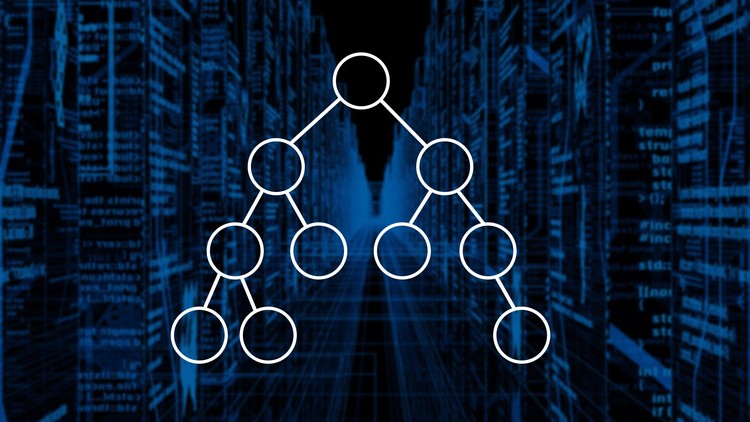
In practice, lineage is typically visualized as a directed acyclic graph (DAG) that shows upstream dependencies (where data comes from) and downstream impacts (what depends on it) . For example, a dashboard is downstream of a transformation pipeline, which is downstream of a source database.
Why Data Lineage Matters
1. Faster Incident Response
When data breaks, every minute matters. Without lineage, engineers trace issues manually through query histories, pipeline logs, and system documentation. With lineage, the investigation traverses the lineage graph to find root causes quickly.
The ROI: Mean time to resolution (MTTR) for data incidents drops from 4-8 hours to under 30 minutes when the fault is in a traced pipeline .
2. Impact Analysis
Before making a schema change, you need to know what will break. A lineage graph shows every downstream dashboard, ML model, or API that depends on a dataset . This prevents production failures from undetected downstream impact—which mature teams reduce by 40-60% after implementing column-level lineage .
3. Regulatory Compliance
Regulations require transparent data tracking :
| Regulation | Lineage Requirement |
|---|---|
| GDPR/CCPA | Trace personal data flow for subject access requests |
| HIPAA | Maintain end-to-end protected health information (PHI) lineage |
| SOX (Sarbanes-Oxley) | Calculate-level lineage for financial reporting |
| BCBS 239 | Complete lineage for risk data from source to report |
| EU AI Act | Document training data provenance for high-risk AI systems |
4. Data Quality and Trust
Lineage helps ensure data quality by making transformations transparent . When stakeholders can see exactly how numbers are calculated, trust increases.
5. AI and ML Governance
AI systems require lineage to answer three questions :
-
Training data provenance: What data was this model trained on, and how was it preprocessed?
-
Inference data lineage: What production data is the model currently running on?
-
Impact analysis: When upstream data changes, which models are affected?
6. Cost Savings
The financial impact is measurable. A mature lineage implementation delivers:
-
Incident response savings: ~$20,000/year per engineer
-
Audit preparation savings: ~$192,000/year for a compliance team
-
Failure avoidance: ~$150,000/year
Most organizations achieve positive ROI within 6-12 months of deployment .
How to Implement Data Lineage
Step 1: Start with a Clear Purpose
Different goals require different approaches :
| Primary Goal | What to Prioritize |
|---|---|
| Regulatory compliance | Column-level lineage for sensitive data fields (PII, financial records) |
| Operational efficiency | Lineage for frequently used datasets and redundant processes |
| AI governance | Training data provenance and model impact analysis |
Step 2: Focus on High-Impact Assets First
Map the 100-200 critical attributes that drive business value—regulatory reports, risk models, key customer metrics . Starting with high-impact assets builds momentum and shows value quickly .
Step 3: Automate from Day One
Manual documentation is the enemy of accurate lineage . If lineage requires manual updates, it will fall behind. Automated capture keeps lineage close to actual execution . As pipelines run and schemas change, the lineage record updates with the environment.
Step 4: Choose Your Implementation Approach
| Approach | Best For | Pros | Cons |
|---|---|---|---|
| Manual documentation | Small environments, early-stage efforts | Simple, customizable | Time-consuming, error-prone |
| SQL parsing | SQL-based warehouses and BI tools | High precision for technical users | Parsing complexity, dialect quirks |
| ETL tool integration | Teams with managed ETL platforms | Built-in lineage tracking | Platform-specific |
| Metadata harvesting | Organizations with data catalogs | Works across multiple tools | Accuracy depends on metadata completeness |
| Platform-native lineage | Cloud warehouse users (Snowflake, BigQuery) | Execution-generated lineage, accurate | Platform-limited |
| AI/ML-enhanced mapping | Undocumented or dynamic environments | Fills gaps intelligently | Still maturing; may produce false positives |
Step 5: Track at the Column Level Where It Matters
Table-level lineage may show two assets are connected. Column-level lineage shows which specific fields were copied, filtered, renamed, or calculated . This is essential for:
-
GDPR field-level compliance
-
SOX financial calculation audits
-
AI training data provenance documentation
-
Precise root cause analysis
Step 6: Connect Lineage to Governance Artifacts
A lineage path becomes much more useful when it carries business context: owners, glossary definitions, tags, policies, certification status . Without this context, a lineage graph may be technically correct but difficult to use outside engineering.
Step 7: Pair Lineage with Data Quality Monitoring
Lineage becomes more powerful when combined with data quality signals . Instead of asking only where data moved, teams can also see where freshness dropped, schema drift occurred, or validation rules failed.
Step 8: Make Lineage Usable Outside Engineering
Dense lineage maps that only engineers can read miss the point. Design lineage views that business, compliance, and audit stakeholders can interpret .
Step 9: Validate with Business Stakeholders
Automated capture shows how data moved, but does not always reveal whether the resulting record reflects how the business understands that data. Business review helps identify missing context and outdated assumptions .
Step 10: Treat Lineage as Engineering, Not Administration
Mature organizations capture lineage automatically as part of the engineering process—just like test plans or deployment logs . Governance becomes the consumer of lineage, not the producer.
Common Implementation Failures
Failure 1: Lineage Deployed But Not Maintained
An organization implements lineage across 200 pipelines, but two years later, 60% of lineage records are outdated. Engineers stop trusting the lineage because it no longer reflects current pipeline configurations.
Fix: Lineage capture must be event-driven—triggered by pipeline execution and schema changes—not a periodic batch job .
Failure 2: Dataset-Level Lineage Treated as Sufficient for Compliance
Table-level lineage often does not meet regulatory requirements for field-level traceability . Financial and healthcare regulations typically require column-level tracking.
Fix: Implement column-level lineage for regulated data assets from the start.
Failure 3: Over-Mapping Everything
Trying to map every field across every system creates a dense, unmaintainable web .
Fix: Focus on the data that drives business value and regulatory reporting.
The Bottom Line
Data lineage is no longer a "nice to have." It is infrastructure for trusted analytics, regulatory compliance, and responsible AI deployment . With automated, cross-system lineage, teams can:
-
Resolve incidents in minutes instead of hours
-
Make schema changes without breaking production
-
Pass audits with on-demand documentation
-
Build AI systems with traceable training data
Your immediate action plan:
-
This week: Identify your 3 most critical data assets. Document their lineage manually as a starting point.
-
This month: Choose a lineage tool and implement automated capture for your high-impact pipelines.
-
Within 3 months: Add column-level lineage and governance context to your critical assets.
-
Within 6 months: Integrate lineage into daily workflows, track ROI, and expand coverage.
Data lineage is challenging to implement but incredibly powerful when done right. Start with what matters, automate where possible, and build trust one dependency at a time.
Contact Us
Phone: +91 9667708830
Email: info@codingnow.in
Website: https://codingnowai.in/
Address:
2nd Floor, Kapil Vihar (Opp. Metro Pillar No.354)
Pitampura, New Delhi – 110034
Backlink to main website: Explore Python and AI courses at Coding Now – Gurukul of AI