Design, build, and deploy intelligent agents that can reason, plan, use tools, and act autonomously. This program covers LLM‑powered agents (ReAct, AutoGPT, CrewAI, LangGraph), tool use, memory, multi‑agent collaboration, and production deployment. Master the future of AI — Agentic systems.



 8460 Learners
60% hands-on projects & real‑world agent scenarios — research agents, customer support agents, multi‑agent teams, code assistants.
Curriculum covers LangChain, LangGraph, CrewAI, AutoGen, tool use, memory systems, planning, ReAct, and deployment with FastAPI/Docker.
Learn from AI engineers who have built production agentic systems for startups and enterprises.
Agentic AI refers to autonomous systems that can pursue goals, make decisions, and take actions using LLMs and tools. This program covers agent architecture (ReAct, Plan‑and‑Execute), memory (short‑term, long‑term), tool use (APIs, databases, search, code), and multi‑agent orchestration (CrewAI, AutoGen).
✔ 60% hands-on projects • 5 real‑world agent systems • Research assistant, customer support agent, code reviewer, multi‑agent team • Official‑style practice exams • 24/7 cloud lab access.
LangChain, LangGraph, CrewAI, Microsoft AutoGen, ReAct agents, tool calling, vector memory, long‑term memory, agent evaluation, deployment with FastAPI, Docker, observability (LangSmith).
Basic Python knowledge and understanding of LLM APIs (OpenAI, Gemini). No prior agent experience required.
Build a research assistant agent that searches and summarizes, a customer support agent with ticket resolution, a multi‑agent coding team (planner, writer, reviewer), and a personal travel planner agent.
Mock interviews, portfolio of agent projects, resume review, and placement assistance for AI Agent Engineer, LLM Engineer, and Autonomous Systems Developer roles.
Tailored Agentic AI upskilling for teams and enterprises
Choose from LangChain focus, AutoGen multi‑agent, or production deployment tracks.
Pre‑configured agents, toolkits, and cloud playgrounds.
Monitor progress and skill gaps with detailed analytics.
Volume discounts for teams of 10+, plus pay-as-you-go options.
Dedicated agent AI mentors to assist your learners anytime.
Single point of contact for seamless training delivery.

Get a custom quote for your organization's autonomous agent training.
From Prompt Chaining to Autonomous Multi‑Agent Orchestration
Understand reasoning loops, structured planning, and self‑critique patterns.
Build stateful agents, conditional edges, cycles, and human‑in‑the‑loop.
Connect agents to search, databases, calculators, custom APIs, and code executors.
Implement conversation memory, vector semantic memory, and persistent storage.
Design teams of agents (planner, writer, critic) with role‑based collaboration.
Test agent loops, use LangSmith for tracing, and deploy as REST APIs with FastAPI + Docker.
Ideal Candidates for Agentic AI Certification
Designed for developers and AI practitioners with basic Python knowledge. This program transforms you into an agentic AI expert — a role that is rapidly becoming the next frontier in applied AI. Average salaries for Agentic AI Engineers in India range from ₹12 Lakhs to ₹30+ Lakhs per year.
Your Step‑by‑Step Path to Building Autonomous Agents
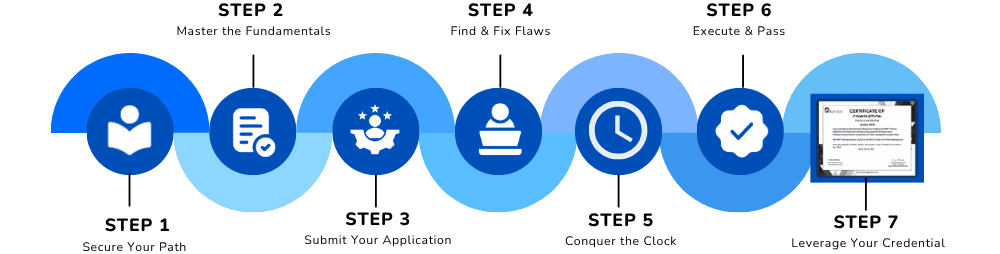
Master LLM API calls, function calling, and advanced prompting (chain‑of‑thought, few‑shot).
What You Need Before You Start
Objective: To certify your ability to design, build, test, and deploy autonomous AI agents. Candidates should have:
Ability to write and debug Python code. We provide a rapid refresher on required topics.
Understanding of how REST APIs work and data exchange formats.
No prior agent experience required — we start from simple chains and progress to complex agent graphs.
Comprehensive Agentic AI modules – from simple agents to multi‑agent orchestrations
Chat completions, streaming, system prompts, and parameter tuning.
Define schemas, parse tool calls, and execute Python functions.
Chain‑of‑thought, tree‑of‑thoughts, self‑consistency, and prompt injection defense.
Compose prompt | model | output parser pipelines.
Combine retrievers with LLMs for document grounded answers.
ConversationBufferMemory, summarization, and tracing callbacks.
Build a basic agent that thinks, acts, and observes loops.
Give agents real‑world capabilities via pre‑built toolkits.
Manage max iterations, retries, and fallback responses.
Build agent graphs with conditional branching and cycles.
Add breakpoints, human approval steps, and checkpointing.
Specialist agents (researcher, writer, reviewer) coordinating via shared state.
Define agents with roles/goals, tasks, tools, and sequential/hierarchical processes.
UserProxy, AssistantAgent, GroupChat, and tool support.
When to choose LangGraph vs CrewAI vs AutoGen.
Store and retrieve past agent interactions as embeddings.
Persist conversation summaries and user preferences.
Decompose goals into sub‑tasks and execute in parallel.
Monitor agent decisions, costs, latency, and failure modes.
Assistants evaluation, tool call accuracy, and end‑task success rates.
Version agents, collect feedback, and improve prompts/tools.
Stream responses, handle async, and background tasks.
Containerize agents, manage environment variables, scale horizontally.
Cost‑effective deployments for agents with cold‑start handling.
Defense patterns (input validation, allowlist tools).
NeMo Guardrails, Moderation API, and custom filters.
Protect agent endpoints from abuse.
Multi‑agent team: researcher, summarizer, writer – produces a report from web search.
Handles tickets, retrieves knowledge base, escalates to human.
Design tradeoffs, evaluation strategies, and cost optimization.
Lifetime Access
Real Agent Projects Included
Mentor Support
Practice Assignments
Certificate Preparation
Join 8,000+ early‑adopter engineers and become a leader in Agentic AI. Autonomous agents are revolutionising automation, customer service, research, and software development.
Limited seats available for the upcoming batch • EMI options available • Includes LangSmith credits


Insights on AI, Data Science, Full Stack & Career
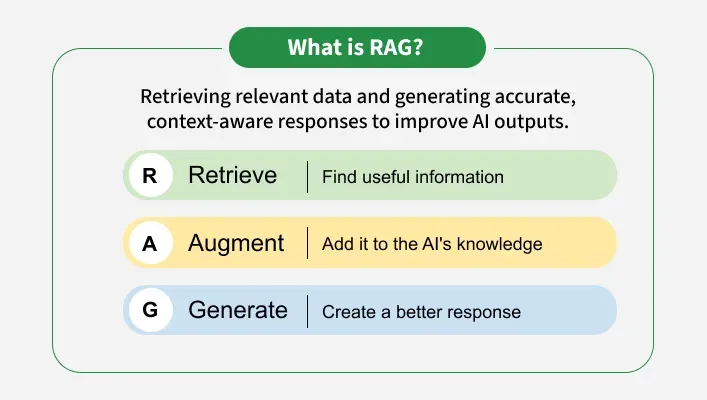
Generative AI has changed the way people interact with technology. Large Language Models (LLMs) can …
Read More →