Build next‑generation intelligent web applications by combining full‑stack development with Artificial Intelligence. Learn to integrate LLMs (GPT‑4, Gemini), vector databases, RAG pipelines, and AI agents into modern web apps using Python (Django/FastAPI) and React/Node.js. Prepare to become an AI‑powered full‑stack developer — the most sought‑after role in the modern tech industry.



 10340 Learners
60% hands-on projects & real‑world applications — AI chat assistants, document Q&A, recommendation engines, and AI agents.
Curriculum covers Python, React, Node.js, LLM APIs (OpenAI, Gemini), RAG, vector databases (Pinecone, Chroma), LangChain, and deployment.
Learn from experts who have built production AI web apps for enterprises and AI startups.
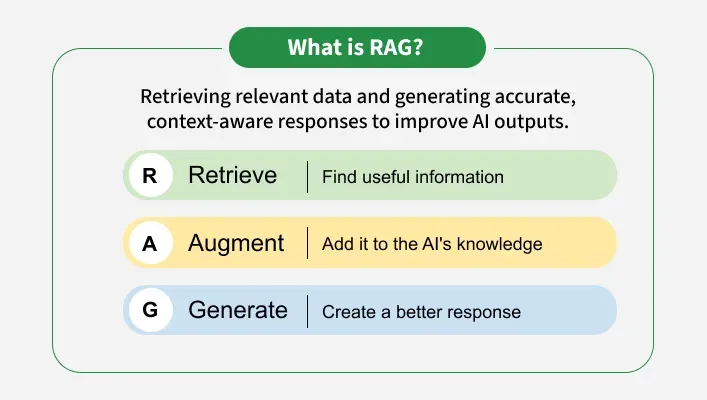
Bridge the gap between traditional web development and artificial intelligence. Learn to build intelligent applications that leverage LLMs, embeddings, vector search, and AI agents. You'll master both modern full‑stack frameworks (React, Node.js, Django) and AI integration patterns like RAG (Retrieval-Augmented Generation), prompt engineering, and fine‑tuning.
✔ 60% hands-on projects • Build 5 AI‑powered full‑stack apps • AI chat, document Q&A, recommendation system • Official‑style practice exams • 24/7 cloud lab access.
Python, React, Node.js, FastAPI, LLM APIs (OpenAI, Gemini, Anthropic), LangChain, RAG pipelines, vector databases (Pinecone, Chroma), prompt engineering, agents, deployment (Vercel, AWS).
Basic knowledge of JavaScript or Python. No prior AI/ML experience required — we start from fundamentals.
Build an AI customer support chatbot, a document Q&A portal (RAG), a personalized recommendation engine, and an AI‑powered code assistant.
Mock technical interviews, resume review, GitHub portfolio optimization, and job placement assistance for AI Full Stack Developer, AI Engineer, and GenAI Application Developer roles.
Tailored AI full‑stack upskilling for teams and enterprises
Choose from RAG focus, AI agents, or LLM fine‑tuning tracks.
Pre‑configured API keys, vector DBs, and Jupyter notebooks.
Monitor progress and skill gaps with detailed analytics.
Volume discounts for teams of 10+, plus pay-as-you-go options.
Dedicated AI full‑stack mentors to assist your learners anytime.
Single point of contact for seamless training delivery.

Get a custom quote for your organization's AI full‑stack training.
From Full‑Stack Foundations to Production AI
Build modern web apps with React, Next.js, Node.js, Express, Django, or FastAPI. Handle authentication, databases, and REST APIs.
Connect your apps to LLM APIs, manage prompt engineering, handle streaming responses, and control costs.
Build document Q&A systems using embeddings, vector databases (Pinecone, Chroma), and hybrid search to ground LLM responses.
Create autonomous agents with LangChain or CrewAI that can call APIs, query databases, and perform multi‑step reasoning.
Index and search semantic vectors using Pinecone, Weaviate, Chroma, or PostgreSQL with pgvector.
Deploy full‑stack AI apps to Vercel, AWS (EC2, Lambda), or Fly.io, manage API keys securely, and monitor usage.
Ideal Candidates for AI‑Integrated Full Stack Certification
Designed for developers with basic web or programming knowledge. This program transforms you into an AI‑enabled full‑stack developer — one of the fastest‑growing and highest‑paying roles in tech. Average salaries for AI Full Stack Developers in India range from ₹9 Lakhs to ₹28+ Lakhs per year.
Your Step‑by‑Step Path to AI‑Powered Full‑Stack Mastery
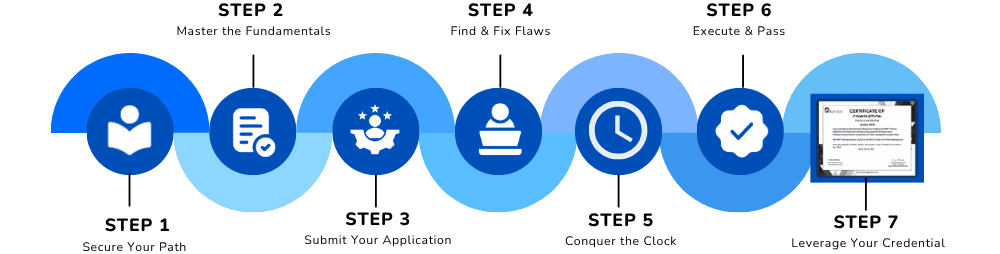
Master modern web development (React + Node.js/Django) and understand LLM fundamentals, prompt engineering, and API integration.
What You Need Before You Start
Objective: To certify your ability to design, build, and deploy AI‑powered full‑stack web applications. Candidates should have:
Basic proficiency in any language (Python, JavaScript, Java, C#). We'll cover web fundamentals before diving into AI.
Familiarity with how websites work is helpful but not mandatory — we include a refresher.
No prior AI or ML experience required — we start from the basics of calling LLM APIs.
Comprehensive AI full‑stack modules – from web basics to agentic AI
Build responsive UIs, understand DOM manipulation, and modern ES6+ syntax.
Python quick start, virtual environments, requests, and working with JSON APIs.
Git workflows, GitHub, and organizing full‑stack projects.
Build interactive front‑ends with functional components, useState, useEffect, and Context API.
Create REST APIs, middleware, and connect to databases (PostgreSQL or MongoDB).
JWT, OAuth, and securing API endpoints for AI features.
Understanding model capabilities, tokenization, temperature, and system prompts.
Zero‑shot, few‑shot, chain‑of‑thought, and structured outputs.
Integrate OpenAI or Gemini API into React/Node.js, handle streaming, errors, and rate limits.
Create real‑time chat interface, manage conversation state, and store chat history.
Create specialized assistants with instructions, tools, and file retrieval.
Integrate vision models (GPT‑4V, Gemini Pro Vision) for image analysis.
Create text embeddings (OpenAI, Cohere) and use Pinecone/Chroma for similarity search.
Ingest PDFs/websites, chunk documents, index vectors, and retrieve context for LLM answers.
Combine keyword and vector search, use re‑rankers to improve accuracy.
Build reusable LLM pipelines, prompt templates, and structured output.
Create agents that can search the web, call weather APIs, or query databases.
Orchestrate multiple AI agents for complex tasks like research, summarization, and report writing.
Build recommender using embeddings and user interaction data.
Use LLMs to generate natural language explanations and conversational recs.
Cache embeddings, update user profiles, and serve recommendations in web apps.
Environment variables, build scripts, and serverless functions for API routes.
Host Chroma/Pinecone, use LangServe, and scale with Redis or PGVector.
Automate testing, embedding updates, and deployment pipelines.
Track tokens, latency, costs, and prompt effectiveness.
Use environment secrets, AWS KMS, or Vault to protect LLM credentials.
Implement input/output filters, toxicity checks, and avoid prompt injection.
Build a chatbot with RAG from support docs, plus admin dashboard for logs and feedback.
Create a web‑based code assistant with syntax highlighting, LLM completions, and repo context.
Architecture design, API cost optimization, and system design for AI full‑stack roles.
Lifetime Access
Real AI Projects Included
Mentor Support
Practice Assignments
Certificate Preparation
Join 10,000+ early‑adopter developers who are shaping the future of intelligent applications. AI full‑stack skills are the most in‑demand in today's tech landscape.
Limited seats available for the upcoming batch • EMI options available • Includes API credits for OpenAI/Gemini


Insights on AI, Data Science, Full Stack & Career
Generative AI has changed the way people interact with technology. Large Language Models (LLMs) can …
Read More →