The Big Question
Here's a question that should make everyone pause: If you received a video call from someone you trust—your boss, your parent, your business partner—asking for urgent help, would you question it?
Most people say no. Why would they? You can see their face. You can hear their voice. The person on the other end is obviously who they say they are.
That's exactly the assumption deepfake scammers are exploiting.
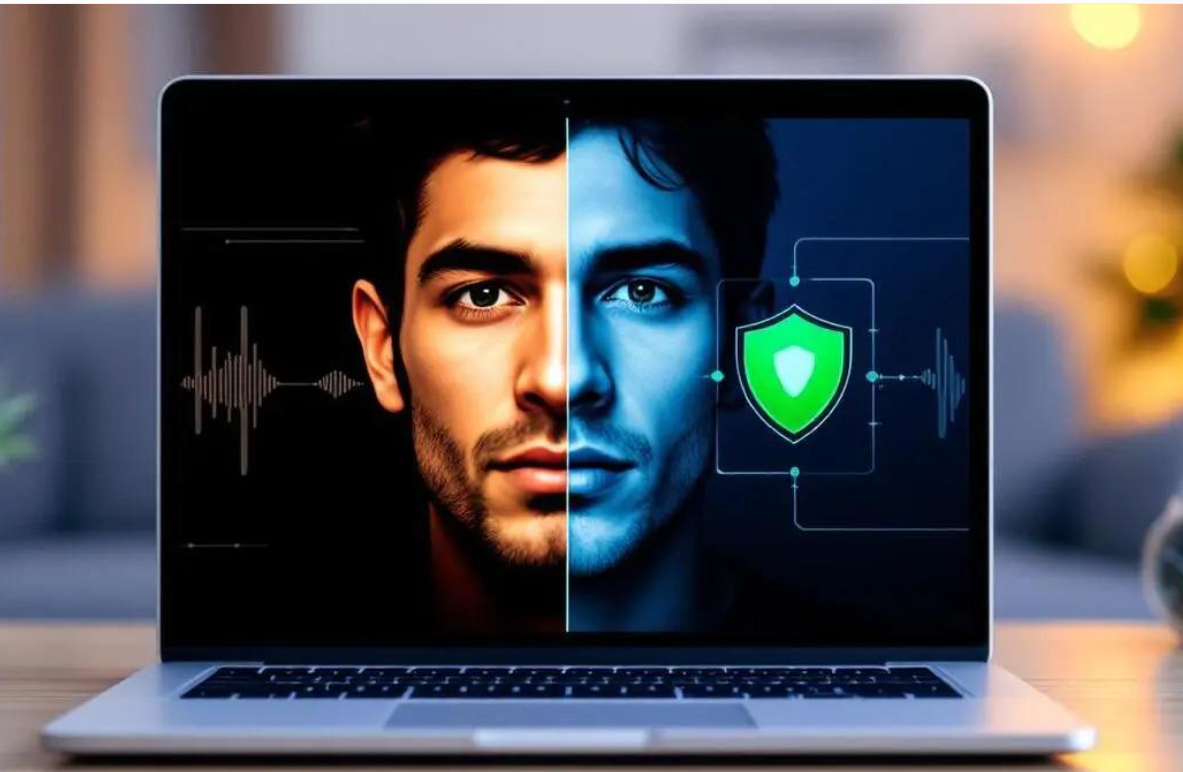
AI has made it possible to clone voices from a few seconds of audio and create realistic video of people saying things they never said. The technology is no longer expensive or rare—it's accessible to anyone with a laptop and an internet connection. And criminals have figured out that the most effective way to steal from you isn't hacking your systems. It's hacking your trust.
The scale of the problem is staggering. A deepfake attack occurred every five minutes in 2024. One in four adults has experienced or knows someone affected by an AI voice cloning scam. And 70% of people aren't confident they could tell a cloned voice from a real one.
So the real question isn't whether deepfake scams can trick people. It's whether you'll recognize the signs before it's too late.
How Deepfake Scams Actually Work
Let's break down the anatomy of a modern deepfake attack.
Step 1: Gathering the Raw Material
Scammers don't need much to start. Publicly available videos, voice recordings, social media posts—anything that captures a person's face or voice can be used to train AI models.
A voice can be cloned from as little as three seconds of audio. That's why the "stay silent for three seconds" advice has spread—scammers often call, stay silent, and wait for you to say "Hello?" or "Who is this?" That brief response is enough.
For video, scammers scrape interviews, presentations, video calls, and social media content. The more material available, the more convincing the result.
Step 2: Building the Fake
Using generative AI, scammers create synthetic media—fake video, fake audio, or both. Modern tools synchronize lip movements, replicate facial expressions, and mimic speaking patterns with frightening accuracy.
The result isn't a crude edit. It's a complete fabrication that appears genuine to casual observation.
Step 3: Constructing the Scenario
This is where deepfake scams differ from simple fake videos. Scammers don't just send a clip—they build an entire context designed to lower your defenses.
A common pattern: You receive a WhatsApp message from someone claiming to be a government official or company executive. They invite you to an "urgent private meeting" on Zoom. When you join, the meeting looks real—multiple people, familiar faces, professional setting.
The conversation is smooth. The people on screen discuss legitimate-sounding topics—investment opportunities, confidential projects, time-sensitive deals. Then comes the ask: transfer funds to a specific account.
By this point, you've seen the faces. You've heard the voices. Your skepticism has been eroded by the sheer realism of the scenario.
Step 4: Creating Urgency
Pressure is the final ingredient. Scammers fabricate emergencies: a legal crisis, a business deal that will collapse without immediate payment, a family member in danger.
The goal is to bypass your rational thinking. When you're panicked, you don't verify. You act.
Step 5: Disappearing with the Money
Once the transfer is made, the funds move through a chain of accounts, often across borders or into cryptocurrency. Recovery becomes nearly impossible.
Real Cases That Show How Bad It Gets
These aren't hypotheticals. They happened.
**The $25 Million Video Call**
In 2024, an employee at a Hong Kong-based engineering firm received a video call from someone who looked and sounded like the company's CFO. Other "colleagues" appeared on the call too. The employee was instructed to transfer approximately $25 million. They complied. Every participant on that call was AI-generated.
**The $3.8 Million Fake Government Meeting**
A victim received a WhatsApp invitation to a private meeting with what appeared to be Singapore's Prime Minister and other officials. The meeting was entirely fabricated. Over $3.8 million was transferred before the victim realized the truth.
The "Boss Scam" in India
India's market regulator SEBI issued a warning in 2026 about a rising fraud where executives are impersonated via WhatsApp, Teams, and deepfake video calls. Finance personnel are instructed to make urgent, confidential transfers. Some attacks also use malware to hijack WhatsApp sessions, allowing scammers to send fraudulent instructions from legitimate accounts.
Warning Signs You Should Never Ignore
Deepfake scams work by creating a false sense of trust. But they're not perfect. Here are the red flags.
The Request Arrives Unexpectedly
Legitimate requests for money follow normal processes. A sudden, urgent demand from someone who's never asked before—especially through informal channels—is suspicious.
There's Pressure to Act Immediately
Urgency is the scammer's favorite tool. "This needs to happen now." "Don't tell anyone." "We can't discuss this over regular channels." These phrases are designed to prevent verification.
The Communication Channel Is Unusual
Your CEO doesn't normally WhatsApp you about wire transfers. Your bank doesn't request sensitive information via text. If the channel feels wrong, trust that instinct.
The Video or Audio Feels Slightly Off
AI is good, but not perfect. Watch for unnatural lip movements, stiff facial expressions, or audio that doesn't quite sync. Listen for robotic intonation, abrupt pauses, or odd breathing patterns. These subtle cues can betray a deepfake.
Verification Is Discouraged
If the person insists you don't contact anyone else, or claims the matter is too confidential to verify through normal channels, that's a massive red flag. Legitimate requests survive scrutiny. Scams don't.
How to Protect Yourself and Your Business
Awareness alone isn't enough. Here are practical defenses.
Establish a Verification Protocol
For individuals: Agree on a "safe phrase" with family members—a word or phrase only you would know. If someone calls claiming to be a loved one in trouble, ask for the phrase.
For businesses: Implement a policy requiring verbal verification through a known, trusted phone number for any financial request. Never authorize transfers based solely on a video call, email, or message—no matter how convincing.
Call Back on a Known Number
If you receive a suspicious call, hang up and call the person back on their regular number. Scammers can't intercept calls to real numbers.
Don't Speak First on Unknown Calls
The "silent for three seconds" tactic works. If an unknown number calls, stay silent. If the caller doesn't speak, hang up. Don't give them your voice.
Limit Your Public Voice and Video Footprint
Be mindful of what you post publicly. Clear videos and audio recordings provide raw material for cloning.
Educate Your Team
For businesses, training is essential. Employees at all levels—especially finance and accounts—should recognize the "Boss Scam" pattern and know the verification protocol.
Report Immediately
If you suspect a deepfake scam, report it. In India, contact the national cybercrime helpline. Speed matters—the faster you act, the better the chance of freezing funds.
What's Being Done: Regulations and Defenses
Governments and platforms are responding, though the technology often moves faster than the law.
India's 2026 IT Rules
India introduced amendments to its IT Rules in February 2026, specifically targeting synthetically generated information (SGI). Platforms must now label AI-generated content, embed metadata for traceability, and act on unlawful synthetic media within drastically reduced timelines—including a 2-hour window for impersonation content.
AI-Powered Detection
Security companies are developing AI tools to detect deepfakes by analyzing artifacts, inconsistencies, and patterns invisible to human eyes. But detection remains an arms race—each improvement in detection is met with better fakes.
Biometric Cross-Verification
Some financial institutions are implementing multi-factor verification that combines voice, face, and behavioral analysis. The goal is to make it impossible for a single deepfake to bypass all layers.
The Bottom Line
Deepfake scams aren't going away. They're getting better, cheaper, and more common. The technology that makes them possible is advancing faster than our ability to detect them.
But here's the thing: scammers rely on speed and emotional manipulation. They need you to act before you think. The simple act of pausing—of saying "I need to verify this"—breaks their entire model.
Your voice, your face, your trust—these are the currencies scammers are stealing. Protect them the way you'd protect your bank account. Verify everything. Trust nothing that arrives with urgency and demands secrecy. And remember: if it feels wrong, it probably is.
Stay skeptical. Stay safe.