How AI is Changing Software Development
Artificial intelligence has moved beyond being a novelty in software development—it is now reshaping how code is written, reviewed, and deployed. What began as autocomplete tools has evolved into agentic systems that can plan, execute, and even review entire features . But with these advances come new challenges around quality, security, and the very role of developers.
The Numbers Tell the Story
The scale of AI adoption in software development is staggering. Industry-wide AI adoption now exceeds 90%, and the impact is measurable :
-
52% of production code is now AI-generated, up from just 34% in early 2026
-
AI-generated code accounts for roughly 1.9% of enterprise production code overall, with adoption accelerating rapidly
-
84% of developers are using or plan to use AI in their workflows, with 50.6% using AI tools daily
-
Developers using AI assistants complete coding projects 55% faster on average
The Three Waves of AI in Development
Wave 1: Autocomplete Assistants
The first generation of AI coding tools were essentially "glorified typers"—advanced autocomplete that finished your code as you typed . Tools like GitHub Copilot and IntelliCode offered real-time code suggestions but didn't fundamentally change how teams worked.
Wave 2: Conversational AI
Agentic chat enabled multi-turn conversations with AI that had context about your codebase. These tools could analyze project files and provide much more intelligent responses. Developers could now discuss problems with AI the way they would with a colleague .
Wave 3: Agentic AI
The current wave features truly goal-seeking agents that reason through problems, create plans, and execute them with minimal human intervention . These agents don't just respond to prompts—they take initiative. Tools like GitHub Copilot's agent mode, Claude Code, Cursor, and Windsurf can now:
-
Plan and execute multi-step development tasks
-
Edit across multiple files autonomously
-
Fix bugs and update documentation
-
Run terminal commands and tests
In this third wave, "you're not typing the code anymore. In fact, at some time in the future, the developer may not look at the code at all" .
How Development Workflows Are Changing
Spec-Driven Development
A significant shift is emerging: developers are moving from hands-on coding to high-level specification. At Amazon, senior engineers discovered they could hand AI agents detailed specifications—similar to how they'd explain a problem on a whiteboard—and let the agent convert that thinking into working code .
The Kiro agentic IDE exemplifies this approach. When presented with a problem, it creates three specification files:
-
Requirements document – Broken down into user stories
-
Design document – Detailing solution architecture and dependencies
-
Task list – Outlining specific work items like functions and tests
This process is highly collaborative—developers can interrupt at any point to change direction, and the agent rewrites the specifications accordingly .
"The most successful developers I see are engineers who understand the architectures they're building. They must really be systems thinkers" .
Vibe Coding
A new practice called "vibe coding" has emerged—where a developer articulates high-level intent in natural language while the AI completes the logic . This represents a conceptual shift toward natural language programming interfaces and is democratizing software development .
However, this accessibility comes with risks. Two AI-generated pull requests received by a senior developer illustrate the problem: one replaced 450 test lines with a comment (test evaporation), and the other violated common conventions and silently deleted 90 lines of functionality .
The Productivity Paradox
Faster Code, But at What Cost?
While AI delivers measurable velocity gains, the data reveals a more complex picture :
| Metric | Trend |
|---|---|
| Code generation | 52% of code is AI-generated (up from 34%) |
| PR size | Nearly doubled, indicating potential technical debt |
| Developer Experience Index | Dropped from 67 to 65 over four quarters |
| Change Confidence | Decreased 6.1% despite code maintainability improving |
| Innovation ratio | Remained flat despite 4-6 hours/week saved |
The Trust Problem
AI is making codebases easier to understand (maintainability improved 3.8%), but developers trust the code they're pushing to production less (change confidence dropped 6.1%). This divergence is striking: traditionally, more maintainable code leads to higher confidence in making changes. AI has broken that correlation .
The Outer Loop Bottleneck
Even before AI, only 30-40% of an engineer's effort went into writing code. The remainder was spent on testing, security, compliance, deployment, and operations—the "outer loop." With AI dramatically increasing code volume, that outer loop is now the dominant bottleneck for enterprises .
Quality and Security Concerns
AI Code Has More Security Violations
In Software Improvement Group's testing, AI-generated code carries roughly double the security risk violations of human-written code . The problem is compounded by "hallucinations"—AI generating plausible-looking but incorrect code, calling nonexistent APIs, or introducing subtle errors .
Technical Debt Accumulates Faster
Where code and architectural quality are measured and managed, AI accelerates delivery. Where it isn't, it accelerates technical debt, cost, and security exposure . The data shows:
-
86% of code falls below recommended maintainability ratings
-
Systems with lower code-level technical debt show up to 72% stronger security compliance
-
Reducing code-level technical debt can save €870,000 in developer time per system, per year
The Developer's Evolving Role
What's Changing
| Role Element | Traditional | In AI Era |
|---|---|---|
| Primary activity | Writing code | Orchestrating AI agents |
| Key skill | Syntax and algorithms | System thinking and specification |
| Review process | Checking code correctness | Validating AI-generated code |
| Bottleneck | Writing code | Testing, security, compliance |
Employment Impact
Generative AI is reshaping software employment in complex ways :
-
Where AI drops expertise requirements (simple web apps): Employment increases but salaries decrease
-
Where AI lifts expertise requirements (novel algorithms, systems programming): Employment decreases but salaries increase
"AI is not shrinking the software industry, it is expanding it. Code is becoming abundant, but trust, safety and operational excellence are becoming scarcer and more valuable" .
What Developers Must Learn
As one analysis puts it, AI rewards strong engineering—it doesn't replace it . The critical transferable skills for working with AI tools are:
-
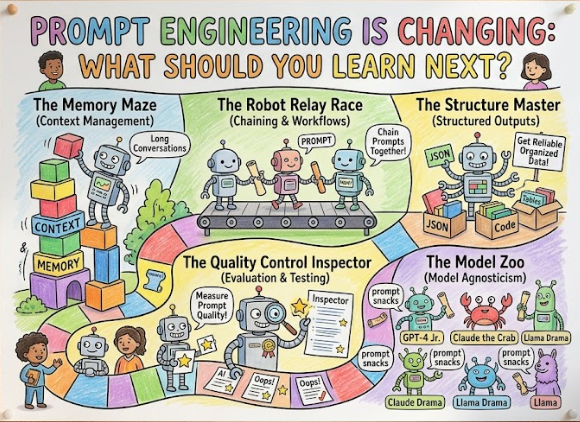
Context engineering – Managing what the AI knows about your project
-
Prompt engineering – Communicating effectively with underlying models
-
Code review, design patterns, testing, and documentation – These core skills still define good developers
-
System thinking – Understanding architectures and desired outcomes
What Leaders Must Do
Engineering leaders face new imperatives in the AI era:
1. Govern, Don't Just Deploy
"Generation outruns governance" is the central risk. AI doesn't fix or break software discipline on its own—it amplifies what's already there . Organizations need AI provenance tags in commits, code review checklists for AI-assisted code, and requirements for model selection and prompt retention .
2. Build Agentic Infrastructure
Running agents safely requires new infrastructure: sandboxed environments, model routing, cost tracking, and automated recovery. Many enterprises are stitching together half a dozen tools just to approximate this functionality .
3. Connect Spend to Outcomes
Median quarterly organizational AI spend climbed from ~$1,500 to ~$44,000 over four quarters—tech-sector spend increased nearly 28x. Leaders who cannot connect this investment to outcomes may face difficult budget conversations .
4. Prevent Skill Degradation
AI-assisted development risks skill degradation, complacency, and difficulty recovering from automation failures. Just as pilots train manually to maintain competency, organizations need policies for regular work without AI assistance .
Final Thought
AI is fundamentally reshaping software development—not by replacing developers, but by redefining their work. The evidence is clear: AI-generated code now represents a majority of production code in many organizations, productivity gains are real, but quality, security, and trust challenges demand attention .
AI rewards strong engineering; it doesn't replace it. The most effective developers will be those who can think systematically and communicate effectively with AI collaborators.
The software industry is expanding, not shrinking—but the skills that matter are shifting. Understanding system architecture, writing clear specifications, and validating AI output are becoming as important as writing code itself.
Contact Us
Phone: +91 9667708830
Email: info@codingnow.in
Website: https://codingnowai.in/
Address:
2nd Floor, Kapil Vihar (Opp. Metro Pillar No.354)
Pitampura, New Delhi – 110034
Backlink to main website: Explore Python and AI courses at Coding Now – Gurukul of Ai