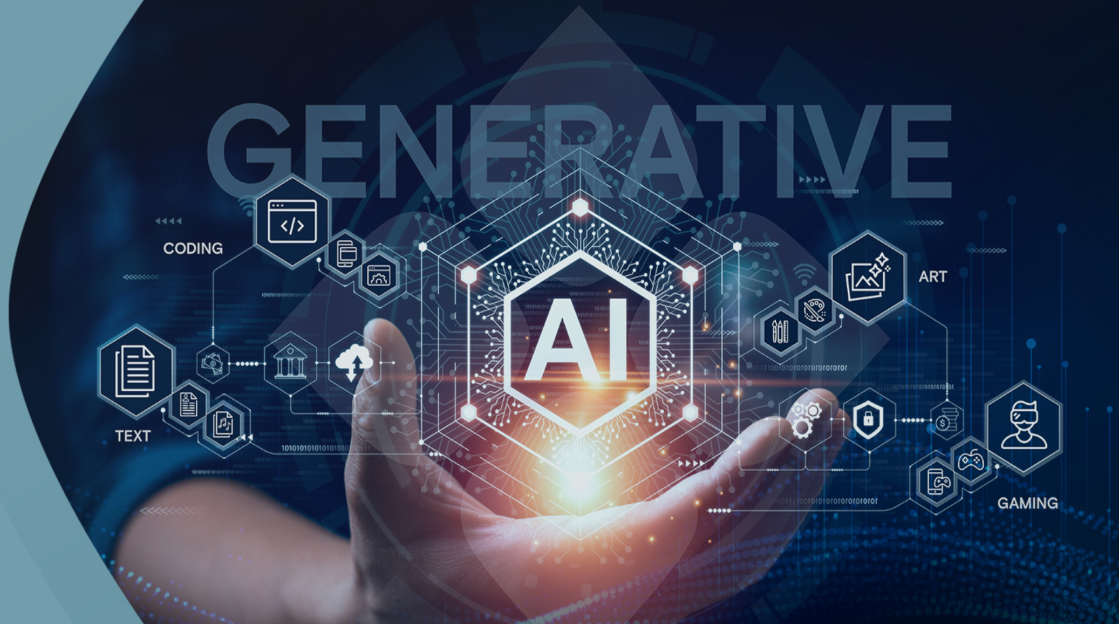
Generative AI Roadmap: What to Learn in 2026
Coding Now
17 Jun 2026 · 10 min read
Why Generative AI Matters in 2026
Generative AI is no longer experimental—it's becoming the foundation of modern business operations. From intelligent chatbots and AI-powered content creation to autonomous agents and workflow automation, organizations across industries are rapidly integrating Generative AI into their products and services.
The technology is evolving from simple text generation tools to sophisticated AI systems capable of reasoning, planning, and taking actions in real time.
For students and professionals, this presents a massive opportunity.
The demand for Generative AI engineers, AI product developers, and Agentic AI specialists has never been higher.
Whether you're a beginner or an experienced developer looking to upskill, this roadmap will guide you from foundational concepts to advanced Generative AI engineering.
Step-by-Step Generative AI Roadmap for 2026
Phase 1: Core Foundations (Month 1–2)
Before diving into Generative AI, build a strong foundation in programming and machine learning fundamentals.
What to Learn
Python Programming
-
Variables and Data Types
-
Conditional Statements and Loops
-
Functions and Modules
-
Object-Oriented Programming
-
File Handling
-
Working with APIs
Essential Python Libraries
-
NumPy
-
Pandas
-
Matplotlib
-
Seaborn
Mathematics Basics
-
Linear Algebra
-
Calculus Fundamentals
-
Probability
-
Statistics
-
Optimization Algorithms
-
Gradient Descent
-
SGD and Adam Optimizers
Machine Learning Fundamentals
-
Supervised Learning
-
Unsupervised Learning
-
Model Training
-
Model Evaluation
-
Overfitting and Underfitting
-
Bias-Variance Tradeoff
Data Handling
-
Data Cleaning
-
Data Manipulation
-
Exploratory Data Analysis
-
Data Visualization
Project
Build a Machine Learning model using a real-world dataset, such as:
Housing Price Prediction System
Phase 2: Deep Learning & Advanced Architectures (Month 3–4)
Deep Learning is the backbone of modern Generative AI systems.
What to Learn
Neural Networks
-
Multi-Layer Perceptrons (MLP)
-
Convolutional Neural Networks (CNN)
-
Recurrent Neural Networks (RNN)
-
LSTM
-
GRU
Transformers
-
Attention Mechanism
-
Encoder-Decoder Architecture
-
BERT
-
GPT
-
T5 Models
Deep Learning Frameworks
-
PyTorch
-
TensorFlow
-
Keras
Advanced Topics
-
Vision Transformers (ViTs)
-
Diffusion Models
-
Image Generation Architectures
GPU Training
-
PyTorch Lightning
-
Distributed Training
-
ONNX Runtime
Project
Build and train a Transformer model from scratch using PyTorch.
Phase 3: Generative AI Mastery (Month 5–6)
This is where you start working with technologies that power ChatGPT, Claude, Gemini, and Midjourney.
What to Learn
Large Language Models (LLMs)
-
How LLMs Work
-
Tokenization
-
Embeddings
-
Context Windows
-
Inference Mechanisms
Prompt Engineering
-
System Prompts
-
Few-Shot Learning
-
Chain-of-Thought Prompting
-
Structured Prompting
LLM Fine-Tuning
-
LoRA
-
QLoRA
-
PEFT
-
Domain Adaptation
Retrieval-Augmented Generation (RAG)
-
Document Ingestion
-
Chunking
-
Embeddings
-
Retrieval Pipelines
-
Reducing Hallucinations
Image and Video Generation
-
Stable Diffusion 3
-
ControlNet
-
Video Diffusion Models
Multimodal AI
-
CLIP
-
Vision-Language Models
-
LLaVA
-
Florence
Voice and Speech AI
-
Text-to-Speech Models
-
Automatic Speech Recognition
-
Whisper Models
-
Voice Cloning Systems
Project
Build a RAG pipeline using LangChain that answers questions from your own documents.
Phase 4: Agentic AI (Month 7–8)
Agentic AI is the fastest-growing skill in 2026.
Traditional chatbots generate responses.
Agents can:
-
Think
-
Plan
-
Take actions
-
Use tools
-
Adapt dynamically
What to Learn
Agent Architectures
-
ReAct
-
Reflexion
-
AutoGPT
Multi-Agent Systems
-
Agent Collaboration
-
Agent Communication
-
Role-Based Systems
Frameworks and Tools
-
LangGraph
-
CrewAI
-
AutoGen
-
Google Agent Frameworks
Memory and Tool Usage
-
Persistent Memory
-
Tool Calling
-
API Integration
-
Planning Systems
Agent Orchestration
-
Sequential Workflows
-
Parallel Workflows
-
Human-in-the-Loop Systems
-
Guardrails
Project
Build a Multi-Agent System that automates a business workflow:
Research → Content Writing → Editing → Social Media Posting
Phase 5: Deployment & Production (Ongoing)
Building AI models is important.
Deploying them in production is what makes you industry-ready.
What to Learn
Vector Databases
-
Chroma
-
Pinecone
-
Milvus
-
Weaviate
MLOps
-
Docker
-
Kubernetes
-
MLflow
-
CI/CD Pipelines
Cloud Deployment
-
AWS
-
Google Cloud Platform
-
Microsoft Azure
Advanced RAG
-
GraphRAG
-
Agentic RAG
API Security
-
Authentication
-
Permission Controls
-
Rate Limiting
-
Security Guardrails
Project
Deploy a full Generative AI application with RAG pipelines, monitoring, and production infrastructure.
Skills Required Before Starting
| Skill Area | What You Need |
|---|---|
| Python | Variables, loops, functions, NumPy, Pandas |
| Mathematics | Linear algebra, probability, statistics |
| Machine Learning | Supervised and unsupervised learning |
| Data Handling | Cleaning, analyzing, and visualizing data |
| Problem Solving | Logical thinking and experimentation mindset |
Can Non-Programmers Learn Generative AI?
Absolutely.
Many successful professionals in Generative AI come from backgrounds such as:
-
B.Com
-
BBA
-
Commerce
-
Marketing
-
Content Writing
-
Business Management
Modern AI platforms handle much of the technical complexity.
You can focus on:
-
Prompt Engineering
-
Business Applications
-
Workflow Automation
-
AI Product Development
Consistency and practical learning matter far more than your academic background.
Top Career Paths in Generative AI
| Job Role | Average Annual Salary (India) |
|---|---|
| AI Researcher | ₹25–40 LPA |
| AI Engineer | ₹12–25 LPA |
| AI Product Developer | ₹12–22 LPA |
| Machine Learning Engineer | ₹10–20 LPA |
| NLP Engineer | ₹10–18 LPA |
| Generative AI Engineer | ₹15–35 LPA |
| Agentic AI Engineer | ₹20–40 LPA |
Salary varies depending on skills, projects, experience, and company.
Key Industry Trends for 2026
Agentic AI
LLMs are evolving from assistants into autonomous contributors capable of completing complex tasks independently.
Hyper-Personalization
Companies are building AI systems customized to their specific data and business workflows.
Compound AI Systems
Modern applications are combining traditional software engineering with probabilistic reasoning from Large Language Models.
Data Governance
The focus is shifting from collecting data to ensuring quality, relevance, privacy, and ethical usage.
AgentOps
Monitoring, debugging, and orchestrating agents at scale is becoming a critical engineering skill.
AI Security
Prompt injection, credential theft, and agent hijacking are emerging challenges requiring robust security mechanisms.
Frequently Asked Questions
How long does it take to learn Generative AI?
With dedicated learning of 4–6 hours per day, you can become job-ready in approximately 6–8 months.
Structured training programs can accelerate this timeline.
What's the difference between Generative AI and Agentic AI?
Generative AI
Creates text, images, audio, and code based on prompts.
Agentic AI
Builds autonomous systems that can plan, reason, execute tasks, and adapt to achieve goals with minimal human intervention.
Which skills are most in-demand right now?
The top skills for 2026 include:
-
Prompt Engineering
-
Applied Machine Learning
-
Retrieval-Augmented Generation (RAG)
-
AI Agent Development
-
AI Governance and Security
Do I need traditional Machine Learning before Generative AI?
Yes.
Strong Machine Learning fundamentals make it significantly easier to understand:
-
LLM Training
-
Fine-Tuning
-
Model Evaluation
-
Deployment
-
Optimization
Start with Python and Machine Learning, then move into Generative AI and Agentic AI.
Ready to Become a Generative AI Engineer?
Join Coding Now – Gurukul of AI and become industry-ready through:
Hands-on Projects
Live Mentorship
Industry-Focused Curriculum
Internship Opportunities
Placement Assistance
Real-World Generative AI Applications
Enroll Now — Free Demo Available
Related Articles
-
From LLMs to Agents: The 2026 Generative AI Roadmap
-
Top 10 Skills Every AI Engineer Must Learn in 2026
-
How to Start Your Career in Artificial Intelligence After College
-
Python + AI: Why This Combination Is Future-Proof
India's Premier AI & Full Stack Training Institute—bridging the gap between education and industry through practical learning, real-world projects, and expert mentorship.
📍 2nd Floor, Kapil Vihar, Opp. Metro Pillar No. 354, Pitampura, New Delhi – 110034
📞 +91 7464099059
✉️ info@codingnowai.in
🕐 Mon – Sat: 9:00 AM – 7:00 PM
© 2026 Coding Now – Gurukul of AI. All Rights Reserved.