AI Engineering: Building the Future with Intelligence
Introduction
Artificial Intelligence (AI) is no longer just a futuristic concept seen in science fiction movies. Today, AI powers recommendation systems, virtual assistants, self-driving cars, fraud detection systems, and even creative tools like ChatGPT and image generators. Behind these innovations are professionals known as AI Engineers, who design, build, and deploy intelligent systems that solve real-world problems.
As businesses increasingly adopt AI-driven solutions, the demand for skilled AI engineers is growing rapidly. According to industry reports, AI engineering is among the fastest-growing and highest-paying technology careers worldwide. But what exactly does an AI engineer do, and how can someone become one? Let's explore.
Who is an AI Engineer?
An AI Engineer is a software professional who develops applications and systems capable of performing tasks that normally require human intelligence. These tasks include learning from data, understanding language, recognizing images, making predictions, and automating decision-making processes.
AI engineers combine knowledge from software engineering, machine learning, mathematics, and data science to create intelligent products and services. They transform complex algorithms and research concepts into practical applications that can be used by businesses and consumers.
Roles and Responsibilities of an AI Engineer
The responsibilities of an AI engineer vary depending on the organization and project requirements. However, some common responsibilities include:
1. Data Collection and Preparation
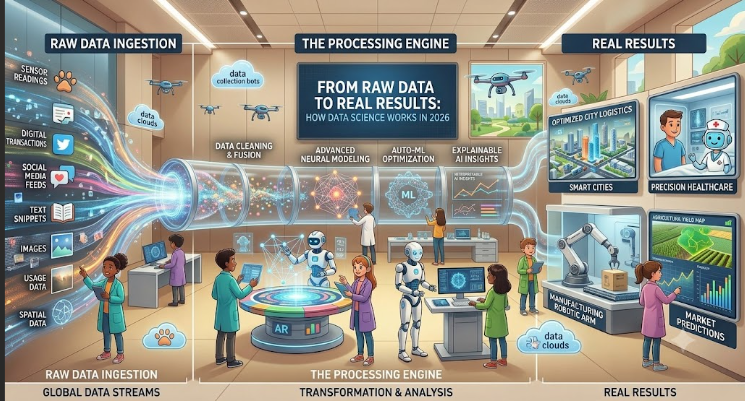
Data is the foundation of every AI system. AI engineers gather, clean, and process large amounts of data to ensure models receive high-quality information.
2. Developing Machine Learning Models
AI engineers design and train machine learning models that can identify patterns and make predictions from data.
3. Building Generative AI Applications
Modern AI engineers work with Large Language Models (LLMs) and Generative AI technologies to build chatbots, virtual assistants, content generators, and intelligent automation systems.
4. Model Deployment
Creating an AI model is only half the work. AI engineers deploy models into production environments where they can interact with real users and applications.
5. Monitoring and Optimization
AI systems require continuous monitoring and improvement to ensure accuracy, reliability, and performance.
Essential Skills Required to Become an AI Engineer
Programming Skills
Python is the most popular programming language in AI because of its simplicity and extensive libraries. Important libraries include:
-
NumPy
-
Pandas
-
Scikit-learn
-
TensorFlow
-
PyTorch
-
Transformers
Mathematics and Statistics
AI engineers should understand:
-
Linear Algebra
-
Probability and Statistics
-
Calculus
-
Optimization Techniques
These concepts help in understanding how machine learning algorithms work.
Machine Learning Fundamentals
Key machine learning concepts include:
-
Supervised Learning
-
Unsupervised Learning
-
Reinforcement Learning
-
Model Evaluation
-
Feature Engineering
Deep Learning
Deep learning enables computers to process complex information such as images, speech, and natural language. Important topics include:
-
Artificial Neural Networks
-
Convolutional Neural Networks (CNNs)
-
Recurrent Neural Networks (RNNs)
-
Transformers
Generative AI and Large Language Models
The AI industry is rapidly shifting toward Generative AI. Modern AI engineers should understand:
-
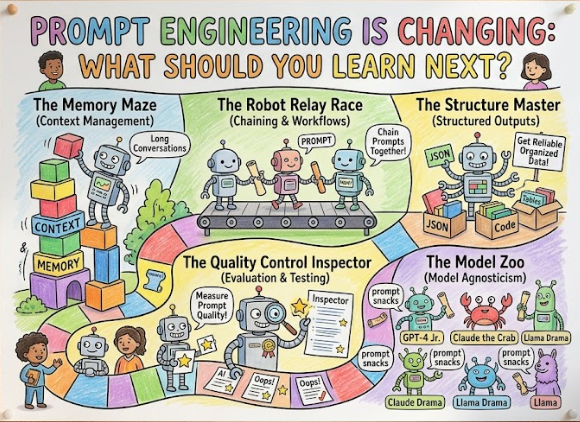
Prompt Engineering
-
Embeddings
-
Vector Databases
-
Retrieval-Augmented Generation (RAG)
-
AI Agents
-
Fine-Tuning Models
-
Multi-Agent Systems
Cloud and Deployment Skills
AI applications often run on cloud platforms. Useful technologies include:
-
Docker
-
FastAPI
-
AWS
-
Microsoft Azure
-
Google Cloud Platform
A Roadmap to Becoming an AI Engineer
Step 1: Learn Python
Master Python fundamentals, data structures, and object-oriented programming.
Step 2: Learn Mathematics and Statistics
Build a strong foundation in linear algebra, probability, and statistics.
Step 3: Understand Data Analysis
Learn how to work with datasets using Pandas and NumPy.
Step 4: Study Machine Learning
Learn machine learning algorithms and build predictive models.
Step 5: Learn Deep Learning
Understand neural networks and frameworks such as TensorFlow and PyTorch.
Step 6: Explore Generative AI
Study Large Language Models, prompt engineering, and RAG architectures.
Step 7: Build Real Projects
Projects help transform theoretical knowledge into practical skills.
Examples include:
-
PDF Chatbot using RAG
-
AI Resume Analyzer
-
Customer Support Chatbot
-
AI Code Assistant
-
Document Question-Answering System
-
Multi-Agent Research Assistant
Step 8: Deploy Applications
Learn deployment tools and create production-ready applications.
Why AI Engineering is the Career of the Future
Artificial Intelligence is transforming every industry:
Healthcare
AI assists doctors in disease detection and personalized treatment recommendations.
Finance
Banks use AI for fraud detection, risk management, and customer support.
Education
AI-powered learning platforms provide personalized educational experiences.
E-Commerce
Recommendation systems and intelligent chatbots improve customer experiences.
Manufacturing
AI enables predictive maintenance and smart automation.
Because of these applications, companies across industries are actively hiring AI professionals capable of building intelligent systems.
Challenges in AI Engineering
Although AI engineering is exciting, it also presents challenges:
-
Handling large and complex datasets
-
Managing computational resources
-
Ensuring model fairness and ethical AI practices
-
Addressing privacy and security concerns
-
Continuously learning new technologies due to rapid advancements
These challenges make AI engineering a dynamic and intellectually rewarding field.
Conclusion
AI engineering is more than just writing code. It involves solving complex problems, building intelligent systems, and creating technologies that can positively impact millions of people. From machine learning and deep learning to Generative AI and AI agents, the field offers endless opportunities for innovation and growth.
For students and professionals entering technology today, AI engineering represents one of the most promising and impactful career paths. By developing strong programming skills, understanding machine learning concepts, and continuously building real-world projects, anyone with curiosity and dedication can begin their journey toward becoming an AI engineer.
The future belongs to those who can build intelligent systems—and AI engineers are leading that transformation.
Pitampura, New Delhi – 110034