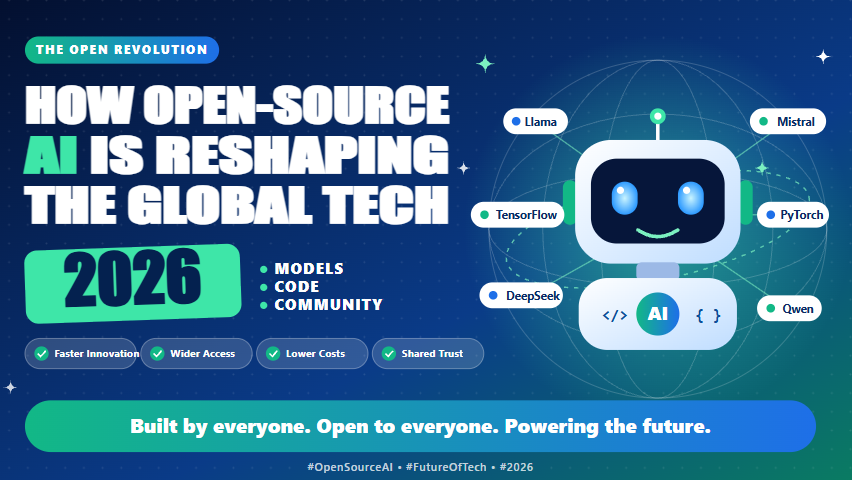
The Big Question: Is Open-Source AI Finally Eating the World, or Just the Low End?
Let me be direct about what the data shows and what it doesn't.
On one side, the adoption numbers are staggering. Chinese open models surpassed 10 billion cumulative downloads globally . On OpenRouter, Chinese models' token usage exceeded US models for 27 consecutive weeks through early November . Menlo Ventures found that of the money US enterprises spend on open-source models, 89% flows to Chinese providers—Kimi at 61%, DeepSeek at 15%, Zhipu's GLM at 11% . Even Silicon Valley startups are voting with their code: Andreessen Horowitz reported that as many as 80% of AI startups seeking funding use Chinese open models .
But here's the nuance that gets lost. Open-source models represent just 4% of total enterprise AI model spending, despite accounting for 19% of token usage . Proprietary APIs from Anthropic and OpenAI still capture 86% of API spending . The money is still overwhelmingly closed-source. The usage is shifting open.
So the real question isn't whether open-source is winning. It's this: Can the economics of open-source AI sustain itself when usage explodes but revenue stays thin? Mozilla's research found open models account for 20% of token volume but only 4% of revenue . The benefits flow to adopters. The costs of maintenance flow to a small number of maintainers. That imbalance is the defining tension of the open-source AI era.
And there's a second question underneath it: what does "open-source" even mean when most "open" models release weights but not training data or full code? The Open Source Initiative's definition requires parameters, complete training and inference code, and enough data information to rebuild a substantially equivalent system . By that standard, many popular "open" models are open-weight, not open-source. That distinction matters more than most developers realize.
The Open-Source AI Landscape: Who's Actually Building What
China's open model ecosystem is not a monolith. Qwen (Alibaba), DeepSeek, Kimi (Moonshot), and GLM (Zhipu) each occupy different niches. Qwen's strength is breadth and licensing: over 460 open models, Apache 2.0 across the board, derivatives growing at 180–210 per day . DeepSeek's strength is raw efficiency and developer mindshare—it led OpenRouter's text request share at 29.8% in early November . Kimi's strength is enterprise trust and scale: its flagship K3 model packs 2.8 trillion parameters, making it the largest open model currently available .
The licensing difference is structural. Among 178 Chinese models released in 2026 with over 20 billion parameters, 59% used Apache 2.0 and 22% used MIT—none carried non-commercial restrictions. Among comparable US releases, only 29% used those permissive licenses, 41% used custom terms, and 30% declared no license at all . That permissiveness is why derivatives proliferate. Developers can build, modify, and commercialize without legal friction. That's not a minor detail. It's the entire mechanism of ecosystem growth.
The OSI's definition is doing quiet work. The Open Source AI Definition (OSAID 1.0), finalized in late 2024, drew a line: weights alone don't make a model open-source . You need the code, the data information, the ability to meaningfully modify. Models like Llama 2, Grok, and Mixtral were evaluated and found not to qualify . That standard isn't universally enforced—the market mostly ignores it—but it gives enterprises and governments a vocabulary for distinguishing genuine openness from marketing. As procurement policies increasingly favor open-source defaults, that vocabulary will matter .
The infrastructure layer is consolidating around open. ModelScope, China's largest AI open-source community, now serves over 33 million developers from 239 countries . Hugging Face remains the global hub, but the center of gravity for open model releases has shifted eastward. That's not a political statement. It's an observation about where the frontier of freely available capability now lives.
Why This Shift Matters for Enterprises and Developers
Cost is the obvious driver, but control is the deeper one. Open models let enterprises run inference on their own infrastructure, keep sensitive data inside their perimeter, and avoid dependency on a single vendor's pricing or policy decisions . For regulated industries—healthcare, finance, government—that control isn't a nice-to-have. It's a compliance requirement. When a model is hosted by a US provider subject to export controls or policy shifts, the risk of disruption is real. Open weights eliminate that specific risk, though they introduce others (maintenance, security, talent).
The performance gap is closing faster than expected. Mozilla's research found open models approaching parity on coding tasks, with some measures showing just a 3% gap . For many enterprise use cases—document classification, summarization, retrieval-augmented generation, customer support routing—the "good enough" open model is genuinely good enough. The frontier models remain better at complex reasoning. But the frontier is a smaller slice of total demand than the hype suggests.
The talent implication is significant. When Cursor built its Composer 2 model, it fine-tuned Moonshot's Kimi K2.5 on code-heavy datasets rather than building from scratch . That's the new pattern: adapt, don't invent. Developers who understand how to fine-tune, quantize, and deploy open models have a skill set that's increasingly valuable and increasingly portable. You're not locked into one vendor's SDK or API semantics. You're working with weights you can inspect, modify, and run anywhere.
But the sustainability question lingers. The maintainers of the most-downloaded open models often see little direct revenue. If usage grows 22.5x while prices drop two-thirds, as Menlo's data shows, the economics for model creators tighten . Some will monetize through hosted services, enterprise support, or proprietary add-ons. Others may pull back. The open ecosystem's long-term health depends on finding a balance between adoption and sustainability that doesn't currently exist.
Pro Tips for Building with Open-Source AI in 2026
1. Check the license, not the label. "Open-weight" and "open-source" are not the same thing. If you need to modify, redistribute, or build a commercial product without restrictions, verify the actual license terms. Apache 2.0 and MIT are your friends. Custom licenses with commercial restrictions are not.
2. Start with Qwen or DeepSeek for prototyping. Both have broad model families, permissive licenses, and active derivative communities. You'll find more examples, more fine-tuning guides, and more community support than with smaller or newer releases.
3. Budget for fine-tuning, not just inference. The raw model is free. The expertise to adapt it to your domain, evaluate it properly, and deploy it at scale is not. Factor in the cost of data preparation, training runs, and ongoing evaluation.
4. Build abstraction into your stack. Don't hardcode yourself to a single model provider, open or closed. Use routing layers that let you swap models as pricing, performance, or availability changes. The open ecosystem's strength is optionality. Preserve it.
5. Watch the OSI definition as a procurement signal. If you're selling into government, education, or regulated enterprises, the OSAID distinction between open-weight and open-source will increasingly appear in RFPs and vendor evaluations. Being able to speak that language is a competitive advantage .
Questions Every CTO Should Ask About Open-Source AI
"What's our actual dependency risk if our primary model provider changes terms?" Open weights reduce vendor lock-in for inference, but fine-tuning dependencies and tooling ecosystems can still create gravity.
"Can we audit the model we're deploying?" If the answer is "we downloaded the weights and hope for the best," you're not auditing. You're trusting. For high-stakes applications, demand data information and training code, not just weights.
"What's the total cost of ownership versus a proprietary API?" The model is free. The GPU time, the MLOps tooling, the evaluation pipelines, and the talent to run them are not. Do the math honestly.
"Are we contributing back?" The open ecosystem depends on reciprocity. If you're building on Qwen or DeepSeek, consider upstreaming improvements, sharing evaluation results, or at minimum, being a good citizen in the community. The commons only survives if people tend it.
Why This Matters for the Next Generation of Builders
At CodingNow, we train people to build with AI, not just talk about it. The open-source shift changes what that training needs to cover. It's not enough to know how to call an API. You need to understand model weights, fine-tuning workflows, licensing implications, and the trade-offs between closed convenience and open control.
The builders who thrive in the next five years will be the ones who can navigate both worlds—using proprietary models where they're the right fit, and deploying open models where control, cost, or customization demand it. That's not a ideological stance. It's a practical skill set.
You can explore our AI engineering and deployment programs at https://codingnowai.in/ .
Frequently Asked Questions
Is open-source AI actually free?
The weights are free to download and use under permissive licenses. The infrastructure to run them, the talent to fine-tune them, and the time to evaluate them are not. For many enterprises, the total cost of ownership of an open model is comparable to or higher than a proprietary API, depending on scale and expertise. The "free" is in the license, not the deployment.
Why are Chinese models dominating open-source adoption?
Three factors: permissive licensing (Apache 2.0 and MIT across most releases), consistent release cadence across model sizes, and genuine capability at the frontier . The ecosystem effect compounds—more derivatives attract more developers, which attract more derivatives. US labs have focused more on proprietary API monetization, leaving the open frontier largely to Chinese labs.
Does open-source AI mean I can do whatever I want with the model?
Depends entirely on the license. Apache 2.0 and MIT allow commercial use, modification, and redistribution. Custom licenses may restrict commercial use or require attribution. Always check the specific terms. "Open-weight" on Hugging Face does not automatically mean "do whatever you want."
What's the difference between open-weight and open-source AI?
Open-weight means the trained parameters are available. Open-source, per the OSI definition, requires the parameters, the complete training and inference code, and enough data information to rebuild a substantially equivalent model . Most "open" models are open-weight only. That distinction matters for auditability, reproducibility, and regulatory compliance.
Will open-source AI replace proprietary models entirely?
No. The economics don't support that. Proprietary APIs capture 86% of enterprise spending because they offer convenience, support, and frontier capability that open models don't match on every task . The future is hybrid: open models for control, cost, and customization; proprietary models for convenience and cutting-edge performance. The balance will shift by use case, not by ideology.