Cybersecurity in 2026: AI, Geopolitics, and the New Threat Landscape
The cybersecurity landscape has undergone a seismic shift entering 2026. We are no longer in an era of human-speed hacking; we are moving to machine-speed attacks, where vulnerabilities can be weaponized and attacks launched within hours thanks to AI-powered toolchains . Cyber risk is becoming systemic as AI acceleration, geopolitical fragmentation, and cyber-enabled fraud converge faster than organizations can adapt .
This article explores the key trends reshaping cybersecurity in 2026, the threats organizations must prioritize, and actionable steps to build resilience.
The Three Forces Reshaping Cybersecurity
1. AI Is Supercharging the Cyber Arms Race
According to the World Economic Forum's Global Cybersecurity Outlook 2026, 94% of respondents identified AI as the most significant driver of change in cybersecurity . However, the nature of AI risk is shifting. For the first time, data leaks linked to generative AI (34%) now outweigh fears about adversarial AI capabilities (29%) as the top concern . In 2025, the reverse was true—47% worried about adversarial AI versus only 22% about data leaks .
This marks a turning point: while the "AI arms race" between attackers and defenders continues to intensify, attention is pivoting toward the unintended exposure and misuse of sensitive data through generative and agentic systems .
Key AI-related threats in 2026 include:
-
Risky AI prompts increased by 97% in 2025, and 40% of analyzed Model Context Protocols (MCPs) were found vulnerable
-
Prompt injection attacks can redirect AI-enabled systems to leak data, bypass controls, or execute harmful actions
-
AI-generated phishing now uses real logos, perfect grammar, and even previous email threads to make messages look 100% legitimate
-
Frontier AI systems can autonomously discover software vulnerabilities, analyze source code, and chain together multi-stage attacks at a scale previously requiring teams of skilled human experts
AI-enabled defensive tools are also advancing—77% of organizations have adopted AI for cybersecurity, primarily for phishing detection, intrusion response, and user-behavior analytics . However, insufficient knowledge and skills (54%) remain the primary barrier to effective implementation .
2. Geopolitics Is a Defining Feature of Cybersecurity
Geopolitics has become a defining force shaping cybersecurity in an increasingly fragmented global environment . Some 64% of organizations are now accounting for geopolitically motivated cyberattacks, such as disruption of critical infrastructure or espionage .
Key geopolitical cybersecurity trends:
-
Confidence in national cyber preparedness is slipping. Only 31% of respondents report low confidence in their nation's ability to respond to major cyber incidents—up from 26% in 2025—with stark regional divides
-
Chinese-nexus cyber operations are industrialized and global by design, using edge and perimeter infrastructure as primary footholds with routine zero-day weaponization
-
Threat activity increasingly mirrors real-world geopolitical tensions, with cyber operations synchronized to physical and political events
3. Cyber-Enabled Fraud Has Overtaken Ransomware
This is perhaps the most startling shift: 73% of survey respondents reported that they or someone in their network had been personally affected by cyber-enabled fraud in 2025 . CEOs now rate cyber-enabled fraud as their top concern, shifting focus from ransomware .
Regionally, sub-Saharan Africa leads the trend with 82% exposure to digital scams, followed by North America at 79% .
Top Threats Facing Organizations in 2026
AI-Driven Social Engineering and Deepfakes
AI has made social engineering attacks dramatically more convincing. Threat actors can create realistic audio and video deepfakes that impersonate executives—one deepfake attack reportedly resulted in a $25 million loss after an employee was deceived by a real-time, interactive deepfake video of their CFO . AI systems can automate large-scale campaigns by generating numerous unique, targeted messages using social media and leaked data analysis .
Supply Chain Attacks
The 2025 Shai-Hulud worm compromised 18 widely-used JavaScript packages with over 2.6 billion combined weekly downloads—by November, a variant had spread to approximately 700 packages, affecting organizations like Zapier and Postman . The attack used phishing to steal credentials and injected itself into every package those maintainers controlled .
The lesson? Users trusted the latest commit to third-party code without justification . Supply chain exposure now ranks as the top cyber risk concern among high-resilience organizations .
The Disappearing Perimeter
Perimeter security is dead—or at least should be treated as such . Most attacks now have no problem traversing firewalls via port 443 TLS-secured traffic (like HTTPS), while organizations neglect foundational imperatives like software update management and secure access controls . Routers, VPNs, firewalls, and cloud-exposed services have become high-value entry points .
Identity Compromise as the Primary Attack Vector
Identities—both human and non-human (service accounts, API keys, OAuth tokens)—have become the primary attack surface . Threat actors are weaponizing trusted enterprise platforms like Microsoft Teams, Zoom, and Quick Assist to bypass defenses. In one campaign, attackers impersonated IT staff through fake Microsoft tenants and convinced users to grant Quick Assist access, enabling privilege enumeration and multi-stage malware execution .
DNS Tunneling and Encryption-Less Ransomware
DNS traffic often travels freely across network perimeters. Attackers exploit this through DNS tunneling—embedding data or commands within DNS queries to bypass security measures . Similarly, encryption-less ransomware attacks involve stealing sensitive information without encrypting files, threatening to publish it unless a ransom is paid. These attacks operate undetected for longer periods using tools like remote access Trojans .
What Security Teams Are Seeing in Practice
Based on real-world observations throughout 2025, researchers identified several consistent conditions across environments :
-
Continuous exposure created by misconfigurations, identity weaknesses, and unmanaged assets
-
Increased reliance on identity-based access paths in intrusion activity
-
Measurable risk introduced by ungoverned AI usage
-
Attack paths spanning cloud, edge, SaaS, and on-prem environments
-
Unmonitored devices (routers, gateways, VPN appliances) as high-value entry points with delayed detection due to limited monitoring
Recommendations for Building Cyber Resilience
For Organizations
CERT-In (India's national cybersecurity agency) has issued comprehensive guidance for defending against frontier AI-driven cyber risks :
1. Maintain Heightened Vigilance
-
Increase frequency of monitoring, threat detection, and system log reviews
-
Review and reduce internet-exposed attack surfaces
-
Adjust monitoring tools to look for unusual or unusually fast activity indicating AI-driven attacks
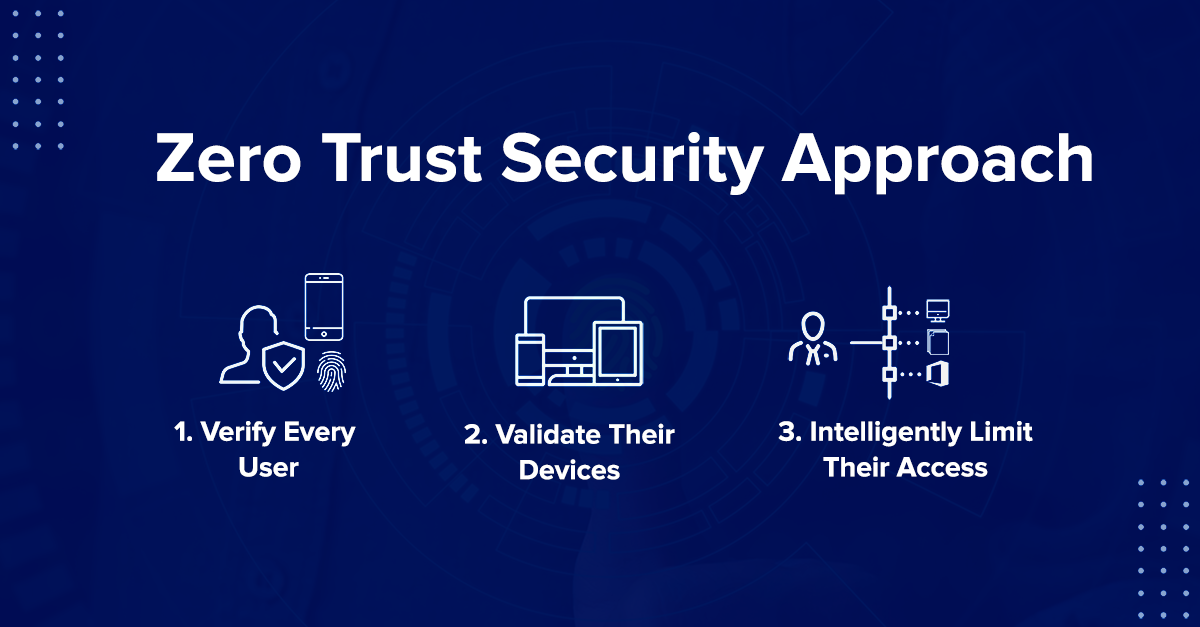
2. Apply Zero Trust Principles
-
Treat every access request as untrusted by default
-
Grant users and systems only minimum required access
-
Assume a breach may already have occurred
-
Enforce phishing-resistant MFA using FIDO2/WebAuthn passkeys—legacy MFA is no longer sufficient
3. Accelerate Patch Management
-
Treat every newly disclosed critical vulnerability as exploitable within hours
-
Apply patches on internet-facing systems within 24 hours of release
-
Maintain up-to-date inventory of IT assets and software
4. Manage Supply Chain Risks
-
Require suppliers to demonstrate how they are preparing for faster exploit timelines
-
Use tools like OpenSSF Scorecard to assess open-source dependencies
-
Track software bills of materials (SBOMs)
5. Secure Cloud and Container Environments
-
Continuously check for misconfigurations
-
Disable unused services, ports, and protocols
-
Encrypt data at rest and in transit
For Individual Users
With advanced AI tools capable of discovering and exploiting vulnerabilities, individual users are now part of the frontline :
-
Exercise caution with unsolicited emails, messages, and links—especially those creating urgency
-
Verify authenticity of voice calls, video messages, and urgent financial requests
-
Enable automatic updates on all devices and applications
-
Use strong, unique passwords with multi-factor authentication everywhere possible
-
Be skeptical of "too good to be true" offers—AI can generate realistic scams
Looking Ahead
As one cybersecurity expert noted: "The only constant is change" and "The more things change, the more they stay the same" . While cyber threats continue to evolve with AI and supply chain complexity, effective defenses remain rooted in rigorous engineering and good security practices: strict access control, strong authentication, rapid vulnerability management, security by design, and limited trust .
Cybersecurity is not merely an IT function—it is a strategic business imperative and a cornerstone of economic resilience . In a deeply interconnected digital economy, resilience cannot be built in isolation. Progress depends on coordinated action across sectors, borders, and value chains .
Key Takeaways
| Threat Category | 2026 Reality |
|---|---|
| AI Threats | 94% say AI is the biggest driver of change; data leaks now top concern |
| Cyber Fraud | 73% affected personally; CEOs' top concern |
| Geopolitics | 64% accounting for geopolitically motivated attacks |
| Supply Chain | Top concern among high-resilience organizations |
| Identity | Primary attack vector; legacy MFA insufficient |
| Perimeter |
Effectively dead; act like there's no parimeter |
Contact Us
Phone: +91 9667708830
Email: info@codingnow.in
Website: https://codingnowai.in/
Address:
2nd Floor, Kapil Vihar (Opp. Metro Pillar No.354)
Pitampura, New Delhi – 110034
Backlink to main website: Explore AI Engineering Diploma and other courses at Coding Now – Gurukul of AI