The Human Element in an AI-Driven B2B World
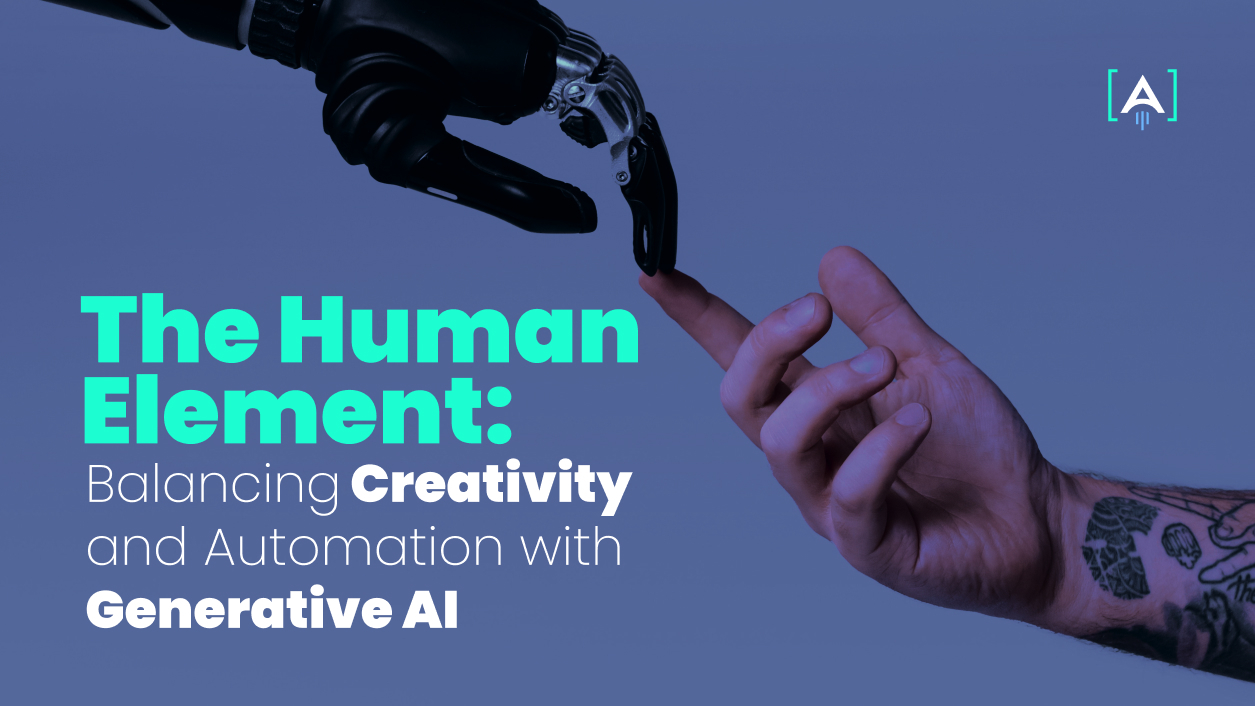
The B2B landscape is undergoing a fundamental transformation, and it's not about AI replacing people. 91% of marketers now actively use AI in their work, but the brands making the biggest impact are those putting human voices at the center of their strategy . The central insight from current research is clear: the more we embrace AI, the more human we must become .
Why Human Voices Matter More Than Ever
AI has made content production effortless. But when everyone can generate polished content at scale, generic messaging becomes invisible. Buyers are overwhelmed with product-centric, AI-generated sameness, and they're increasingly turning to people they trust to make sense of complex topics .
The data is compelling. According to LinkedIn and Edelman research, nearly three in four B2B decision-makers say thought leadership is a more trustworthy way to assess a company's capabilities than product sheets or marketing materials . A vast majority of stakeholders (95%) say strong thought leadership makes them more open to outreach .
This shift is part of a broader paradox identified in Dentsu Creative's 2025 Global CMO Report: while 71% of CMOs agree that "if I don't win with the algorithm, I will be invisible," 79% fear that over-optimization for algorithms risks creating a "sea of sameness" . The antidote? Winning "share of culture" rather than just "share of voice" .
The Creator-Led B2B Revolution
Creators are becoming the new word-of-mouth in B2B. Nearly six in 10 buyers discover new brands through creator content, and about two-thirds say creator perspectives help them evaluate options and separate real solutions from noise . Importantly, 82% of B2B buyers say content directly influences their decisions, and 87% prefer credible content from industry influencers .
What makes creator content so effective? When an industry expert—whether founder, operator, or practitioner—explains how they think, what they've learned, or what they would avoid, that perspective carries a weight that polished brand copy simply cannot match . As one industry observer puts it: "Lived-in beats polished" .
The shift is reflected in budget priorities as well. Nine in ten CMOs believe social and influencer content now drives greater engagement than traditional advertising, with 91% agreeing that brands are increasingly built through partnerships with creators and cultural tastemakers—a 14 percentage point increase year over year .
Building a People-First Ecosystem: Four Key Players
Modern B2B thought leadership requires a mix of voices across four key groups :
-
Creators – Community members who build engagement through educational, storytelling-driven content
-
Influencers – Voices who leverage established credibility to shape buying decisions
-
Employees – Often underutilized, yet employees' combined networks are roughly 12 times larger than a company's own following. When employees share their real experiences, they become some of the most credible voices a brand has
-
Executives – Internal experts who shape the narrative and signal strategic direction
The key is not treating these as separate tactics but as an integrated ecosystem where external voices bring reach and fresh perspectives while internal voices make the narrative feel grounded in day-to-day reality .
Practical Principles for Implementation
Based on current best practices, here are five focal points for building a human-centered B2B thought leadership program :
1. Prioritize fit over follower count. The most impactful creators are the ones your buyers already respect—operators and niche experts with genuine subject-matter depth .
2. Activate people already close to the work. Invest in helping your internal experts show up confidently through writing support, video coaching, or simple content prompts .
3. Create with people, not for them. Scripts and overly controlled talking points drain authenticity. Give clear guardrails and context, then trust creators to speak in their own voice .
4. Use paid to scale what's working. Organic reach only goes so far. Promote authentic creator posts to the audiences that matter most .
5. Lean into video. Short-form video uploads have grown sharply, and buyers say video is one of the formats that most influences their decisions. When buyers can see and hear the person behind the perspective, it collapses distance—it feels less like marketing and more like a conversation .
The Hybrid-Human Future
Forrester's analysis of the B2B landscape frames the challenge as an alignment problem, not an adoption problem. The future of go-to-market isn't human versus AI; it's a hybrid approach where AI handles the heavy lifting while humans guide strategy, creative direction, and judgment .
This hybrid model is becoming clearer: AI handles first drafts, keyword research, audience segmentation, and performance analysis. Human marketers shape the strategy, define the voice, interrogate the brief, and make the
The Human Element in an AI-Driven B2B World
The corporate blog—once the engine of inbound marketing—is dying. And AI is the one holding the smoking gun .
For years, the playbook was simple: identify high-volume keywords, produce a comprehensive guide, and watch the organic traffic roll in. But when Generative AI floods the internet with perfectly average content at scale, the value of the standard blog post has cratered . The brands still winning aren't the ones trying to out-AI the AI. They're the ones putting human voices at the center of their strategy.
The Paradox of AI: More Human, Not Less
Here's the central insight shaping B2B marketing right now: the more we embrace AI, the more human we must become.
When everyone has access to the same AI tools, generic messaging becomes invisible . Buyers are overwhelmed with AI-generated sameness—grammatically flawless but intellectually vacant content . As one industry observer puts it, readers have developed an intuitive "AI-filter"; they can sense the repetitive structures and hedging language of an unedited LLM from the first sentence . When a reader senses AI-laziness, brand trust evaporates instantly.
Brian Solis, Head of Global Innovation at ServiceNow, argues that AI should be treated as a "forcing function for reinvention" rather than a tool for incremental efficiency. "AI-generated sameness makes human creativity and perspective more valuable than ever" .
Why Human Voices Cut Through the Noise
The data is compelling. According to LinkedIn and Edelman research, nearly three in four B2B decision-makers say thought leadership is a more trustworthy way to assess a company's capabilities than product sheets or marketing materials . A vast majority—95%—say strong thought leadership makes them more open to outreach.
But here's what's changed: thought leadership is becoming "people-powered." Buyers increasingly trust insights from individual creators and internal experts over polished brand messaging . As Rebekah Thomas writes, "People trust their peers more than brands. Human influence based on emotions, experience and trust can create connections that go a lot deeper than what a brand can sell" .
The Creator-Led B2B Revolution
82% of B2B buyers say content directly influences their decisions, and 87% prefer credible content from industry influencers . That's why we're seeing a shift toward "creator-led" B2B marketing:
-
Nearly six in 10 buyers discover new brands through creator content
-
67% of B2B marketers believe influencer campaigns had more impact on performance than brand-only marketing
-
49% agree that influencers boost credibility
What makes creator content so effective? When an industry expert—whether founder, operator, or practitioner—explains how they think, what they've learned, or what they would avoid, that perspective carries a weight that polished brand copy simply cannot match. As one observer puts it: "Lived-in beats polished" .
Building a "Trust Architecture"
The most forward-thinking B2B companies are building what Norwest's Gail Moody-Byrd calls a "trust architecture"—a deliberate network of trusted voices that strengthens visibility, builds credibility, and ultimately drives pipeline .
This ecosystem includes four key players:
-
Creators – Community members who build engagement through educational, storytelling-driven content
-
Influencers – Voices who leverage established credibility to shape buying decisions
-
Employees – Their combined networks are roughly 12 times larger than a company's own following. When employees share their real experiences, they become some of the most credible voices a brand has
-
Executives – Internal experts who shape the narrative and signal strategic direction
The key is not treating these as separate tactics but as an integrated ecosystem where external voices bring reach and fresh perspectives while internal voices make the narrative feel grounded in day-to-day reality .
What This Means for Your Content Strategy
The blogs that are failing today are the ones trying to beat AI at its own game: producing fast, efficient summaries of existing information. You cannot out-summarize an LLM .
To win, you must:
Stop writing for keywords and start writing for "information gain." Every post should contain a "Value Moat"—proprietary research, internal benchmarks, or a technical breakdown of a failed project . When AI models synthesize answers, they'll cite you as the authority.
Lead with "the friction." AI is programmed to be helpful and neutral. A successful blog in 2026 is often opinionated . If the industry standard is moving toward "Centralized Data" and you believe that's a mistake, write the manifesto on why. Contention generates engagement; neutrality generates a "Back" button click.
Activate the people close to the work. Stop asking generic content writers to research topics they don't understand. Instead, use them as journalists. Have them interview your engineers, sales reps, or CEO for 15 minutes. The final output will contain "scars"—real-world anecdotes and "ugly" truths that an LLM would never hallucinate because they're grounded in your company's unique reality .
Create content that can't be automated. AI can generate a 1,000-word essay in seconds, but it cannot easily generate a custom-coded interactive calculator, a high-fidelity video interview with a recognized industry leader, or a proprietary dataset visualization . Every Tier 1 piece of content should include a non-textual element that makes it valuable and memorable.
The Bottom Line
Success today isn't measured by page views—it's measured by the referral loop. Does your content get shared in private Slack communities? Does it get cited in AI research prompts? Does your sales team use it to close deals?
As Forrester puts it: "The future of B2B GTM isn't human versus AI. It's a hybrid approach where AI handles the heavy lifting while humans guide strategy, creative direction, and judgment" . The future belongs to brands that pair intelligent technology with human insight, originality, and empathy.
Because in an AI-driven world, the most powerful thing a brand can be is understood—and that takes a human touch.
Contact Us
Phone: +91 9667708830
Email: info@codingnow.in
Website: https://codingnowai.in/
Address:
2nd Floor, Kapil Vihar (Opp. Metro Pillar No.354)
Pitampura, New Delhi – 110034
Backlink to main website: Explore Python and AI courses at Coding Now – Gurukul of Ai