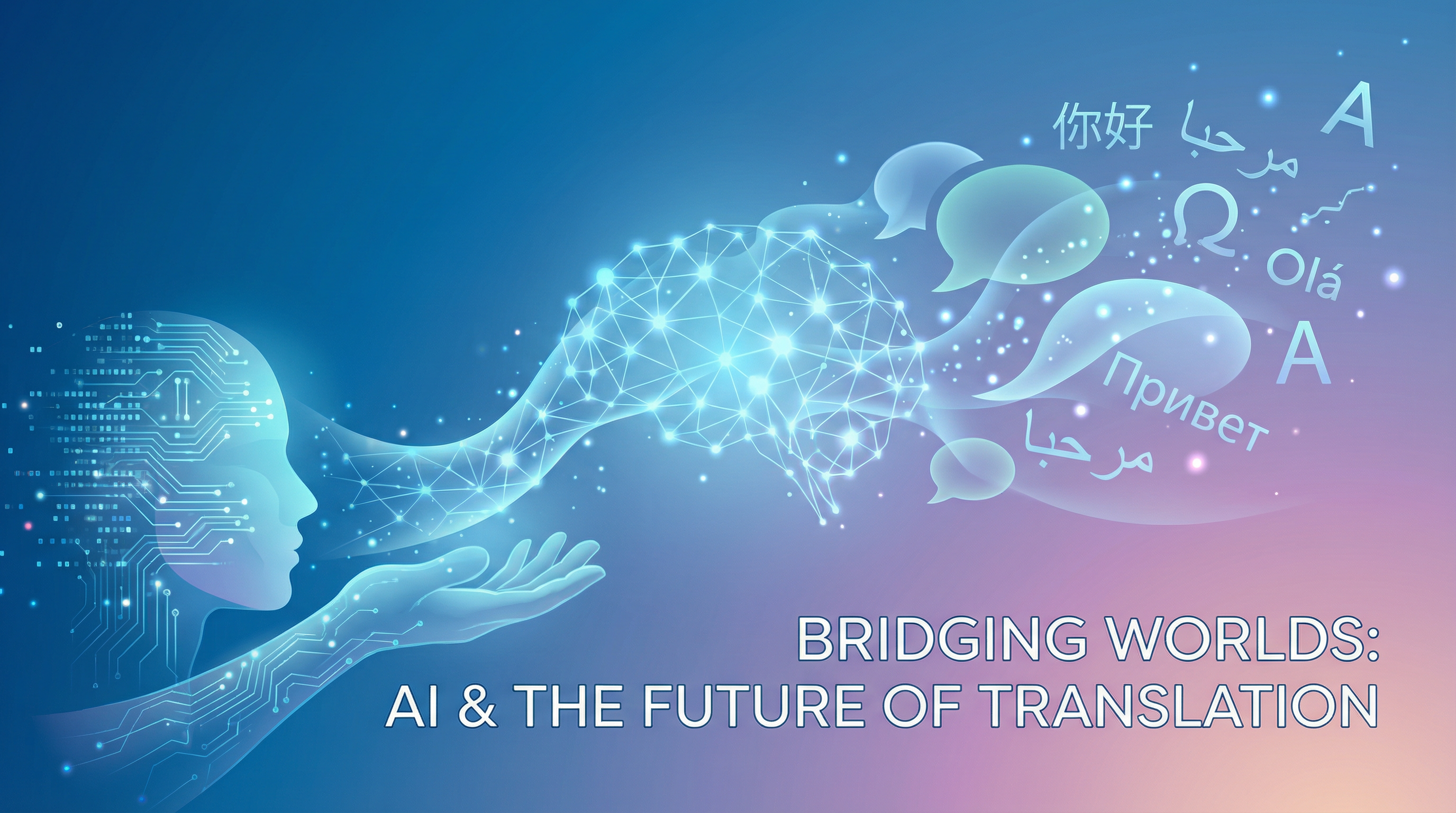
In 2026, a new career path is emerging as one of the most sought-after in the AI economy: the AI Translator. These professionals serve as strategic bridges between business stakeholders and technical teams, ensuring that AI and data-driven solutions are aligned with real-world business needs . They don't just write code or fine-tune prompts—they translate business problems into something an engineer can actually implement.
This role exists because most AI projects fail—not from bad technology, but from bad scoping. Someone asks for "an AI that handles customer complaints gracefully." The engineer hears vague chaos. "Gracefully" isn't a parameter you can set. The translator fixes that disconnect.
What Is an AI Translator?
The clearest way to think about the AI Translator role is this: an AI Engineer builds the engine. A Prompt Engineer fine-tunes what the engine produces. A Data Analyst reads the gauges. The AI Translator decides where the vehicle needs to go—and makes sure everyone on board understands the route .
The core skill is structuring requests so they map directly to code. Not writing the code yourself, but thinking in systems. Every AI workflow breaks into three parts :
Trigger. What starts the process? A new email? A database change? A scheduled time? Enterprise triggers look like "when an invoice PDF hits the accounts inbox, the system activates."
Input. What data does the AI need? The translator lists every piece: the document text, the relevant database fields, the policy constraints, the tone requirements. Translators document. Shadow users paste and pray.
Output. What does the AI produce? Not just text, but structured data. A JSON object with specific fields. An API call that updates a ticket. A formatted record that feeds another system.
This framework, sometimes called TIO (Trigger-Input-Output), turns fuzzy ideas into buildable specifications.
AI Translators In Action: Real Job Descriptions
Pfizer's "Business Translator, Commercial, AIA"
Pfizer, the global pharmaceutical leader, is hiring a Director-level "Business Translator" for their AI Accelerator. The role is a strategic bridge between business stakeholders and technical teams, ensuring AI solutions are aligned with real-world business needs in complex healthcare environments .
Key responsibilities include:
-
Translating business challenges into actionable AI use cases
-
Eliciting and structuring requirements into user stories and acceptance criteria
-
Partnering with product leads to understand strategic goals and priorities
-
Aligning on adoption metrics and tracking performance post-deployment
-
Ensuring data access, model approvals, risk controls, and compliance requirements before build
The compensation reflects the role's importance: Pfizer offers $162,900 to $271,500 per year for this position, plus bonus (target 20% of base salary) and long-term incentive participation .
Accenture's "Finance AI Consultant / Manager"
Accenture is hiring a Finance AI Consultant/Manager who acts as a finance professional genuinely curious about what AI changes across the function—from planning to reporting to controls—and honest about what it doesn't. They know finance well enough to see where an agent or a model belongs and where a human control has to stay .
The work includes:
-
Finding high-value AI and automation use cases across the finance function
-
Keeping AI reliable and safe in finance: data quality, testing, controls, and auditability
-
Turning the AI opportunity into a working operating model that runs, rather than a slide
-
Building the data foundation that makes finance AI trustworthy
This role also involves practical experience building applied AI or agent solutions, including prompt design, retrieval, and testing .
Euroclear's "AI Translator / Junior Business Analyst"
Euroclear, the international financial market infrastructure company, is hiring an AI Translator/Junior Business Analyst through their Tech Talent Programme. This role turns business ideas into AI-powered solutions at the intersection of business, technology, and AI .
What the role does:
-
Translates business needs and processes into clear AI and IT requirements
-
Supports AI solutions built on Microsoft Azure (including Azure OpenAI and Azure AI services)
-
Assists with LLM-based solutions such as chatbots, AI assistants, and automated translation tools
-
Learns how agentic AI systems work (AI that can plan tasks, call tools, and support decision-making)
This is an entry-level role ideal for IT or business graduates curious about AI and wanting to learn how real-world AI solutions are designed, delivered, and governed in a regulated environment.
Why AI Translators Are in Demand
According to The Hague University of Applied Sciences, which launched a dedicated AI Translator master's program in 2026: "The world of AI is evolving at lightning speed. Many organizations feel they have to do something with AI for fear of being left behind, but they don't yet know exactly what. There is a growing need for new types of professionals" .
Mirjam Boer, program manager of Applied Data Science & AI, explains: "The AI Translator is not a technical specialist but someone who understands what AI can mean within an organization. The AI Translator looks not only at what is technically possible, but especially at what is appropriate and responsible for an organization and what this means for its operations" .
This requires insight not only into technology, but also into organizational processes, human behavior, and laws and regulations. AI can accelerate and support processes, but improper use can lead to ethical issues or privacy risks .
The Skills That Drive This Role
Professionals equipped with the following skills are best positioned for AI Translator opportunities:
Technical Skills:
-
Python and cloud architecture experience
-
AI/ML frameworks (e.g., TensorFlow, PyTorch)
-
Prompt engineering and RAG (Retrieval-Augmented Generation) experience
-
Data literacy and basic SQL
Domain Skills:
-
Industry expertise in areas like finance, healthcare, manufacturing, or pharmaceutical
-
Understanding of regulatory expectations and risk management
Core Translator Skills:
-
Ability to explain and defend complex models to both technical and non-technical stakeholders
-
Critical thinking and problem framing
-
Communication and stakeholder management
-
Ability to translate business needs into technical requirements
Compensation Snapshot
| Role | Company | Salary Range |
|---|---|---|
| Director, Business Translator | Pfizer | $162,900 – $271,500 + bonus + equity |
| Finance AI Consultant/Manager | Accenture | Competitive (based on experience) |
| AI Translator/Junior BA | Euroclear | Competitive (Tech Talent Programme) |
The premium for AI Translator roles reflects their scarcity and value. Companies are willing to pay a premium for professionals who can bridge the gap.
How to Position Yourself as an AI Translator
1. Choose a Domain First, Then AI
The most valuable AI Translators combine domain expertise (healthcare, finance, manufacturing) with AI fluency. If you work in healthcare, learn AI. If you work in finance, learn AI automation.
2. Build the Technical Foundation
The foundational skills are Python, AI/ML frameworks, and cloud experience. Even if you don't code full-time, you need to understand the technical possibilities and limitations.
3. Learn the Translator Framework
Master the Trigger-Input-Output model. Learn to structure fuzzy business requests into buildable specifications.
4. Practice Communication
The AI Translator's most valuable skill is translating complex AI concepts into clear, actionable insights for non-technical stakeholders.
Frequently Asked Questions (FAQs)
What is the difference between an AI Engineer and an AI Translator?
An AI Engineer builds the engine. A Prompt Engineer fine-tunes what the engine produces. The AI Translator decides where the vehicle needs to go and makes sure everyone on board understands the route .
What are the key skills for an AI Translator?
Key skills include: Python and cloud architecture, AI/ML frameworks, data literacy, domain expertise in finance/healthcare/manufacturing, prompt engineering, and strong communication to explain complex models to non-technical stakeholders .
What are the highest-paying industries for AI Translators?
Pharmaceuticals ($162–271K at Pfizer) , finance AI consulting (competitive compensation), and finance roles at global firms.
What roles should I target as an AI Translator?
Look for roles like Business Translator , AI Product Owner, Finance AI Consultant , AI Strategy Consultant , or AI Translator/Junior Business Analyst . Demand for these roles is growing rapidly across industries from pharmaceuticals to manufacturing to banking.