The Big Question
Let us ask you something directly.
You are learning to code, or you are already a developer. You see AI tools writing code, generating entire applications, and assisting with debugging. You think to yourself: "Do I still need to learn to code? Or should I learn to work with AI instead?"
We hear this question every week from students and professionals who visit our center near Pitampura Metro.
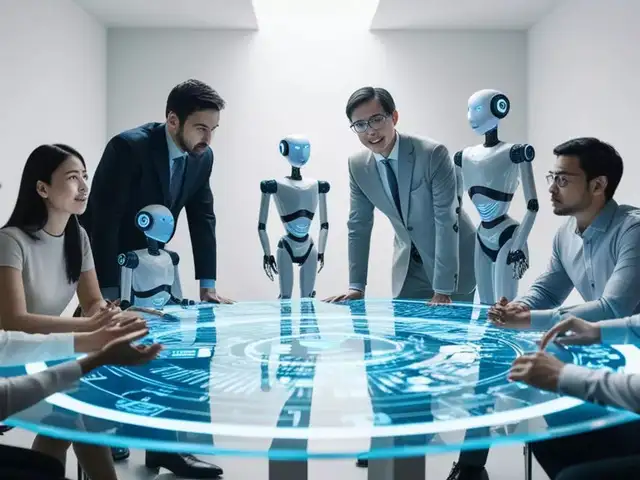
Here is the honest answer: You need both. The fundamentals of programming have not disappeared—they have become more important. You still need to understand logic, data structures, and system design. But you also need to learn how to work alongside AI, validate its output, and orchestrate its capabilities .
Step 3: The Fundamentals Still Matter
Before we talk about AI, let us be clear about what has not changed. The core skills of programming remain essential.
What You Still Need to Learn:
| Skill | Why It Matters |
|---|---|
| Programming Logic | Understanding how to break problems into steps |
| Data Structures | Arrays, lists, trees, hash maps—the building blocks |
| Algorithms | Sorting, searching, recursion, dynamic programming |
| System Design | How components fit together in a larger system |
| Testing | Writing code that is verifiable and maintainable |
| Version Control | Git and GitHub for collaboration and history |
A strong foundation in these areas is what separates a developer who can guide AI from one who is simply along for the ride. According to one analysis, AI still cannot tell you when a design decision today will cause problems six months from now—that requires human judgment .
Step 4: The New Reality—AI-Assisted Development
AI has fundamentally changed how software is built. But the evolution is more nuanced than "AI writes all the code."
The Evolution of Programming:
| Era | What Defined It |
|---|---|
| Punch Cards & Machine Code (1950s-1960s) | Direct communication with hardware |
| Assembly (1960s-1980s) | Readable but still low-level |
| C/C++ (1970s-2000s) | Manual memory management, "real" software |
| High-Level Languages (1990s-2010s) | Closer to business logic |
| Frameworks & Libraries (2000s-2020s) | Plug-and-play components |
| Vibe Coding / AI-Assisted (2023-Present) | Natural language → functional code |
What "Vibe Coding" Actually Means:
Andrej Karpathy, who coined the term "vibe coding" in February 2024, described it as "fully giving in to the vibes, embracing exponentials, and forgetting that the code even exists." In practice, it means describing what you want in natural language and having the AI generate the code .
However, responsible AI-assisted development is not the same as "vibe coding." As Andrew Ng has argued, programming with AI is a rigorous intellectual task, not a casual or intuitive process. Deep technical knowledge, critical thinking, and the ability to understand, verify, and interpret AI-generated code remain essential .
Step 5: The New Developer Roles
As AI handles more of the mechanical coding work, human developers are naturally gravitating toward two distinct roles:
1. The Systems Architect
For complex, enterprise-level projects, developers are becoming high-level orchestrators who design system architecture, define integration patterns, and make strategic technical decisions. They do not write the individual functions—they design how hundreds of AI-generated components should interact .
2. The Taste Curator
For simpler applications, developers act as "vibe and taste setters"—translating fuzzy human needs into concrete specifications that AI can execute. It is less about coding and more about product intuition and user empathy .
3. The AI Orchestrator
This is the emerging role for many developers. You guide AI tools to produce code, validate their output, and maintain coherence across AI-generated components. Co-founder and CEO of Cursor Michael Truell believes that in the next 5–10 years, users will simply describe their desired outcome and AI will build it .
Step 6: Skills That Matter in 2026
Based on the current landscape, here are the skills that will define successful developers in 2026.
Technical Skills:
| Skill | Why It Matters |
|---|---|
| Python | The dominant language for AI, data science, and automation |
| JavaScript/TypeScript | Web and full-stack development |
| Git & GitHub | Version control and collaboration |
| SQL | Working with databases |
| API Integration | Building and consuming APIs |
| Cloud Platforms | AWS, Azure, GCP for deployment |
| Containerization | Docker, Kubernetes for scalability |
Emerging AI Skills:
| Skill | Why It Matters |
|---|---|
| Prompt Engineering | Designing effective AI inputs |
| AI Tool Proficiency | Using tools like GitHub Copilot, Cursor |
| Output Validation | Spotting AI-generated errors and hallucinations |
| AI Architecture | Designing systems that leverage AI effectively |
Soft Skills:
| Skill | Why It Matters |
|---|---|
| Communication | Explaining complex ideas to different audiences |
| Problem Decomposition | Breaking problems into AI-executable steps |
| Judgment | Knowing when to trust AI output and when to question it |
| Adaptability | Learning new tools as the landscape evolves |
Step 7: Pro Tips for Modern Developers
Tip 1: Master the Fundamentals First
Before you rely on AI, understand what it is doing. A strong foundation in programming logic, data structures, and algorithms makes you a better guide for AI tools.
Tip 2: Learn to Think in Systems
AI can write functions, but it cannot design architecture. The ability to see the big picture and design coherent systems is a skill AI cannot replace .
Tip 3: Validate Everything
AI-generated code can have subtle bugs or hallucinated features. Always review, test, and verify AI output before deploying it .
Tip 4: Develop Prompt Engineering Skills
The quality of AI output depends on the quality of your prompts. Learn to be specific, provide context, and refine your prompts iteratively.
Tip 5: Stay Curious
The tools change fast. The developers who thrive are the ones who adapt quickly. Follow major releases, experiment with new tools, and keep learning .
Step 8: Frequently Asked Questions
Q1: Is coding still a valuable skill in 2026?
Yes. The fundamentals of programming are more important than ever. AI handles the mechanical parts, but human judgment, system design, and problem-solving remain essential .
Q2: What is "vibe coding"?
Vibe coding, a term coined by Andrej Karpathy, means building software with an LLM without reviewing the code it writes. It prioritizes speed and experimentation over quality and understanding .
Q3: Is vibe coding a good practice?
For throwaway weekend projects, it can be useful. For production applications, it is not responsible. Andrew Ng argues that programming with AI is a rigorous intellectual task, not a casual process .
Q4: What programming language should I learn first?
Python is the most versatile choice in 2026—it is used in AI, data science, web development, and automation.
Q5: Will AI replace developers?
No. AI will change how developers work, but human judgment, system design, and problem-solving remain essential. The role is shifting from coder to orchestrator .
Step 9: Final Tagline
"AI Writes Code. Humans Design Systems. Master Both."
Hashtags:
#Programming #Development #AICoding #SoftwareEngineering #LearnToCode #VibeCoding #CodingNow #GurukulOfAI
Step 10: A Note on the Future of Programming
The future of programming is not about choosing between human and AI. It is about learning to work together. The developers who thrive will be those who understand both the fundamentals of software engineering and the capabilities of AI tools .
At Coding Now, we help students build the skills that matter for modern development—from Python and data structures to AI-assisted development. Come visit us. Take a free demo class. See what is possible.
Your programming journey starts now.
Contact Us
Phone: +91 9667708830
Email: info@codingnow.in
Website: https://codingnowai.in/
Address:
2nd Floor, Kapil Vihar (Opp. Metro Pillar No.354)
Pitampura, New Delhi – 110034
Backlink to main website: Explore Python and AI courses at Coding Now – Gurukul of AI