The Big Question
Let us ask you something directly.
You have heard about open-source AI models. You see them on Hugging Face. You read about Qwen and DeepSeek and Llama 4. You think to yourself: "Which one should I use? Are they really as good as ChatGPT or Claude? How do I even choose?"
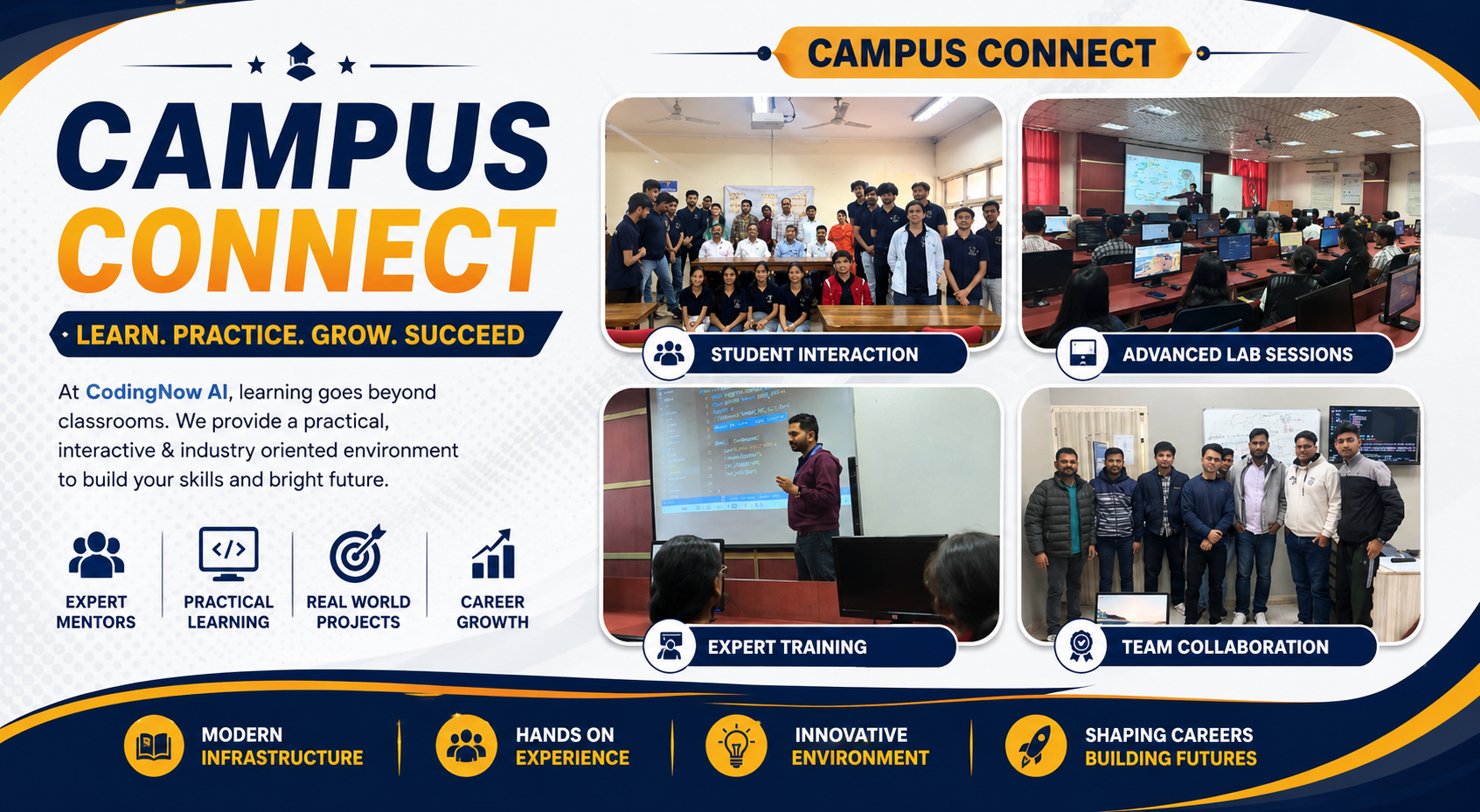
We hear these questions every week from students and professionals who visit our center near Pitampura Metro.
Here is the honest answer: open-source LLMs have become genuinely competitive with closed models on many practical tasks . The gap between open and closed has narrowed to single digits on coding benchmarks. But the "best" model depends entirely on your hardware, your use case, and your licensing requirements .
Let us break down the landscape.
Step 3: Open Source vs Open Weight – The Critical Distinction
Before we look at models, we need to understand a crucial difference .
What It Means:
| Type | What It Means | Examples |
|---|---|---|
| Open Source (OSI) | Weights, training code, and training data details are all published | OLMo, Pythia (not on leaderboards) |
| Open-Weight | Weights are downloadable, but training data and sometimes code are withheld | Qwen3, DeepSeek, Llama 4, GPT-OSS |
| Closed (API) | Weights are not downloadable; you only call an API | GPT-5, Claude |
The Practical Takeaway:
Open-weight models can be self-hosted, inspected, and fine-tuned, just like truly open-source ones. The difference is licensing freedom and how much of the training pipeline is disclosed . When you read "open-source LLM" on a model card or leaderboard, assume it means open-weight unless the page explicitly cites the OSI definition .
Why Almost Nothing is Strictly Open Source:
Training data is the missing piece. Releasing trillions of tokens of web, code, and licensed text raises copyright and competitive concerns, so makers publish weights and a model card but not the corpus .
Step 4: The Leading Open-Weight Model Families in 2026
Qwen3 (Alibaba)
License: Apache-2.0
Context: 256K (extendable to 1M via Yarn)
Best For: General assistant, coding, multilingual apps, agents
The flagship Qwen3-235B-A22B is a Mixture-of-Experts (MoE) model with 235B total parameters and 22B active per token . Qwen3-Coder-480B currently holds the top single-attempt SWE-bench Verified score among open models at 69.6%, making it the current open-weight champion for coding . Apache 2.0 license with no user cap, no commercial restrictions, no legal headaches—making it the safest and most flexible choice .
DeepSeek (DeepSeek-AI)
License: MIT
Context: 128K
Best For: Permissive generalist, coding, math reasoning, agentic workflows
DeepSeek-V3.2 (685B total, 37B active) reaches roughly 70% on SWE-bench Verified under the standard MIT License—the cleanest license-to-performance ratio among top coding models . DeepSeek-R1 leads open reasoning with a Codeforces rating of 2029 (96.3 percentile) and 65.9 LiveCodeBench Pass@1-COT . MIT license permits commercial use and distillation into other models, making it highly flexible .
Llama 4 (Meta)
License: Llama 4 Community License
Context: 1M tokens
Best For: Long-context, multimodal, generalist
The Llama 4 series introduces Mixture-of-Experts architecture for the first time in Meta's lineup. Maverick has 400B total parameters (17B active) with a 1M-token context window . Scout supports a staggering 10 million token context window—more than any other open model . Both are multimodal. The community license has a monthly-active-user clause—if your product exceeds certain thresholds, you may need a separate agreement from Meta . For most teams this never binds, but legal teams should review it before shipping .
GPT-OSS (OpenAI)
License: Apache-2.0
Context: 128K
Best For: Reasoning, private deployments, enterprise assistants
OpenAI released open-weight reasoning models in 2026—and nobody expected it . The 120B version can run within 80 GB of memory and achieves 650+ tokens/second on optimized hardware . It reaches 2622 Elo on Codeforces, matching or exceeding o4-mini on competition coding . These models are not available in ChatGPT or through the OpenAI API—you download and run them yourself .
GLM-5.2 (Zhipu AI)
License: MIT
Context: 1M tokens
Best For: Long-horizon agentic coding, complex systems engineering
Zhipu AI open-sourced GLM-5.2 in June 2026 with a 1M-token context window under an MIT license . Its MoE architecture with 256 experts routes just 8 experts per token . Dynamic working memory enables up to tens of hours of autonomous execution without context overload . Early comparisons place it level with or ahead of leading closed models on math reasoning .
Gemma 3 (Google DeepMind)
License: Gemma Terms of Use
Context: 128K (256K in cloud)
Best For: Single GPU deployment, multimodal tasks, local agentic workflows
Four sizes: 1B, 4B, 12B, and 27B . The 4B, 12B, and 27B versions support text and image input, 128K context, and 140+ languages—all on a single GPU . The 27B version fits on one RTX 4090, making it the best "serious model" for people who want real capability without multi-GPU complexity . The license is custom, not OSI-approved—read the terms before building a commercial product .
Mistral Models (Mistral AI)
License: Mistral (MNPL) / Apache 2.0 for some models
Context: 256K
Best For: Code completion, generalist (Mistral Large), small deployments
Mistral Codestral 25.01 leads fill-in-the-middle code completion with 95.3% pass@1 on HumanEval FIM . Mistral Small 3.1 is Apache 2.0, multimodal, with 128K context, making it a strong enterprise-friendly option .
Step 5: Benchmark Comparison – How They Stack Up
| Model | SWE-bench Verified | Key Benchmark | License |
|---|---|---|---|
| Qwen3-Coder-480B | 69.6% | 256K context | Apache 2.0 |
| Kimi K2 | 71.6% (agentic multi-attempt) | 1T params | Modified MIT |
| DeepSeek-V3.2 | ~70% | 685B params | MIT |
| GLM-5.2 | 77.8% | 1M context | MIT |
| MiniMax-M2 | 69.4% | 230B params | Modified MIT |
| Llama 4 Maverick | Not reported | 1M context | Community |
SWE-bench Verified measures real GitHub-issue resolution in a multi-turn agentic loop—the closest proxy for production coding ability .
Step 6: Which Model Should You Choose?
For General Use on Laptops → Qwen3 8B or 14B
For Single GPU → Gemma 3 12B or 27B
For Coding → Qwen3-Coder-480B (if you have the hardware), or Qwen3 32B locally
For Permissive License → DeepSeek-V3.2 (MIT)
For Long-Context → Llama 4 Scout (10M tokens) or GLM-5.2 (1M)
For Reasoning → GPT-OSS 120B
For Code Completion → Mistral Codestral 25.01
Step 7: Pro Tips for Working with Open-Source LLMs
Tip 1: Start Small
Do not start with the biggest model. Start with the best model your hardware can comfortably run. A smaller, faster model is usually more useful than a giant model that crashes or swaps memory .
Tip 2: Read the License Before Shipping
Apache-2.0 and MIT are the safest. Llama 4 Community License has a monthly-active-user clause. Cohere Command A (CC-BY-NC) bars commercial use entirely .
Tip 3: Run Your Own Evals
A model that tops a leaderboard may underperform on your specific task. Run evaluations on your own workload before committing .
Tip 4: Understand MoE
Most flagship models now use Mixture-of-Experts (MoE) architecture—they have large total parameters but activate only a fraction per token, which is what drives inference cost .
Step 8: Frequently Asked Questions
Q1: What is the best open-source LLM for coding in 2026?
Qwen3-Coder-480B (69.6% SWE-bench Verified) under Apache-2.0 .
Q2: What is the difference between open-source and open-weight?
Open-source requires publishing training data and code too. Open-weight only publishes the weights. Almost no leading "open" model qualifies as true open-source under the OSI definition .
Q3: Which open-source LLM has the longest context window?
Llama 4 Scout supports 10 million tokens, and GLM-5.2 supports 1 million .
Q4: Can I run these models locally?
Yes, with Ollama, vLLM, LM Studio, or llama.cpp. Smaller models like Phi-4-mini (3.8B) run on a CPU, while larger models need GPUs .
Q5: Is Qwen3 actually better than Llama?
On SWE-bench Verified coding benchmark, Qwen3-Coder-480B (69.6%) outperforms Llama 4 Maverick, whose coding scores are not reported, but Qwen3 is Apache 2.0, while Llama 4 uses a community license .
Q6: Does Coding Now teach open-source LLM skills?
Yes. Our AI Engineering Diploma covers RAG, LangChain, fine-tuning, and deployment of open-source LLMs.
Q7: How do I enroll?
Call +91 9667708830 or visit our center at 2nd Floor, Kapil Vihar (Opp. Metro Pillar No.354), Pitampura, New Delhi – 110034.
Step 9: Final Tagline
"Open-Source LLMs Have Caught Up. Now Choose the Right One for You."
Hashtags:
#OpenSourceLLM #Qwen3 #DeepSeek #Llama4 #GPTOSS #AI #MachineLearning #CodingNow #GurukulOfAI
Step 10: A Note on the Open-Source AI Revolution
The gap between open and closed AI models has narrowed to single digits on the benchmarks that matter—the ones that track real work. Open-weight systems now post coding scores within a few points of the best closed models at a tenth to a thirtieth of the cost per token .
But the model, once the moat, is becoming the commodity input . As one analyst put it, "The price of intelligence is falling fast. The bigger question is where those savings get redeployed" . For most enterprise tasks—document analysis, customer triage, code review, structured extraction—the open model is now the rational default on cost and data-privacy grounds alone .
At Coding Now, we teach the skills to work with these models—from deployment to fine-tuning to building agents. Come visit us. Take a free demo class. See what is possible.
Your open-source AI journey starts now.
Contact Us
Phone: +91 9667708830
Email: info@codingnow.in
Website: https://codingnowai.in/
Address:
2nd Floor, Kapil Vihar (Opp. Metro Pillar No.354)
Pitampura, New Delhi – 110034
Backlink to main website: Explore AI Engineering Diploma and other courses at Coding Now – Gurukul of AI