The Big Question
Let us ask you something directly.
You have heard about AI models trained on massive datasets. But you have also heard about privacy concerns, data breaches, and regulations like GDPR. You think to yourself: "How can we train powerful AI models without putting people's personal data at risk?"
We hear this question every week from students and professionals who visit our center near Pitampura Metro.
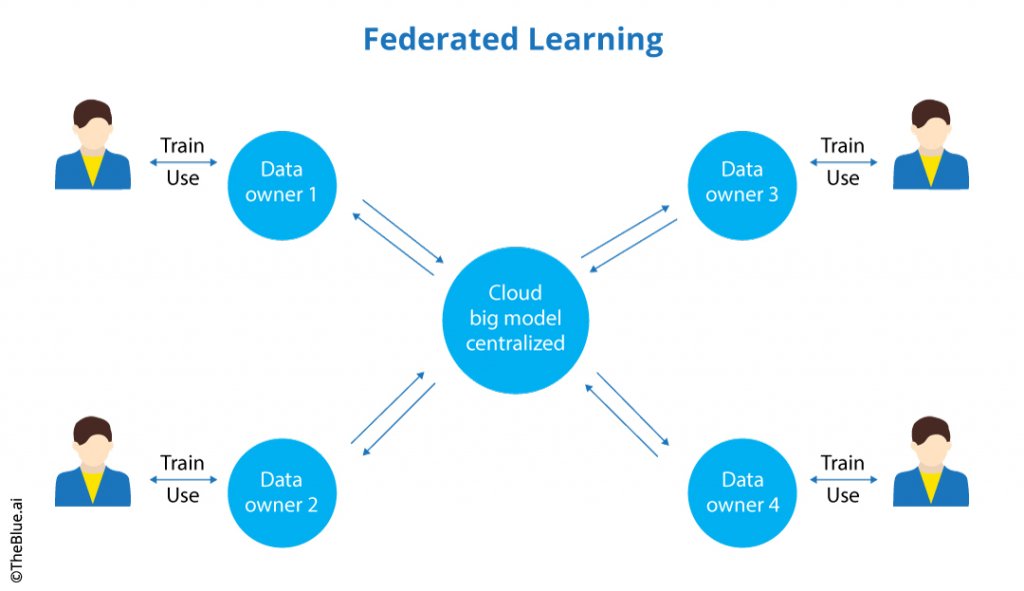
Here is the honest answer: Federated learning solves this problem by flipping the traditional model. Instead of sending data to a central server, the model goes to the data. Each device trains the model locally using its own data, and only the encrypted updates are shared. The raw data never leaves the device . This approach has been used by Google for smartphone keyboards and is now being adopted across healthcare, finance, and autonomous systems .
Step 3: What is Federated Learning? The Simple Definition
The Simple Definition:
Federated learning is a decentralized machine learning paradigm where multiple clients—such as mobile phones, hospitals, or IoT devices—collaboratively train a shared global model without exchanging their raw data . Instead of centralizing data in a cloud server, each client trains the model locally and only sends encrypted model updates (weights or gradients) to a central server for aggregation .
In Plain Language:
Imagine a team of doctors across different hospitals who want to build an AI model to detect a disease. In the traditional approach, they would send all patient records to one central database—risking privacy breaches. In federated learning, each hospital trains the model on its own patients' data locally. They then share only what the model learned (not the patient data itself) to build a better collective model .
Core Principle:
| Element | What It Means |
|---|---|
| Local Training | Each client trains the model on its own private data |
| Model Updates | Only encrypted weights or gradients are shared |
| Aggregation | The server combines updates into an improved global model |
| Privacy Preservation | Raw data never leaves the client |
Step 4: How Federated Learning Works
Federated learning operates through an iterative client-server architecture .
The Three Key Components :
-
Central Server: Coordinates training, distributes the global model, and aggregates updates
-
Clients: Local devices or organizations that hold private data and train locally
-
Communication Protocol: Secure exchange of model updates (not raw data)
The Federated Learning Lifecycle:
| Step | What Happens |
|---|---|
| 1. Model Distribution | The central server broadcasts the current global model to participating clients |
| 2. Local Training | Each client trains the model on its local dataset (usually multiple epochs) |
| 3. Update Transmission | Clients send back encrypted model parameters (weights or gradients) to the server |
| 4. Aggregation | The server aggregates all updates using an algorithm like Federated Averaging (FedAvg) to create a new global model |
| 5. Iteration | The process repeats until the global model converges |
A Simple Analogy:
Think of it like a group presentation. Each person works on their own section with their own resources. Instead of sharing the entire document, everyone sends their key findings to the team lead. The team lead combines them into a better final report. The process repeats until the presentation is complete .
Step 5: Types of Federated Learning
Not all federated learning setups are the same. Depending on how data is distributed across clients, different architectures are used .
The Three Main Types :
| Type | Data Distribution | Example |
|---|---|---|
| Horizontal FL | Clients have similar datasets with different samples (same feature space) | Different hospitals with patient records |
| Vertical FL | Clients have complementary data (different features for the same entities) | Combining movie and book preferences to predict music taste |
| Federated Transfer Learning | Pre-trained model on one task is adapted to another domain | Model trained on cars adapted to identify cats |
Step 6: Why Federated Learning Matters in 2026
Federated learning has become a strategic priority in 2026 for several compelling reasons .
Key Benefits :
| Benefit | Impact |
|---|---|
| Privacy Preservation | Models are trained without exposing sensitive raw data, supporting compliance with GDPR and HIPAA |
| Reduced Communication Costs | Only encrypted model updates are transmitted, not large datasets |
| Data Security | Data never leaves local devices, reducing breach risk |
| Collaborative Innovation | Organizations can share knowledge without sharing data |
| Unlocks Hidden Data | Enables access to sensitive/confidential data that otherwise cannot be shared |
The Spanish Data Protection Agency and European Data Protection Supervisor have recognized federated learning as a "key role" in advancing AI models that are more respectful of personal data protection .
Real-World Applications:
| Sector | Application |
|---|---|
| Healthcare | Collaborative disease detection without sharing patient records |
| Finance | Improved fraud detection across institutions |
| Smartphones | Google's keyboard predictive text |
| Industrial IoT | Fault diagnosis across factories without raw data exchange |
| Smart Cities | Traffic prediction and energy optimization |
Step 7: The Challenges of Federated Learning
Federated learning comes with significant technical and practical challenges .
Statistical Heterogeneity (Non-IID Data):
| Challenge | What It Means |
|---|---|
| Data Distribution Mismatch | Each client's data is often non-IID (non-independent and identically distributed) due to geographical or behavioral differences |
| Performance Degradation | Non-IID data can slow convergence and reduce model accuracy |
System Heterogeneity:
| Challenge | What It Means |
|---|---|
| Device Variations | Clients differ in computing power, battery, and network connectivity |
| Stragglers | Slower devices can delay the entire training process |
Communication Bottlenecks:
| Challenge | What It Means |
|---|---|
| Frequent Updates | Large models require frequent transmission, which can be expensive |
| Compression Tradeoffs | Reducing update size can affect model quality |
Privacy and Security Threats:
| Challenge | What It Means |
|---|---|
| Gradient Leakage | Model updates can be used to reconstruct sensitive data through inference attacks |
| Model Poisoning | Malicious clients can inject bad updates to degrade the global model |
| Backdoor Attacks | Adversaries can implant hidden behaviors in the model |
Step 8: Pro Tips for Understanding Federated Learning
Tip 1: Think of It as Collaborative Learning
The central idea is collaboration without data sharing. Each participant contributes model knowledge, not raw data .
Tip 2: Understand the Tradeoff
Federated learning reduces privacy risks but introduces heterogeneity challenges. More privacy often means more technical complexity .
Tip 3: Look for Real-World Applications
Google's Gboard uses FL for next-word prediction. Healthcare is a major growth area . These are not theoretical—they are live.
Tip 4: The Algorithm Matters
Federated Averaging (FedAvg) is the foundational aggregation algorithm, but many variants exist to handle non-IID and heterogeneous environments .
Tip 5: Privacy is Not Guaranteed
FL reduces data exposure but does not eliminate privacy risks. Techniques like differential privacy and secure aggregation are needed to strengthen protection .
Step 9: Frequently Asked Questions
Q1: What is federated learning in simple terms?
Federated learning is a way to train AI models without collecting user data in one place. Each device trains the model locally, and only the encrypted learning updates are shared .
Q2: How does federated learning protect privacy?
Raw data never leaves the device. Only encrypted model parameters are shared, so the central server cannot see your personal data .
Q3: Where is federated learning used today?
Google uses it for smartphone keyboard predictions. It is also being explored in healthcare, finance, and autonomous vehicles .
Q4: What are the main challenges of federated learning?
Non-IID data, device heterogeneity, communication overhead, and vulnerabilities to model poisoning and inference attacks .
Q5: Is federated learning better than centralized learning?
Not necessarily better—it serves different purposes. Centralized learning is simpler and often more accurate, but FL provides privacy benefits essential for sensitive data .
Q6: Does Coding Now teach federated learning?
Yes. Our AI Engineering Diploma covers advanced AI topics including distributed training and privacy-preserving machine learning.
Step 10: Final Tagline
"Data Should Stay Private. Models Should Keep Learning. Federated Learning Makes Both Possible."
Hashtags:
#FederatedLearning #PrivacyPreservingAI #MachineLearning #DataPrivacy #AI #CodingNow #GurukulOfAI
Step 11: A Note on the Future of Federated Learning
Federated learning has evolved from a 2016 Google research idea into a strategic technology for privacy-preserving AI in 2026 . The Spanish Data Protection Agency and European Data Protection Supervisor view it as "dual-use technology" that can both protect privacy and boost the digital economy .
The field continues to evolve. Researchers are integrating FL with reinforcement learning, blockchain, and even quantum computing to enhance scalability and trust . Hybrid architectures (cross-silo and cross-device) are being developed to handle the growing scale of distributed systems .
At Coding Now, we help students understand the technologies that are shaping the future. Come visit us. Take a free demo class. See what is possible.
Your federated learning journey starts now.
Contact Us
Phone: +91 9667708830
Email: info@codingnow.in
Website: https://codingnowai.in/
Address:
2nd Floor, Kapil Vihar (Opp. Metro Pillar No.354)
Pitampura, New Delhi – 110034
Backlink to main website: Explore AI courses at Coding Now – Gurukul of AI