
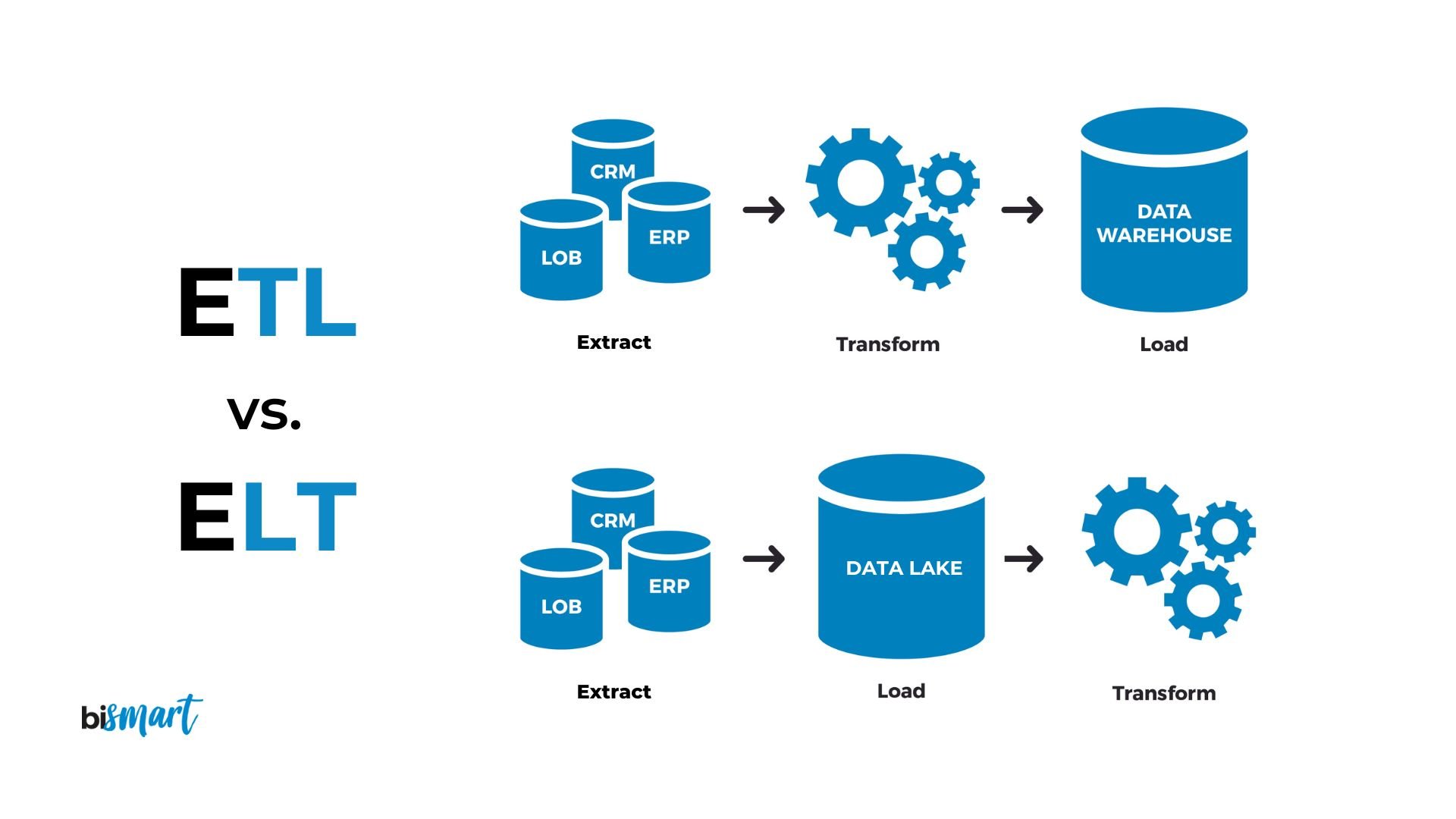
ETL vs. ELT: Which Data Pipeline Strategy Wins in 2026?
In the world of data engineering, few debates are as heated—or as critical—as ETL vs. ELT.
If you are building a data stack for analytics, machine learning, or business intelligence, choosing the wrong data pipeline architecture can cost you millions in cloud compute fees and leave your data scientists waiting hours for fresh information.
But here is the truth: ETL is not dead, and ELT is not always the answer.
In this guide, we will break down the difference between ETL and ELT, when to use each, and why the "modern" data stack is heavily favoring ELT—but not for everyone.
What is ETL? (Extract, Transform, Load)
ETL is the classic approach to data integration. It has been the industry standard since the dawn of data warehousing in the 1970s.
The process is exactly as the acronym suggests:
-
Extract: Pull raw data from source systems (CRMs, databases, flat files).
-
Transform: Clean, deduplicate, join, and format the data outside the target database—usually on a dedicated staging server or middleware tool.
-
Load: Insert the final, polished, "golden" data into your data warehouse.
Key Characteristic: The target system only ever sees clean data.
When to choose ETL
Despite being the "older" technology, ETL is still the right choice in specific scenarios:
-
Strict Data Privacy (GDPR/HIPAA): Because you can mask or delete personally identifiable information (PII) before it reaches your cloud warehouse, ETL offers superior security.
-
Underpowered Data Warehouses: If you are running a legacy SQL Server or Oracle system that cannot handle massive compute loads, ETL offloads the heavy lifting to a separate server.
-
Complex, Multi-Source Joins: If you need to combine data from 10 disparate APIs into one final table, doing it upfront ensures the final load is simple and fast.
Pros: Secure, predictable performance, and lower storage costs (you only store what you need).
Cons: Slow to load; rigid to change; you lose the raw data forever.
What is ELT? (Extract, Load, Transform)
ELT is the modern approach, born from the rise of cloud computing and next-generation data warehouses like Snowflake, Google BigQuery, and Amazon Redshift.
It completely flips the script:
-
Extract: Pull raw data from source systems.
-
Load: Dump the raw, unedited data (JSON, logs, CSV files) directly into the data warehouse.
-
Transform: Use the raw power of the cloud to clean and model the data inside the warehouse, usually using SQL or tools like dbt (data build tool).
Key Characteristic: The raw data is always preserved. You never lose the "source of truth."
When to choose ELT
If you are building a new data pipeline today, you should default to ELT. Here is why:
-
Massive Data Volumes: Cloud warehouses scale horizontally. It is cheaper to let a warehouse use 100 compute nodes to transform data than to buy expensive ETL servers.
-
Data Science and AI: Data Scientists love ELT because they have access to raw, untouched data. They can explore new patterns and build new tables without waiting for an ETL engineer.
-
Frequent Schema Changes: If your Salesforce or HubSpot API adds new columns, ELT handles it gracefully. You just load everything raw and change the SQL logic later.
Pros: Extremely fast loading; total data preservation; highly agile.
Cons: Requires an expensive, powerful cloud warehouse; raw data takes up large storage space; you need strict governance to prevent users from querying dirty data.
ETL vs. ELT: The Head-to-Head Comparison
| Feature | ETL | ELT |
|---|---|---|
| Transformation Timing | Before loading. | After loading. |
| Location of Work | Staging server / Middleware. | Inside the Data Warehouse. |
| Storage | Saves only final data. | Saves raw data permanently. |
| Load Speed | Slow (transformation is a bottleneck). | Very fast (raw data dump). |
| Agility | Rigid. Changing rules requires full re-load. | Highly agile. Just change SQL views. |
| Cost Structure | High licensing fees for ETL tools. | High compute/storage costs in the cloud. |
| Best For | On-premise, compliance-heavy, small/medium data. | Cloud-native, Big Data, AI/ML workloads. |
| Example Tools | Informatica, Talend, Matillion. | dbt, Snowflake, Fivetran, Databricks. |
The "Modern" Verdict: ELT is the Default
If you are starting a new data project today in 2026, ELT is almost always the better choice.
Here is the strategic reason: With ELT, you retain your raw data forever. This means if a business rule changes six months from now (e.g., "How do we define a 'churned' customer?"), you can re-transform the raw data without having to go back to the source API and re-extract everything. This makes your data stack infinitely more flexible.
The only exceptions to this rule are:
-
You are a highly regulated bank or hospital that must delete PII before it hits the cloud.
-
Your data warehouse is an older, underpowered on-premise box that cannot handle the computational strain.
Conclusion: It is Not About "Better," It is About "Context"
The debate between ETL and ELT is not a war—it is a maturity model.
ETL is secure, rigid, and reliable. ELT is agile, fast, and modern. For 90% of cloud-native companies, ELT will win because it empowers data teams to move at the speed of business. However, don't throw out your ETL playbook entirely; for specific compliance and legacy workloads, it remains the gold standard.
Your Next Step: Audit your current data stack. If you are spending more time waiting for ETL jobs to finish than analyzing data, it is time to explore ELT.
Contact Us
Phone: +91 9667708830
Email: info@codingnow.in
Website: https://codingnowai.in/
Address:
2nd Floor, Kapil Vihar (Opp. Metro Pillar No.354)
Pitampura, New Delhi – 110034
Backlink to main website: Explore Python and AI courses at Coding Now – Gurukul of AI