The Big Question
Let us ask you something directly.
You have seen the term CI/CD in job descriptions. Your team members mention "pipelines." You know it has something to do with automating software development. But you are not sure what it actually means or why it matters. You think to yourself: "What is a CI/CD pipeline? Why does every company seem to use it? How does it work?"
We hear these questions every week from students and professionals who visit our center near Pitampura Metro.
Here is the honest answer: CI/CD is the engine that powers modern software development. It automates the boring, repetitive, and error-prone parts of shipping code—building, testing, and deploying—so developers can focus on what they do best: writing great software. Understanding CI/CD is like understanding how a factory assembly line works—it is the process that turns raw materials (code) into finished products (working applications).
Step 3: What Is CI/CD? The Simple Definition
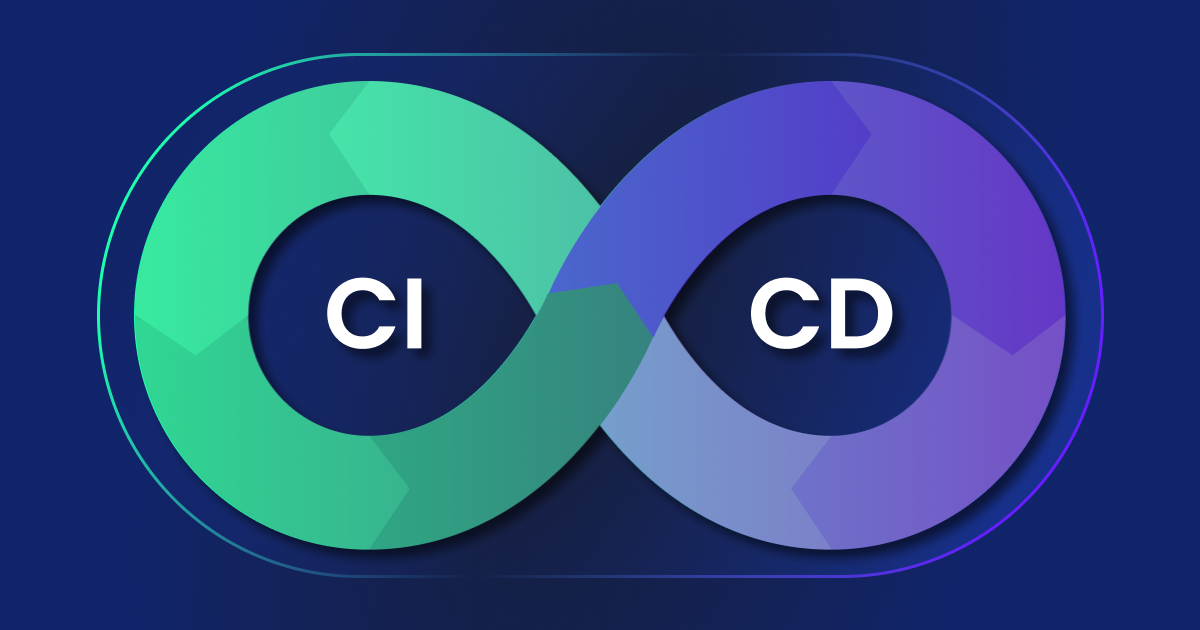
CI/CD stands for Continuous Integration and Continuous Delivery/Deployment. It is a software development methodology that automates the integration, testing, and deployment phases of application development.
Think of it as an automated assembly line for software. Instead of developers manually building, testing, and deploying code—which is slow and error-prone—a CI/CD pipeline handles these tasks automatically every time someone pushes code to the repository.
The Two Parts:
| Part | What It Does |
|---|---|
| Continuous Integration (CI) | Developers regularly merge code changes into a shared repository. Each merge triggers an automated build and test process to catch problems early. |
| Continuous Delivery (CD) | Code that passes tests is automatically prepared for release and deployed to a staging environment. It is ready to go to production with a single click. |
| Continuous Deployment (CD+) | Every change that passes all tests is automatically deployed to production without human intervention. |
The common theme through all three is a heavy reliance on automation and testing to drive the workflow.
Step 4: How Does a CI/CD Pipeline Work?
A CI/CD pipeline is a set of automated steps that transform code into a running application. It follows a structured flow from code commit to production deployment.
The Typical Pipeline Flow:
| Stage | What Happens | Why It Matters |
|---|---|---|
| 1. Source Control | Developers commit code changes to a shared repository (like GitHub or GitLab) | Creates a single source of truth for the entire team |
| 2. Build | The code is compiled, dependencies are resolved, and executable artifacts are generated | Produces a deployable package |
| 3. Automated Testing | Unit tests, integration tests, and end-to-end tests run automatically | Catches bugs early, when they are cheap to fix |
| 4. Staging Deployment | The build is deployed to a staging environment that mirrors production | Validates the application in a realistic setting |
| 5. Production Deployment | Validated code is deployed to the production environment | Delivers new features and fixes to users |
| 6. Monitoring and Feedback | The system is monitored for issues; feedback drives improvements | Ensures reliability and informs future development |
The goal is to catch and fix bugs early, when they are cheap and easy to resolve.
Step 5: Why CI/CD Matters
1. Accelerated Time to Market
Organizations implementing CI/CD significantly reduce deployment times from hours to minutes or even seconds. This agility enables near-immediate response to customer requirements and market changes.
2. Enhanced Code Quality
Early detection allows developers to address issues when they remain small and manageable, preventing errors from compounding throughout the development lifecycle.
3. Freedom to Fail and Experiment
CI/CD's rapid cyclicality enables developers to experiment with innovative coding styles and algorithms with far less risk than traditional development. If an experiment does not work out, it can be undone in the next rapid iteration.
4. Easier Rollbacks
If a problem occurs that requires the platform to return to a previous known position, smaller changes mean less effort to carry out the rollback.
5. Better Developer Experience
Teams using continuous delivery benefit from expedited feedback, allowing developers to work with greater confidence and focus on value creation rather than manual deployments and troubleshooting.
Step 6: Pro Tips for Understanding CI/CD
Tip 1: Start with the Why
Before diving into tools, understand the problem CI/CD solves. It is not about tools; it is about speed, quality, and reliability.
Tip 2: Think of It as an Assembly Line
Code moves through stages, each one adding value and catching problems. The goal is to deliver a reliable product to users.
Tip 3: Automation Is the Key
CI/CD relies heavily on automation to build, test, and deploy each build with little, if any, manual interaction.
Tip 4: Don't Forget the "Continuous" Part
The pipeline never stops. As one build is deployed, the next one is being tested, and a newer one is being built. This is what makes CI/CD powerful.
Tip 5: Small Changes Are Better
Small, frequent changes are easier to test, easier to debug, and easier to rollback if something goes wrong.
Step 7: Frequently Asked Questions
Q1: What is the difference between CI and CD?
CI (Continuous Integration) focuses on the early stages—building and testing code changes. CD (Continuous Delivery/Deployment) focuses on the later stages—validating and deploying completed builds.
Q2: What is the difference between continuous delivery and continuous deployment?
Continuous delivery stages builds for manual release. Continuous deployment automatically deploys every validated build to production.
Q3: Is CI/CD only for large companies?
No. CI/CD is valuable for any team that wants to ship software faster and more reliably. It is used by organizations of all sizes.
Q4: What tools are used for CI/CD?
Popular tools include GitLab CI/CD, GitHub Actions, Azure Pipelines, Jenkins, and many others.
Q5: Why is automated testing important in CI/CD?
Automated testing is the gatekeeper of the pipeline. It catches bugs early, prevents bad code from reaching production, and gives developers rapid feedback.
Step 8: Final Tagline
"CI/CD Is the Engine of Modern Software Delivery. Understand It and Ship Faster."
Hashtags:
#CICD #DevOps #ContinuousIntegration #ContinuousDelivery #SoftwareDevelopment #Automation #CodingNow #GurukulOfAI
Step 9: A Note on Your CI/CD Journey
The best way to understand CI/CD is to see it in action. Many platforms like GitLab and GitHub offer free tiers where you can experiment with simple pipelines. Start small—define a build stage, add a test stage, and gradually expand as you gain confidence.
At Coding Now, we help students build the foundational skills to understand and implement modern software development practices. Come visit us. Take a free demo class. See what is possible.
Your CI/CD journey starts now.
Contact Us
Phone: +91 9667708830
Email: info@codingnow.in
Website: https://codingnowai.in/
Address:
2nd Floor, Kapil Vihar (Opp. Metro Pillar No.354)
Pitampura, New Delhi – 110034
Backlink to main website: Explore Full Stack and DevOps courses at Coding Now – Gurukul of AI