AWS vs Azure vs Google Cloud: Which Cloud Platform Should You Choose in 2026?
The cloud wars are heating up. Amazon Web Services (AWS), Microsoft Azure, and Google Cloud Platform (GCP) are the three giants battling for supremacy. But here's the million-dollar question: Which one is right for you?
If you're confused, you're not alone. Each platform has passionate fans, impressive capabilities, and a unique flavor. The "best" choice isn't about which is technically superior—it's about which fits your business, your team, and your goals.
Let's break down the cloud titans and help you make an informed decision.
The Big Picture: Who's Who in the Cloud
| Platform | Market Share | Founded | Strength |
|---|---|---|---|
| AWS | ~31% | 2006 | Market leader, most mature, vastest services |
| Azure | ~20-25% | 2010 | Enterprise & hybrid cloud king |
| GCP | ~11-13% | 2008 | Data analytics & AI/ML innovator |
The bottom line: AWS leads in market share, Azure dominates the enterprise, and GCP shines in data and AI.
Deep Dive: chttps://codingnow.in/courses
Overview
AWS is the pioneer and undisputed market leader. Launched in 2006, it has the longest track record, the most services (over 200), and the largest customer base.
Key Strengths
-
Maturity and Reliability: 15+ years of experience means battle-tested infrastructure
-
Vast Service Portfolio: Literally has a service for everything—compute, storage, databases, AI, IoT, blockchain, you name it
-
Global Reach: Most regions and availability zones worldwide
-
Huge Community: Massive ecosystem of partners, third-party tools, and learning resources
-
Flexibility: Supports virtually every programming language, framework, and operating system
Best For:
-
Cloud-native startups and enterprises
-
Organizations needing the widest range of services
-
Companies that want maximum flexibility and control
-
Teams with AWS expertise
Popular Services:
-
EC2 – Virtual machines
-
S3 – Object storage
-
RDS – Managed databases
-
Lambda – Serverless computing
-
SageMaker – Machine learning
-
Redshift – Data warehousing
Potential Drawbacks:
-
Complex pricing (easy to overspend)
-
Steeper learning curve
-
User interface can be overwhelming
Deep Dive: Microsoft Azure
Overview
Azure is the enterprise darling. With deep integration into Microsoft's ecosystem, it's the go-to choice for businesses already using Windows, Active Directory, Office 365, and other Microsoft products.
Key Strengths
-
Microsoft Ecosystem Integration: Seamless with Windows Server, SQL Server, Active Directory, .NET, and Office 365
-
Hybrid Cloud Leadership: Best-in-class hybrid solutions (Azure Arc) to manage on-premises and cloud together
-
Enterprise Trust: Preferred by 95% of Fortune 500 companies
-
Enterprise-Grade Security: Strong compliance certifications
-
AI Partnership with OpenAI: Exclusive access to cutting-edge GPT models via Azure OpenAI Service
Best For:
-
Large enterprises and government organizations
-
Companies already invested in Microsoft
-
Hybrid cloud scenarios
-
Organizations needing strong compliance and security
Popular Services:
-
Azure Virtual Machines – Compute
-
Azure SQL Database – Managed SQL
-
Azure Blob Storage – Object storage
-
Azure Functions – Serverless
-
Azure OpenAI Service – GenAI models
-
Azure Synapse Analytics – Data warehousing
Potential Drawbacks:
-
Pricing can be complex
-
Some services less mature than AWS counterparts
-
Strong Windows focus (though Linux support is improving)
Deep Dive: Google Cloud Platform (GCP)
Overview
GCP is the data and AI powerhouse. Built on Google's massive infrastructure, it's the platform for organizations that want to do serious analytics, machine learning, and data-driven innovation.
Key Strengths
-
Data Analytics Leadership: BigQuery is the gold standard for serverless data warehousing
-
AI/ML Innovation: Home to TensorFlow, Vertex AI, and cutting-edge AI research
-
Kubernetes Pioneer: Google created Kubernetes; GKE (Google Kubernetes Engine) is best-in-class
-
Developer-Friendly: Clean APIs, great documentation, open-source friendly
-
Transparent Pricing: Sustained use discounts and simpler pricing models
-
Global Network: Built on Google's private fiber optic network (fastest among the three)
Best For:
-
Data-driven organizations
-
AI/ML-heavy workloads
-
Containerized applications (Kubernetes)
-
Open-source enthusiasts
-
Startups looking for innovation-friendly environment
Popular Services:
-
Compute Engine – Virtual machines
-
Cloud Storage – Object storage
-
BigQuery – Serverless data warehouse
-
Vertex AI – ML platform
-
Google Kubernetes Engine (GKE) – Managed Kubernetes
-
Cloud Run – Serverless containers
Potential Drawbacks:
-
Smaller ecosystem and community compared to AWS
-
Fewer regions and services overall
-
Less enterprise-focused than Azure
Side-by-Side Comparison
Compute (Virtual Machines)
| Aspect | AWS | Azure | GCP |
|---|---|---|---|
| VM Service | EC2 | Virtual Machines | Compute Engine |
| Instance Types | Broadest selection | Strong Windows focus | Competitive pricing |
| Customization | Highly flexible | Good | Good |
| Bare Metal | Available | Available | Available |
Storage
| Aspect | AWS | Azure | GCP |
|---|---|---|---|
| Object Storage | S3 | Blob Storage | Cloud Storage |
| Block Storage | EBS | Managed Disks | Persistent Disks |
| File Storage | EFS | Azure Files | Filestore |
| Archive | Glacier | Archive Storage | Coldline |
Databases
| Aspect | AWS | Azure | GCP |
|---|---|---|---|
| Relational | RDS (many engines) | Azure SQL, MySQL, PG | Cloud SQL, AlloyDB |
| NoSQL | DynamoDB | Cosmos DB | Firestore, Bigtable |
| Data Warehouse | Redshift | Synapse Analytics | BigQuery |
AI & Machine Learning
| Aspect | AWS | Azure | GCP |
|---|---|---|---|
| ML Platform | SageMaker | Azure ML | Vertex AI |
| GenAI | Bedrock, Q | OpenAI Service (exclusive) | Gemini, Vertex AI |
| Open Source | Good support | Good support | Home of TensorFlow |
Serverless
| Aspect | AWS | Azure | GCP |
|---|---|---|---|
| Functions | Lambda | Functions | Cloud Functions |
| Containers | ECS, EKS | AKS | GKE, Cloud Run |
Pricing Comparison
Pricing is complex and depends on region, instance type, commitment, and usage. But here's the general picture:
| Aspect | AWS | Azure | GCP |
|---|---|---|---|
| On-Demand Pricing | Competitive (around $0.19/hr for 4 vCPU, 16GB) | Similar to AWS | Similar, sometimes lower |
| Reserved Savings | Up to 65% (Reserved Instances) | Up to 60% (Reserved Instances) | Up to 55% (Committed Use) |
| Spot/Preemptible | Spot Instances (up to 90% off) | Spot VMs | Preemptible VMs (up to 80% off) |
| Discounts | Savings Plans, Reserved | Hybrid Benefit (for MS users) | Sustained Use (auto, up to 30%) |
| Pricing Complexity | Complex, many options | Complex | Simpler, transparent |
Pro tip: Use the cloud provider's pricing calculators to estimate costs before committing. And always set up budget alerts!
Hybrid and Multi-Cloud
| Platform | Hybrid Solution | Multi-Cloud Management |
|---|---|---|
| AWS | AWS Outposts (bring AWS to your data center) | Limited, but integrates with others |
| Azure | Azure Arc (manage on-premises, edge, and other clouds) | Best-in-class cross-cloud management |
| GCP | Anthos (Kubernetes-based, deploy anywhere) | Runs on AWS and Azure too |
Which Cloud Should You Choose?
Choose AWS If:
-
You want the broadest selection of services
-
You're building a cloud-native application from scratch
-
You need maximum flexibility and maturity
-
You have a large team with existing AWS skills
-
You're a startup looking for the largest ecosystem
Choose Azure If:
-
Your organization is heavily invested in Microsoft (Windows, Active Directory, Office 365, SQL Server)
-
You need strong hybrid cloud capabilities (on-prem + cloud)
-
You operate in highly regulated industries (finance, government)
-
You want premier access to OpenAI's GPT models
-
You prefer enterprise-grade support and SLAs
Choose GCP If:
-
Your workload is data-heavy (analytics, BI, data science)
-
You're building AI/ML applications
-
You use Kubernetes extensively
-
You value developer experience and clean APIs
-
You want transparent, simple pricing
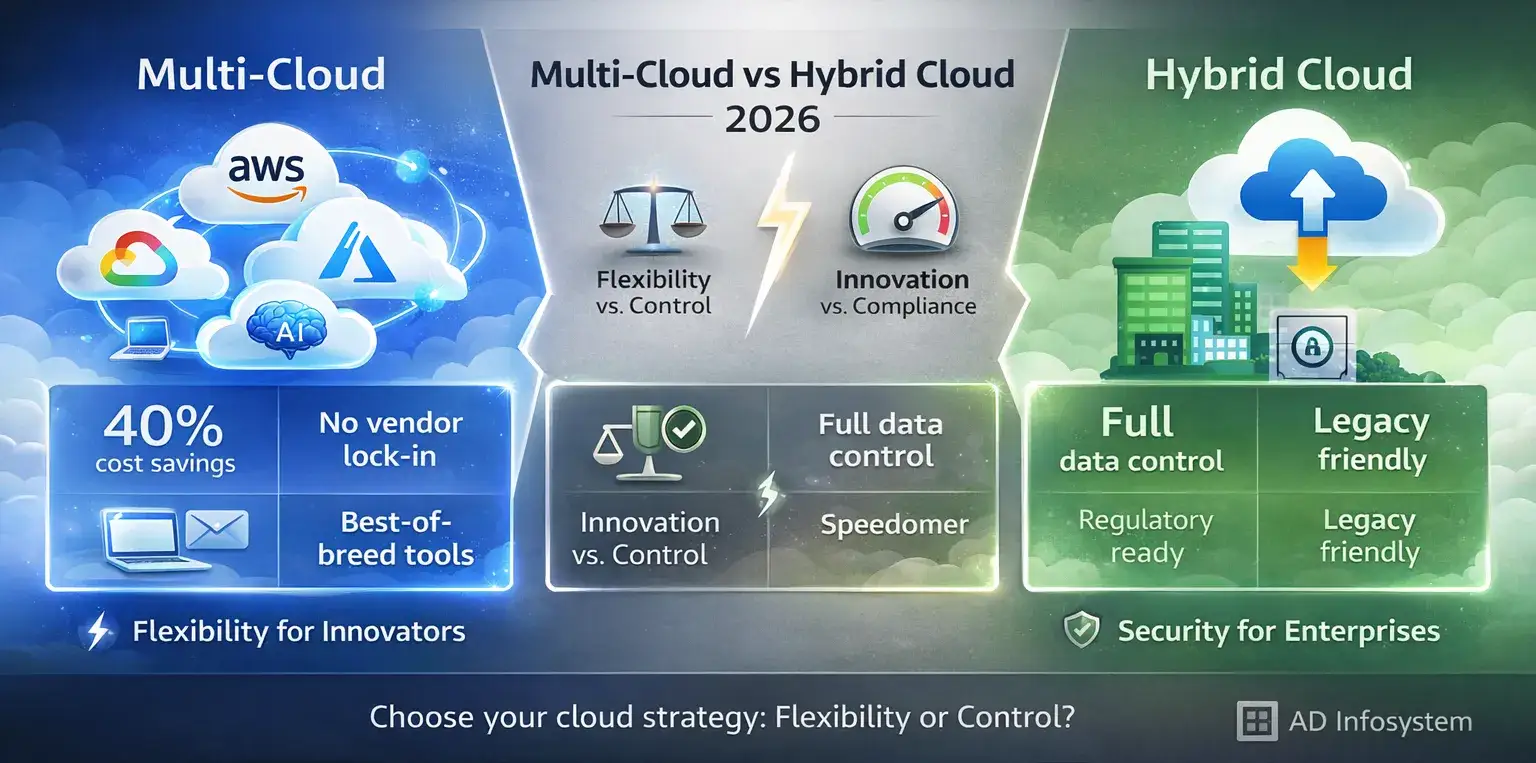
Multi-Cloud: The Rise of "Best of Breed"
Here's a secret: You don't have to choose just one.
Many organizations use a multi-cloud strategy:
-
AWS for core infrastructure
-
Azure for Microsoft workloads
-
GCP for data analytics and AI
Or they pick based on region, cost, or specific services.
Example: Use AWS for general compute, GCP's BigQuery for data warehousing, and Azure's OpenAI for generative AI.
Final Thought: Choose Your Weapon Wisely
The cloud isn't a one-size-fits-all solution. AWS, Azure, and GCP are all excellent platforms—each with unique strengths. The "best" one is the one that aligns with:
-
Your business goals
-
Your existing tech stack
-
Your team's skills
-
Your budget
-
Your compliance requirements
My advice:
-
Start with your non-negotiables (specific services, compliance, region)
-
Consider your team's expertise (skills gap = cost and delays)
-
Run a small pilot before going all-in
-
Don't be afraid to go multi-cloud if it makes sense
The cloud is a journey, not a destination. Pick a partner, learn, adapt, and grow.
Contact Us
Phone: +91 9667708830
Email: info@codingnow.in
Website: https://codingnowai.in/
Address:
2nd Floor, Kapil Vihar (Opp. Metro Pillar No.354)
Pitampura, New Delhi – 110034
Backlink to main website: Explore Python and AI courses at Coding Now – Gurukul of AI