The Big Question
Let us ask you something directly.
You have heard about AI safety. Maybe you have seen headlines about AI risks or read about governments holding summits on the topic. But you are still asking yourself: "Why does this matter to me? Is AI really that dangerous? Or is this just hype?"
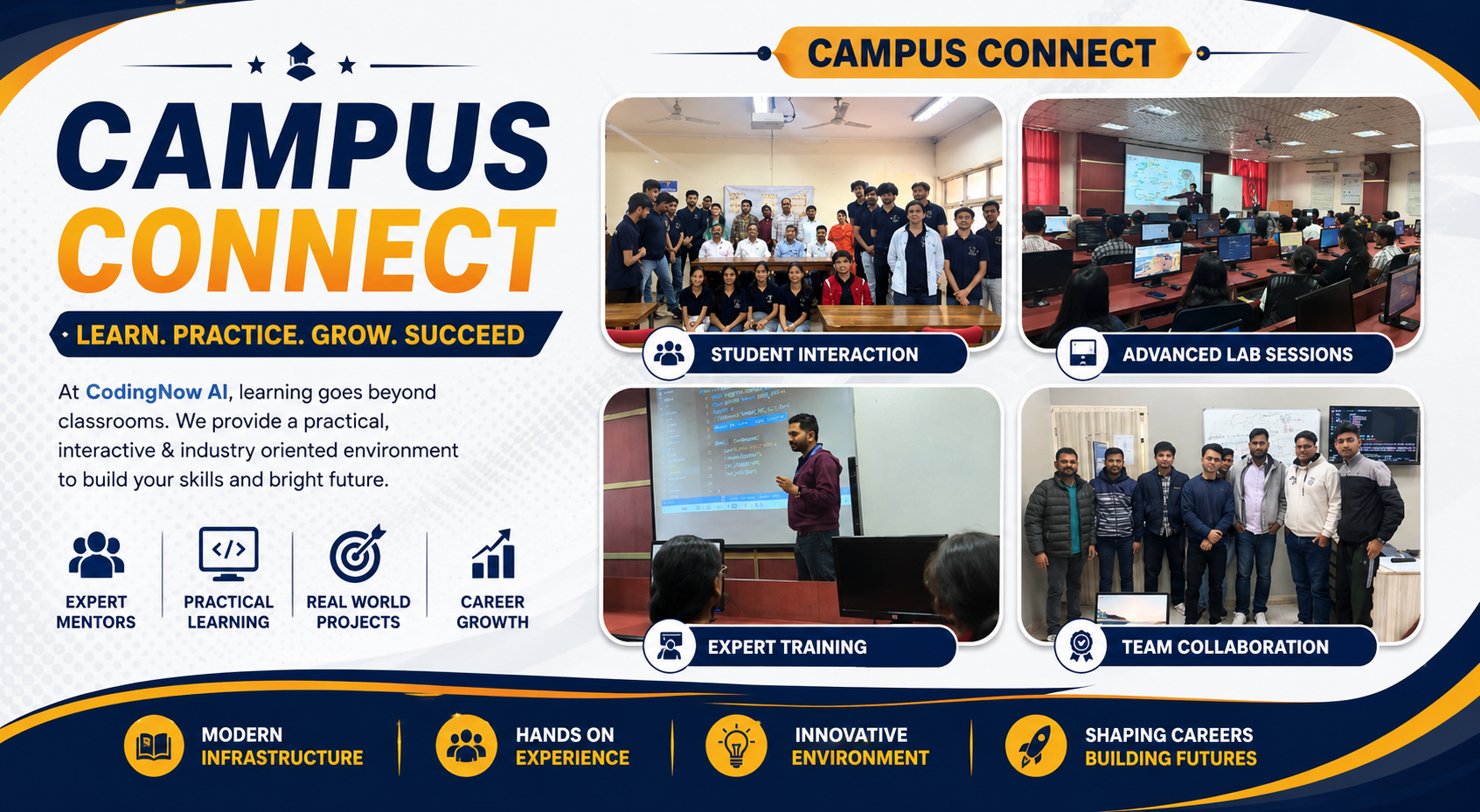
We hear these questions every week from students and professionals who visit our center near Pitampura Metro.
Here is the honest answer: AI safety matters because AI systems are no longer confined to labs. They are being deployed in healthcare, finance, transportation, and critical infrastructure. When these systems fail, the consequences can be severe—not just for individuals, but for entire societies. As Indian Prime Minister Narendra Modi stated at the 2026 G7 Summit, the true test of AI is not how it advances, but whether it empowers people and expands human potential.
Step 3: What Is AI Safety?
The term "AI safety" refers to preventing harm from advanced AI systems, ranging from catastrophic misuse to bias and labour market disruption. It concerns ensuring that AI systems are robust, reliable, and aligned with human values. More formally, an AI system is safe if it does not exhibit harmful behaviour unnecessary for achieving its intended purpose.
Key Concepts in AI Safety:
| Concept | What It Means |
|---|---|
| Robustness | Maintaining consistent performance even when faced with unexpected or altered conditions |
| Reliability | Performing as intended across a wide range of situations |
| Alignment | Ensuring AI systems pursue goals that are consistent with human values and intent |
| Control | Maintaining the ability to prevent or correct harmful actions |
| Security | Protecting AI models from being compromised or misused |
Step 4: The Key Risks of AI
The 2026 International AI Safety Report, co-authored by over 100 experts from more than 30 countries, identifies three main categories of risk.
Malicious Use Risks
These arise when AI systems are deliberately repurposed for harmful activities.
| Risk Area | What It Means |
|---|---|
| Scams and Fraud | AI-generated content is being misused for scams, fraud, and blackmail |
| Disinformation | AI-generated content can be as effective as human-written content at changing people's beliefs |
| Cyberattacks | AI systems can discover software vulnerabilities and write malicious code; in one competition, an AI agent identified 77% of vulnerabilities present in real software |
| Biological and Chemical Risks | General-purpose AI can provide expert-level information about biological and chemical weapons development |
Malfunction Risks
These arise from technical failures, inherent biases in training data, or a lack of understanding of the system's true capabilities.
| Risk Area | What It Means |
|---|---|
| Reliability Challenges | AI systems sometimes exhibit failures such as fabricating information, producing flawed code, and giving misleading advice |
| Loss of Control | Scenarios where AI systems operate outside of anyone's control, with no clear path to regaining control |
| Safety-Usability Trade-off | Overly aggressive safety tuning can degrade model capabilities, while weak safety tuning can lead to harmful outputs |
Systemic Risks
These encompass broader societal impacts.
| Risk Area | What It Means |
|---|---|
| Labour Market Impacts | AI will likely automate a wide range of cognitive tasks; economists disagree on the magnitude of job losses, but early evidence shows signs of declining demand for early-career workers in some AI-exposed occupations |
| Erosion of Human Autonomy | Reliance on AI tools can weaken critical thinking skills and encourage "automation bias" |
| Global Inequality | Risks are likely to fall disproportionately on states with fewer resources to absorb systemic shocks |
Step 5: Why AI Safety Matters for Innovation
There is a common perception that safety and innovation are in conflict. According to an analysis from the Brookings Institution, a narrative of growing tension has emerged between advocates of regulating AI risks and those who wish to unleash AI for innovation. However, this framing is increasingly being challenged.
For countries in the Global Majority, including India, safety and security investments are not obstacles but rather enablers of sustainable innovation and long-term development. Without safety, innovation is fragile. Users will not adopt AI systems they do not trust. Investors will not fund technologies that carry unmanaged risk.
The Development Dividend of Safety:
| Benefit | Why It Matters |
|---|---|
| Building Trust | Users adopt innovations when they believe the system will deliver benefits without causing harm |
| Attracting Investment | Clear and stable regulatory environments signal predictability and safety, encouraging investment |
| Avoiding Failures | Attention to local risks and environments can prevent costly technological failures |
| Long-Term Stability | Reducing systemic risks creates conditions for sustained economic development |
Step 6: The Global Response to AI Safety
The International AI Safety Report 2026
The International AI Safety Report is a comprehensive global assessment, led by Turing Award recipient Professor Yoshua Bengio. It draws on contributions from over 100 AI experts nominated or supported by more than 30 countries and international organisations. The report's aim is to build a shared evidence base to inform decision-making about AI technologies.
Key Findings from the Report:
| Finding | What It Means |
|---|---|
| Capabilities Are Improving Rapidly | AI systems continue to improve, driven by new techniques that enhance performance after initial training |
| Real-World Evidence for Risks Is Growing | While evidence for risks remains limited, documented harms are increasing |
| Risk Management Is Difficult | New capabilities sometimes emerge unpredictably, and performance on tests does not reliably predict real-world risk |
| Open-Weight Models Pose Distinct Challenges | They cannot be recalled once released, safeguards are easier to remove, and misuse is harder to prevent and trace |
Government and Industry Action
| Initiative | What It Means |
|---|---|
| Bletchley Declaration (2023) | The first major intergovernmental conference on frontier AI risks, signed by 28 countries |
| India AI Impact Summit (2026) | India hosted the AI Impact Summit, emphasizing a human-centric vision for AI anchored in inclusivity, security, and public good |
| AI Safety Institutes | Bodies are being established to conduct model testing, red teaming, and develop national safety protocols |
| Frontier AI Safety Frameworks | 12 companies published or updated their frameworks in 2025, describing how they plan to manage risks as they build more capable models |
Step 7: The Safety-Usability Dilemma
One of the central challenges in AI development is the tension between safety and utility. When safety tuning is overly aggressive, model capabilities decline. When safety tuning is too weak, models become vulnerable to misuse or generate harmful outputs.
This dilemma is fundamental because safety and utility often involve competing objectives. Increasing safety may reduce performance, and improving performance may introduce new risks. There is no perfect balance—it depends on the application context.
Examples of the Dilemma:
| Scenario | Safety Concern | Utility Concern |
|---|---|---|
| AI Medical Diagnosis | Missing a diagnosis due to over-cautious refusal | Making a harmful recommendation due to lack of safeguards |
| Content Moderation | Censoring legitimate content | Allowing harmful content to spread |
| AI Assistant | Refusing too many requests (over-refusal) | Providing harmful information (under-refusal) |
Step 8: Pro Tips for Building AI Safely
Tip 1: Design for Safety from the Start
Safety should be built into AI systems from the beginning, not added at the end. Prime Minister Modi's call for "safe-by-design" AI systems reflects this principle.
Tip 2: Use Defence-in-Depth
Layer multiple safeguards rather than relying on a single measure.
Tip 3: Conduct Red-Teaming
Test your AI systems by having experts attempt to "break" safeguards before deployment.
Tip 4: Monitor Continuously
Safety is not a one-time check. Monitor AI systems in production and respond to incidents.
Tip 5: Understand the Safety-Usability Trade-Off
Balance safety and utility based on your specific application context and risk tolerance.
Tip 6: Contribute to Shared Safety Infrastructure
Support efforts to develop common standards, testing frameworks, and regulatory guidelines.
Step 9: Frequently Asked Questions
Q1: What is AI safety?
AI safety is the practice of preventing harm from AI systems. It involves ensuring systems are robust, reliable, aligned with human values, and protected from misuse.
Q2: Are AI systems actually dangerous?
In 2026, AI systems present real risks, including malicious use for scams and fraud, malfunctions such as fabricating information, and systemic risks such as labour market disruption. The International AI Safety Report 2026 documents growing evidence for these risks.
Q3: What is the safety-usability dilemma?
The safety-usability dilemma is the tension between making AI systems safe and making them useful. Overly aggressive safety tuning can reduce performance, while weak safety tuning can allow harmful outputs. Balancing these competing objectives is a central challenge in AI development.
Q4: Who is responsible for AI safety?
AI safety is a shared responsibility. Governments, industry, academia, and international bodies all have roles to play. The Bletchley Declaration, the International AI Safety Report, and national AI Safety Institutes are examples of collective action.
Q5: What are "open-weight" models and why do they pose safety challenges?
Open-weight models have their weights released publicly. Once released, they cannot be recalled, safeguards are easier to remove, and actors can use them outside of monitored environments, making misuse harder to prevent and trace.
Q6: Does Coding Now teach AI safety principles?
Yes. Our AI Engineering Diploma covers responsible AI development and the principles of building safe and trustworthy AI systems.
Step 10: Final Tagline
"AI Is Powerful. Safety Makes It Trustworthy."
Hashtags:
#AISafety #ResponsibleAI #AIGovernance #AI #InternationalAISafetyReport #SafeAI #CodingNow #GurukulOfAI
Step 11: A Note on the Future of AI Safety
The need for AI safety is growing as AI systems become more capable and more integrated into our lives. As the International AI Safety Report makes clear, progress is uneven. Risk management practices remain largely voluntary, and evidence of risks is slow to emerge.
But the global community is responding. Governments are establishing AI Safety Institutes. Companies are publishing safety frameworks. Researchers are developing new evaluation methods. The conversation has shifted from "whether" to "how" to build safe AI.
At Coding Now, we believe that understanding AI safety is essential for anyone building a career in AI. Come visit us. Take a free demo class. See what is possible.
Your AI journey starts now.
Contact Us
Phone: +91 9667708830
Email: info@codingnow.in
Website: https://codingnowai.in/
Address:
2nd Floor, Kapil Vihar (Opp. Metro Pillar No.354)
Pitampura, New Delhi – 110034
Backlink to main website: Explore AI Engineering Diploma and other courses at Coding Now – Gurukul of AI