The Big Question
Let us ask you something directly.
You run a retail business or work in e-commerce. You have seen the AI hype. But you are still asking yourself: "Is AI actually delivering personalized shopping experiences that drive sales? Where should I invest? What is real and what is just hype?"
We hear these questions every week from professionals who visit our center near Pitampura Metro.
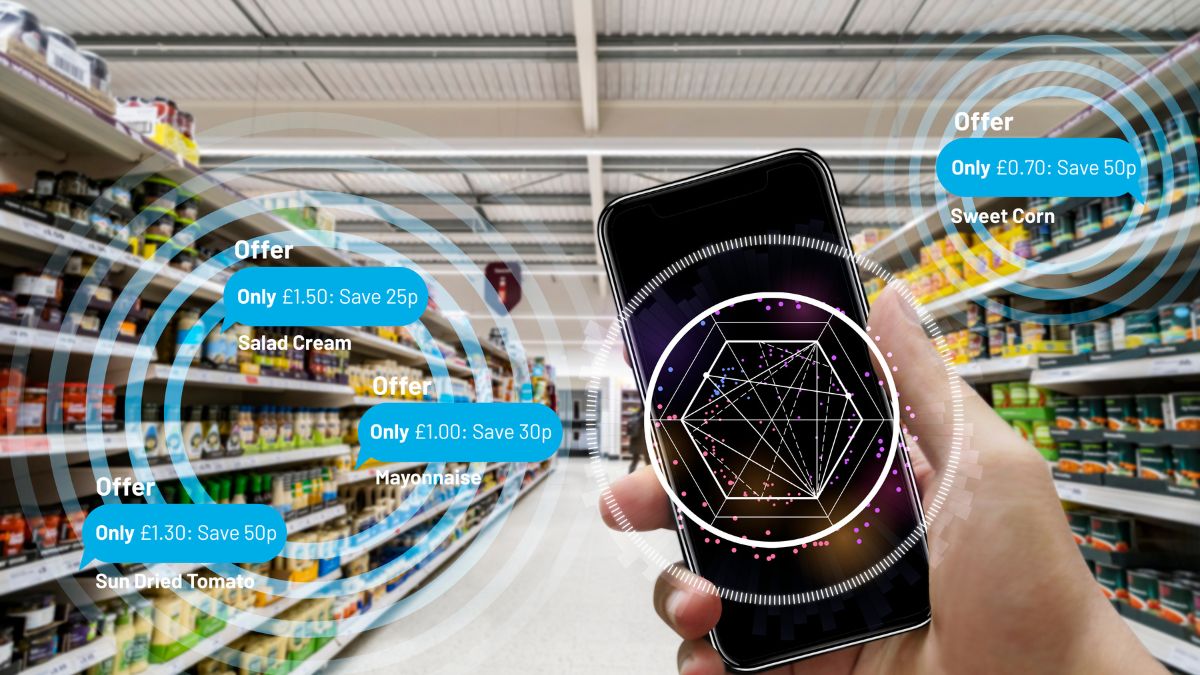
Here is the honest answer: AI is turning shopping into a trusted conversation, much more than a search . Consumers now rely on assistants that feel almost human, know their preferences, and offer neutral, best-for-me advice. The companies pulling ahead are not the ones with the most AI tools—they are the ones using AI to deliver relevance at scale .
According to a global IBM-NRF study of over 18,000 consumers, 45% of shoppers already turn to AI for help during their buying journeys . They use AI to research products (41%), interpret reviews (33%), and hunt for deals (31%). The expectation for AI-powered personalization is forming faster than most retail operating models can keep pace .
Let us look at what is actually working.
Step 3: The Big Picture – From Search to Intent-Led Commerce
The shift is profound. Flipkart's Chief Product and Technology Officer Balaji Thiagarajan describes it as moving "from search to intent-based" commerce—where customers increasingly expect interactions that mirror the experience of speaking with a store associate rather than typing keyword-based searches .
Key Trends Driving the Shift:
| Trend | What It Means |
|---|---|
| Search to Intent | AI understands broader customer intent, not just keywords |
| Conversational Commerce | Chat and voice replace typed queries |
| Proactive Personalization | AI anticipates needs before customers express them |
| Agentic Commerce | AI agents perform specialized tasks autonomously |
| N=1 Personalization | Tailoring experiences to individual users and local contexts |
Flipkart is deploying an AI-powered interface where traditional search functions are being replaced by conversational experiences . The shift is also expanding the data foundation of commerce platforms beyond transaction histories and catalog information to include contextual knowledge, local insights, and multimodal interactions.
As one retail expert put it, "AI is going to sit between the shopper and the shelf—whether that shelf is physical or digital. Instead of typing 'best moisturizer' or scrolling endlessly, consumers will increasingly rely on AI to surface options, compare prices, check ingredients and personalize recommendations based on context and the shopper's personal history" .
Step 4: How Retailers Are Deploying AI for Personalization
1. AI-Powered Recommendations and Discovery
Flipkart
Flipkart is building what Thiagarajan calls an ecosystem of intelligent agents: "We have search agents, product Q&A agents, payment agents, agents that understand how to take care of customer queries, and agents that can act as a personal concierge" . These systems are being deployed across customer journeys, seller workflows, warehouse operations, and forecasting functions.
Kendra Scott
The jewelry brand's AI Copilot answers roughly 93% of customer inquiries, a 53% increase from a previous version . Today, as much as 6% of Kendra Scott's e-commerce sales are influenced by AI Copilot, and the brand has seen a 160% increase in revenues stemming from interactions with the tool. The company is also using predictive AI for marketing, reading over 500 customer behavioral signals that feed into personalized marketing messages, resulting in a 5% revenue per visitor lift .
Google Cloud's Shopping Agent
Google Cloud has unveiled Gemini Enterprise for CX, introducing new agents that can be deployed in days, not months, capable of managing the entire customer lifecycle—from initial product discovery to autonomous post-purchase resolution . These agents can independently plan, reason, and act on your behalf, under your supervision. Kroger, Lowe's, Papa John's, and Woolworths are already using Gemini Enterprise for CX to deliver elevated experiences for their customers .
2. Conversational and Voice Commerce
Williams-Sonoma's "Olive" Sous Chef Agent
Williams-Sonoma is building a sous chef agent on Salesforce Agentforce 360 that helps customers plan menus, discover products, and execute recipes with confidence . Customers will be able to interact with Olive, who will soon reason over data, infer intent, and deliver a customized plan for experiences such as hosting Thanksgiving dinner—creating a detailed menu with recipes, generating a shopping list, and recommending the right kitchen tools and food products—even from past purchases the customer already owns .
Flipkart's Voice-Led Commerce
Thiagarajan identified voice-enabled shopping experiences in Indian languages as a major growth vector, making digital commerce more accessible to users across geographies and demographics .
3. Visual Discovery and Multimodal AI
Lush's In-Store Visual Recognition
Lush has brought AI from its popular Lush Lens app feature directly to its in-store tills, powered by Google Cloud. Using Google Cloud Storage to host a library of over half a million product images and built with Gemini via Vertex AI, Lush tills can now instantly identify any unpackaged product held up to the camera . What was once a manual lookup is now a split-second scan. During the Christmas peak in Glasgow, queue times dramatically reduced from out-the-door to around just three minutes .
Pinterest's Multimodal Visual Search
Pinterest's proprietary multimodal visual search model now outperforms leading off-the-shelf models by over 30 percentage points on the relevance of shopping recommendations, according to Julie Towns, Vice President of Product Marketing and Product Operations at Pinterest . The platform's "taste graph" has grown more than 70% in the last two years .
4. AI-Powered Marketing and Content
Meta's AI Shopping Engine
Meta is positioning AI as the new shopping engine behind modern e-commerce marketing . The company is exploring the ability to create UGC-style videos with avatars and voiceovers alongside studio-style generation, and generative AI voiceover translation capabilities are now available for more advertisers .
Authentic Brands Group
Authentic Brands Group (owner of more than 50 iconic brands including Juicy Couture, Reebok, and SHAQ) integrated Google Cloud's most advanced media models, such as Imagen 3 and Veo 3.1, into its "Authentic Intelligence" platform . More than 80% of Authentic employees use the platform weekly. In early testing, Reebok ad creative enhanced by Authentic delivered up to 60% higher return on ad spend (ROAS) compared to traditional product imagery .
5. Retailer Digitization and Kirana Stores
Coca-Cola India's Coke Buddy
Coca-Cola India's eB2B platform Coke Buddy serves more than one million retailers, ranging from neighbourhood kirana stores to local supermarkets . The most popular feature is the AI-driven 'Suggested Order' functionality, which uses a retailer's purchasing pattern, range of products, and seasonality to come up with replenishment recommendations customized to each outlet . Over one-third of all Coke Buddy orders are made after 6 pm or on Sundays—when retailers find time to check their stock and plan their next purchase .
6. Predictive Commerce and Smart Recommendations
The Home Depot's Magic Apron Agent
The Home Depot announced a major expansion of its partnership with Google Cloud, ushering in a new era of agentic retail powered by Google's Gemini models . This initiative transforms the customer experience through an advanced Magic Apron agent, which offers conversational project planning localized at the store level for precise aisle-level navigation and product knowledge with support for chat or voice in thousands of languages. The collaboration introduces AI-powered materials list generation for Pro contractors and equips thousands of associates with Gemini Enterprise tools .
Jo Malone London's AI Scent Advisor
The Estée Lauder Companies and Jo Malone London built the future of personalized beauty with their AI Scent Advisor, developed with Vertex AI and Gemini . This sophisticated conversational agent recreates the brand's signature in-store consultation for the digital world. By allowing customers to describe scents in their own natural language, the agent maps personal preferences to Jo Malone's complex olfactory data, providing bespoke, expert-informed recommendations that move a shopper from curiosity to a confident purchase .
Step 5: The Rise of Agentic Commerce
The most significant shift in 2026 is the emergence of agentic commerce—where AI agents perform specialized tasks and collaborate across the e-commerce value chain . Badri of Flipkart believes agent-based systems will become pervasive over the next two years, with virtually every major commerce workflow supported by dedicated AI agents .
What Agentic Commerce Means for Personalization:
| Aspect | Traditional Retail | Agentic Commerce |
|---|---|---|
| Discovery | Search-based, self-directed | Intent-led, AI-curated |
| Decision Support | Manual research | AI agents handle cognitive drudgery |
| Execution | Human-led | Agent-automated |
| Scale | One-to-many | N=1 personalization |
Retailers and brands face a new reality: AI agents are becoming the new gatekeepers . As Ogilvy's Griffin Smith noted, "Brands will be competing not just for human attention but for a place inside the agent's recommendation logic. That means shaping how consumers use and configure their agents and optimizing content so it's part of that search" .
Step 6: Consumer Trust and Human Touch
As powerful as AI may be, retail leaders note a consistent gap: AI's ability to interpret human meaning and emotion remains limited, elevating the importance of brand-led storytelling and trust . Even as AI accelerates utility, human creativity becomes more, not less, important.
"There will be a lag in the translation of that intelligence into emotionally resonant, brand-led experiences," said Shae Hong, CEO and co-founder of Made by Gather. "Human creativity and design still set the experiences that people remember" .
Reddit's Anna Haffner put it simply: "In a landscape increasingly defined by algorithms and AI, it's still authentic human conversation that sparks discovery, refines consideration and ultimately converts interest into action" .
Step 7: Key Takeaways
| Strategy | How It Drives Personalization |
|---|---|
| Intent-Led Commerce | AI understands broader customer intent |
| Conversational Interfaces | Chat and voice replace search |
| Visual Discovery | Multimodal AI enhances product discovery |
| AI Recommendations | Personalized suggestions at scale |
| Agentic Commerce | Autonomous agents handle complex workflows |
| Data Readiness | Unified customer data drives personalization |
Step 8: Frequently Asked Questions
Q1: What is the difference between search-led and intent-led commerce?
Search-led commerce relies on keyword-based queries. Intent-led commerce uses AI to understand broader customer intent, creating conversational experiences that mirror interactions with a store associate .
Q2: Is AI actually delivering personalized shopping experiences?
Yes. Flipkart is deploying conversational AI interfaces . Kendra Scott saw a 160% increase in revenues from AI interactions . Williams-Sonoma expects to resolve more than 60% of chat inquiries autonomously .
Q3: What is agentic commerce?
Agentic commerce is where AI agents perform specialized tasks and collaborate across the e-commerce value chain—including search agents, product Q&A agents, payment agents, and personal concierge agents .
Q4: Are consumers actually using AI for shopping?
Yes. A global IBM-NRF study found 45% of consumers turn to AI for help during their buying journeys, using it to research products (41%), interpret reviews (33%), and hunt for deals (31%) .
Q5: What is the biggest challenge in implementing AI personalization?
Data readiness. More than half of brand executives report persistent challenges with data integration across channels and systems . As one executive noted, "If you don't have the right data, it doesn't work" .
Step 9: Final Tagline
"AI Is Turning Shopping from a Search into a Conversation. Are You Ready?"
Hashtags:
#AIinRetail #PersonalizedShopping #AgenticCommerce #RetailAI #EcommerceAI #IntentLedCommerce #CodingNow #GurukulOfAI
Step 10: A Note on the Future of AI in Retail
The future of Indian e-commerce is interactive, intelligent, and deeply connected . The companies pulling ahead are not the ones with the most AI tools. They are the ones that deliver relevance at scale—not just to improve conversion, but also to build trust, emotional connection, and long-term loyalty by showing up in the right moment with the right tone and a clear understanding of who the customer is .
As Flipkart executives argued, AI will become a foundational layer underpinning everything from customer discovery and seller growth to fulfilment and network optimisation . The next stage of e-commerce will be defined not only by scale but by the ability to deliver highly contextual, intelligent, and personalised experiences in real time .
At Coding Now, we help build the skills to implement AI effectively in retail and other industries. Come visit us. Take a free demo class. See what is possible.
Your AI retail journey starts now.
Contact Us
Phone: +91 9667708830
Email: info@codingnow.in
Website: https://codingnowai.in/
Address:
2nd Floor, Kapil Vihar (Opp. Metro Pillar No.354)
Pitampura, New Delhi – 110034
Backlink to main website: Explore AI courses at Coding Now – Gurukul of AI