A new role is emerging at the intersection of AI governance and technical audit. The Agent Auditor monitors, evaluates, and holds accountable the AI agents that enterprises are deploying at scale. Demand is already outpacing supply, and the regulatory clock is ticking.
If you've followed the AI governance conversation, you've likely heard about AI governance specialists and prompt engineers. But a newer, more specialized role is emerging: the Agent Auditor. This role sits at the intersection of technical AI understanding, audit methodology, and regulatory compliance. It is being created because organizations deploying AI agents at scale cannot simply trust them to work correctly—they need professionals who can continuously verify that they do .
What Is an Agent Auditor?
An Agent Auditor is a professional who monitors, evaluates, and holds accountable the AI agents that enterprises deploy. The role is not about building AI systems or writing policy—it is about verifying that AI systems behave as intended, safely, and within regulatory requirements.
The role is driven by a fundamental shift: enterprises are moving from building AI agents to deploying them in production. Once an AI agent can take actions, the question changes from "can it generate useful text?" to "can it be trusted to make decisions and take actions without harmful consequences?"
What Agent Auditors do:
-
Conduct runtime accountability checks on autonomous AI agents
-
Manage audit trails for agent decisions and interventions
-
Detect and document hallucinations or unsafe outputs
-
Design human escalation protocols when agents fail
-
Ensure compliance with regulations like the EU AI Act
The Regulatory Driver: Why This Role Exists Now
The most significant market catalyst for the Agent Auditor role is not organic enterprise demand—it is regulation. The European Union AI Act, which entered into force in August 2024, creates a tiered compliance framework that has created a formal mandate for this function.
The key provisions of the EU AI Act that create the Agent Auditor role are in Articles 8–15, which impose on providers of high-risk AI systems a documented requirement for :
-
Risk management systems with ongoing runtime evaluation
-
Data governance measures covering training and operational datasets
-
Technical documentation updated throughout the system lifecycle
-
Automatic logging of agent decisions and interventions
-
Human oversight mechanisms with meaningful intervention capability
-
Accuracy, robustness, and cybersecurity safeguards
These requirements, read carefully, constitute a job description. The Agent Auditor's core functions—continuous runtime accountability, audit trail management, hallucination detection, and human escalation protocol—map directly onto the legislative mandate .
The Timeline: What's Happening When
The regulatory landscape has shifted with the Digital Omnibus on AI. Key deadlines:
-
2 August 2026: Transparency obligations (informing users they interact with AI) continue to apply
-
2 December 2027: High-risk AI systems (Annex III) must now comply—delayed from August 2026
-
2 August 2028: High-risk AI systems embedded in regulated products (Annex I) must comply
Important: While deadlines have been extended, the underlying obligations remain unchanged. Penalties for non-compliance can reach €35 million or 7% of global annual revenue . The sanctions framework remains intact.
The 72-hour and 15-day incident reporting windows to national authorities create operational urgency that cannot be met with ad-hoc review processes. Enterprises that deploy high-risk AI systems in EU markets must build or hire the Agent Audit function or face significant penalties .
Where Agent Auditors Come From
The role does not yet have a dedicated educational pathway. What it does have is a set of predecessor roles whose practitioners are best positioned for lateral transition .
From MLOps
Professionals with production ML systems experience—particularly those who have operated model monitoring pipelines, managed model drift, and built evaluation frameworks—hold the technical layer of the Agent Auditor competency model. Their gap is typically regulatory and governance literacy, which can be acquired through certification programs .
Bridge to close: AI governance certification (AIGP), understanding of EU AI Act requirements
From Internal Audit and Compliance
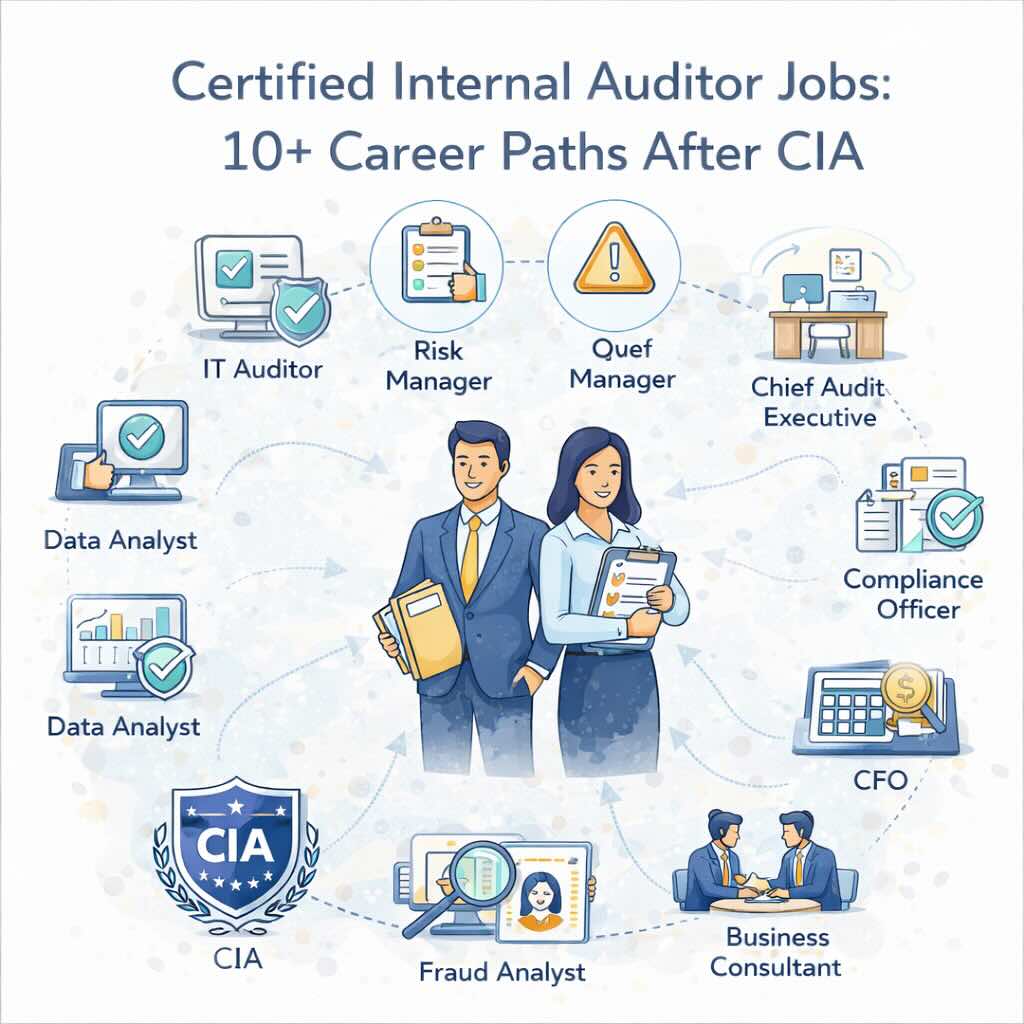
IT auditors and AI ethics officers bring the governance layer—risk assessment methodologies, documentation standards, and regulatory mapping—but typically lack the systems-level understanding of how multi-agent architectures fail .
Bridge to close: Technical AI understanding—model types, bias, drift, multi-agent architectures
From Security and Penetration Testing
The overlap between red-team AI security work and Agent Auditing is substantial. Professionals who have conducted adversarial testing of AI systems—prompt injection, tool abuse, agent-to-agent attack surface analysis—hold skills that are directly applicable to the threat model assessment component of agent auditing .
Bridge to close: Understanding of AI governance, compliance documentation, and regulatory frameworks
Salary Architecture and Career Progression
The Agent Auditor role is emerging with a clear salary architecture. According to Axial Search market data and TechJack Solutions' January 2026 salary analysis :
| Level | Experience | Typical Titles | Salary Range (USD) |
|---|---|---|---|
| Early Career | 2-5 years | AI Governance Analyst, AI Risk Analyst | $100,000 – $122,000 |
| Mid-Career | 5-10 years | AI Governance Manager, Agent Audit Lead | $140,000 – $200,000 |
| Senior | 10+ years | Director of AI Governance, Agent Audit Principal | $150,000 – $295,900 |
| Executive | 15+ years | Chief AI Officer, Head of AI Governance | $250,000 – $540,000+ |
The AI skills wage premium: PwC's 2025 analysis found that roles requiring AI skills carry a 56% wage premium over comparable non-AI positions, up from 25% one year earlier .
The AIGP Certification Premium
The International Association of Privacy Professionals (IAPP) offers the Artificial Intelligence Governance Professional (AIGP) certification. It is the most recognized credential in the field .
What the data shows: AIGP certification holders earn a US median of $182,000 . This is a 10-15% premium controlled for seniority, jumping to 27% when stacked with another IAPP certification .
The certification pays for itself: Professionals whose roles bridge privacy and AI governance earn a US median of $169,700, compared to $151,800 for AI-only practitioners. Adding CIPP/E or CIPM to AIGP adds roughly $24K per year on top .
Who the certification is for: CIOs, CISOs, cybersecurity managers, IT managers, IT auditors, and professionals with intermediate-level IT systems, cybersecurity management, and business governance experience .
The Market Is Growing Fast
Demand: LinkedIn's 2026 Skills on the Rise report puts AI governance demand at +150% year-over-year. AI ethics is +125% . SignalHire's analysis of over 850 million professional profiles found that AI governance roles recorded over 1,200% growth in posting volume in 2026 .
Supply is the problem: The most significant driver of the AI governance talent shortage is not a lack of technical professionals—it's the parallel shortage of legal, compliance, and audit professionals with sufficient understanding of AI technologies to govern effectively. The gap will take five to seven years to resolve through educational pipeline development .
The EDI dimension: Barclay Simpson's 2026 survey found that AI governance is already male-dominated. 40% of employers surveyed identified "increasing representation among leadership and board" as the biggest challenge in creating a diverse and inclusive culture .
How to Position Yourself
If You Come From...
MLOps: You already understand the technical side. The gap to close is governance and regulatory literacy. Start with the EU AI Act's risk classification system and NIST AI RMF .
Internal Audit / Compliance / Risk: You already understand governance frameworks. The gap is technical AI understanding. Learn how multi-agent architectures fail, what model drift means, and how AI systems make decisions .
Security / Penetration Testing: You already understand how systems fail. The gap is governance and compliance documentation. Learn how to document AI systems for regulatory purposes and what the EU AI Act requires .
90-Day Learning Plan
Days 1–30:
-
Study the EU AI Act risk classification system
-
Begin AIGP certification prep—there are no prerequisites
-
Read NIST AI RMF 1.0
Days 31–60:
-
Study AI/ML fundamentals—model lifecycle, bias, drift, explainability
-
Explore AI governance platforms (Credo AI, Holistic AI, Monitaur)
-
Build an AI risk assessment template as a portfolio piece
Days 61–90:
-
Take AIGP exam (CIPP + AIGP is the most valued credential pairing)
-
Lead or volunteer for an AI governance initiative at your current organization
-
Apply to AI Governance Lead, AI Governance Manager, or Agent Auditor roles
Frequently Asked Questions (FAQs)
What is an Agent Auditor?
An Agent Auditor monitors, evaluates, and verifies the behavior of autonomous AI agents in production environments. They conduct runtime accountability checks, manage audit trails, and ensure AI systems operate safely and within regulatory requirements .
What is the difference between AI Governance and Agent Auditing?
AI Governance establishes the policies, standards, and controls. Agent Auditing is the operational practice of verifying that those controls are actually working in deployed systems. Agent Auditing is to AI Governance what a security operations center is to security policy .
Do I need a computer science degree to become an Agent Auditor?
Not necessarily. The role is best filled by professionals who combine governance experience (audit, compliance, privacy, legal) with technical AI understanding. MLOps, security, and audit professionals are all well-positioned .
What certifications help in Agent Auditing?
AIGP (AI Governance Professional) is the core certification. The most effective combination is AIGP + a privacy credential (CIPP/E or CIPM) + an audit credential like ISO 42001 Lead Auditor or CISA .
What is the salary potential?
AI Governance Analysts earn $100,000–$122,000 . AI Governance Managers earn $140,000–$200,000. AI Governance Directors earn $150,000–$295,900 . Chief AI Officers earn $250,000–$540,000+ .
What is the EU AI Act timeline?
-
2 August 2026: Transparency obligations apply
-
2 December 2027: High-risk AI systems (Annex III) must comply
-
2 August 2028: High-risk AI systems embedded in regulated products (Annex I) must comply
Is the EU AI Act deadline being extended?
Yes, the Digital Omnibus on AI delayed the Annex III high-risk AI compliance deadline from August 2026 to December 2027. However, the underlying obligations remain unchanged, and penalties for non-compliance remain severe .
Build Your Agent Auditor Career with Coding Now – Gurukul of AI
The Agent Auditor role represents the convergence of AI governance, technical audit, and compliance expertise. At Coding Now – Gurukul of AI, our programs build the AI literacy, governance, and audit skills that employers in this emerging role are actively seeking.
Visit us: https://codingnowai.in/ .
Conclusion
The Agent Auditor is emerging as a critical new role as organizations move from building AI agents to deploying them in production. The role is driven by regulation—the EU AI Act creates a formal mandate for continuous runtime accountability, audit trail management, and human oversight. The demand is growing, the compensation is attractive, and the role is open to professionals from audit, compliance, security, and MLOps backgrounds. The regulatory clock is ticking, and the time to position yourself is now.
AI Auditor Career 2026: The New Role Shaping AI Governance
AI governance roles have grown over 1,200% in recruiter searches in 2026, and a new specialized position—the AI Auditor—is emerging as one of the most critical functions in the enterprise risk landscape. Companies like Blue Shield of California, EY, and Allstate are actively hiring, with salaries reaching $180,000+.
The AI Auditor role sits at the intersection of technical AI understanding, audit methodology, and regulatory compliance. It is being created because organizations deploying AI at scale cannot simply trust systems to work correctly—they need professionals who can continuously verify that they do. This role has become non-negotiable as the EU AI Act's compliance deadlines approach and organizations face potential fines of up to €35 million or 7% of global annual revenue.
What Is an AI Auditor?
An AI Auditor is a professional who evaluates artificial intelligence systems for risk, compliance, and operational integrity. The role is not about building AI systems—it is about verifying that AI systems behave as intended, safely, and within regulatory requirements .
What AI Auditors do:
-
Evaluate AI governance models and risk management frameworks
-
Perform algorithm audits reviewing robustness, security, bias, and interpretability
-
Test AI system controls, user behavior, and data flows for compliance
-
Investigate AI-enabled fraud, insider threats, and policy violations
-
Ensure regulatory compliance with the EU AI Act, GDPR, and other frameworks
-
Advise on standards such as ISO 42001 and NIST AI RMF
-
Review system documentation to identify risks and control gaps
The role at Blue Shield of California: The Senior AI Auditor "supports AI-focused audits, advisory reviews, and investigative activities designed to identify inappropriate, suspicious, fraudulent, unauthorized, unethical, or non-compliant AI activity." This includes testing AI system activity, user behavior, prompts, outputs, logs, access patterns, and system usage trends .
At EY, the AI Auditor "participates in strategic projects involving the review and audit of AI governance models, internal controls, and regulatory compliance" and "performs algorithm audits, reviewing key KPIs such as robustness, security, bias, interpretability" .
Why AI Auditors Are in Demand in 2026
Regulatory Mandates
The most significant market catalyst is regulation. The EU AI Act, which entered into force in August 2024, creates mandatory compliance requirements for high-risk AI systems. Key provisions in Articles 8-15 impose :
-
Risk management systems with ongoing runtime evaluation
-
Data governance measures for training and operational datasets
-
Technical documentation updated throughout the system lifecycle
-
Automatic logging of agent decisions and interventions
-
Human oversight mechanisms with meaningful intervention capability
-
Accuracy, robustness, and cybersecurity safeguards
The timeline is creating urgency:
-
2 December 2027: High-risk AI systems (Annex III) must comply
-
2 August 2028: High-risk AI systems embedded in regulated products (Annex I) must comply
The 72-hour and 15-day incident reporting windows to national authorities create operational urgency that cannot be met with ad-hoc review processes .
The EU AI Act's high-risk classification explicitly includes AI systems used in recruitment, credit scoring, and critical infrastructure—meaning organizations in every sector must now comply with mandatory technical documentation, bias auditing, and human oversight mechanisms.
The AI Governance Hiring Surge
SignalHire's analysis of over 850 million professional profiles found that AI governance roles recorded over 1,200% growth in posting volume in 2026. Prompt engineering grew 777%. AI Leadership, Management, and Product roles increased 74% .
The shift reflects organizational scale. McKinsey's 2025 State of AI report found that nearly 90% of organizations now regularly use AI in operations. At that adoption level, AI governance and management have become core business functions .
Who's Hiring AI Auditors
| Employer | Role | Location | Experience | Focus Area |
|---|---|---|---|---|
| Blue Shield of California | Senior AI Auditor | California | 5+ years | Fraud detection, compliance monitoring |
| EY GDS Spain | AI Junior Auditor | Spain | 1-3 years | AI governance, regulatory compliance |
| Allstate | Lead AI & Technology Risk Auditor | Remote | 5+ years | AI risk frameworks, data science |
| Deloitte Nordic | AI Governance and Risk Professional | Finland | 5+ years | AI governance models, EU AI Act |
| Aumovio | AI Compliance Officer | Romania | 5+ years | EU AI Act, automotive compliance |
Sources:
Skills You Need
Core Technical Skills
AI/ML Understanding: Familiarity with supervised/unsupervised learning, neural networks, natural language processing, and generative AI architectures .
Data Analytics: Proficiency in tools like SQL, Python, or Tableau for data extraction, analysis, and visualization .
AI Platforms: Awareness of platforms like Azure ML Studio, AWS Bedrock, AWS SageMaker, OpenAI models, and M365 Copilot Studio .
Regulatory and Governance Knowledge
EU AI Act: Understanding of risk classification, provider/deployer obligations, and compliance requirements. At EY, the AI Auditor "ensures regulatory compliance with the European AI Act and other applicable regulations" .
NIST AI RMF: The NIST AI Risk Management Framework is the governance playbook. EY advises clients on "international standards such as ISO 42001, NIST RMF" .
GDPR: Privacy and data protection requirements for AI data processing. Deloitte's role requires "strong knowledge of the GDPR" .
Auditing and Assurance Skills
Control Design and Testing: Experience assessing the design, implementation, and effectiveness of controls .
Audit Methodology: Understanding of IT audit processes, risk assessment, and internal control frameworks.
Certifications: CISA (Certified Information Systems Auditor) is required at Blue Shield of California . Allstate requires core certifications (CPA, CA, CISA, CIA, or CFE) within 18 months .
Salary Architecture and Career Progression
Tier 1 AI Governance Salaries (US)
| Level | Experience | Typical Titles | Salary Range |
|---|---|---|---|
| Early Career | 2-5 years | AI Governance Analyst, AI Risk Analyst | $95,000 - $122,000 |
| Mid-Career | 5-10 years | AI Governance Manager, AI Auditor Lead | $140,000 - $175,000 |
| Senior | 10+ years | Director of AI Governance, Lead AI Auditor | $150,000 - $273,000 |
Source: Axial Search market data (n=146) and TechJack Solutions January 2026 salary analysis
The AIGP Certification Premium
The International Association of Privacy Professionals (IAPP) offers the Artificial Intelligence Governance Professional (AIGP) certification. It is the most recognized credential in the field .
What the data shows:
-
AIGP holders earn a US median of $182,000 (IAPP 2025 data)
-
This is a 10-15% premium over non-certified peers controlled for seniority
-
Holding multiple IAPP certifications lifts the premium to 27%
-
The highest-leverage combination is AIGP + a privacy credential (CIPP/E or CIPM) + an audit credential (ISO 42001 Lead Auditor or CISA)
-
Adding CIPP/E or CIPM to AIGP adds roughly $24,000 per year on top
The takeaway: One certification pays off. Multiple certifications pay off significantly better.
Where AI Auditors Come From
The role does not yet have a dedicated educational pathway. According to market research , practitioners from three predecessor backgrounds are best positioned for lateral transition:
From Internal Audit and Compliance
IT auditors and AI ethics officers bring the governance layer—risk assessment methodologies, documentation standards, and regulatory mapping. Their gap is typically technical understanding of AI systems, which can be acquired through certification programs and structured training .
Bridge to close: AI/ML fundamentals, understanding of model types and architectures, familiarity with AI platforms.
From IT Audit and Technology Risk
Professionals with experience auditing cloud platforms, data systems, or complex IT environments bring the audit methodology and control evaluation skills. Their gap is AI-specific technical and regulatory knowledge.
Bridge to close: EU AI Act requirements, NIST AI RMF, AI/ML system understanding.
From MLOps and Data Science
Professionals with production ML systems experience—particularly those who have operated model monitoring pipelines and built evaluation frameworks—hold the technical layer of the competency model. Their gap is regulatory and governance literacy .
Bridge to close: AI governance certification (AIGP), understanding of EU AI Act requirements.
How to Position Yourself
If You Come From Audit or Compliance
You already understand governance frameworks and audit methodology. The gap is technical AI understanding. The learning path:
-
Study the EU AI Act's risk classification system
-
Learn NIST AI RMF 1.0
-
Build familiarity with AI/ML fundamentals—model lifecycle, bias, drift, explainability
-
Consider AIGP certification
-
Gain hands-on exposure to AI platforms
If You Come From IT or Technology
You already understand technical systems. The gap is regulatory and governance literacy. The learning path:
-
Study the EU AI Act and its requirements
-
Learn NIST AI RMF 1.0
-
Understand GDPR and data protection requirements for AI
-
Consider CISA or CIPP/E certification
-
Build a portfolio piece documenting an AI governance framework
The 90-Day Learning Plan
Days 1–30:
-
Study the EU AI Act risk classification system
-
Begin AIGP certification prep (no prerequisites required)
-
Read NIST AI RMF 1.0
Days 31–60:
-
Study AI/ML fundamentals—model lifecycle, bias, drift, explainability
-
Explore AI governance platforms (e.g., Azure AI Foundry)
-
Build an AI risk assessment template as a portfolio piece
Days 61–90:
-
Take AIGP exam
-
Lead or volunteer for an AI governance initiative at your current organization
-
Apply to AI Auditor, AI Governance Manager, or AI Compliance roles
Frequently Asked Questions (FAQs)
What is an AI Auditor?
An AI Auditor evaluates artificial intelligence systems for risk, compliance, and operational integrity. They perform algorithm audits, test system controls, investigate misuse, and ensure regulatory compliance with frameworks such as the EU AI Act.
What is the difference between AI Governance and AI Auditing?
AI Governance establishes the policies, standards, and controls. AI Auditing is the operational practice of verifying that those controls are actually working in deployed systems. AI Auditing is to AI Governance what a security operations center is to security policy.
Do I need a computer science degree to become an AI Auditor?
Not necessarily. The role is best filled by professionals who combine governance experience (audit, compliance, risk management) with technical AI understanding. Audit and compliance backgrounds are equally valued.
What certifications help in AI Auditing?
AIGP (AI Governance Professional) is the core certification. The most effective combination is AIGP + a privacy credential (CIPP/E or CIPM) + an audit credential like ISO 42001 Lead Auditor or CISA. AIGP holders earn a US median of $182,000.
What is the EU AI Act timeline?
-
2 December 2027: High-risk AI systems (Annex III) must comply
-
2 August 2028: High-risk AI systems embedded in regulated products (Annex I) must comply
Penalties for non-compliance can reach €35 million or 7% of global annual revenue.
What companies are hiring AI Auditors?
Blue Shield of California, EY, Allstate, Deloitte, and Aumovio are actively hiring AI Auditor and AI Compliance roles.
Build Your AI Auditor Career with Coding Now – Gurukul of AI
The AI Auditor role represents one of the fastest-growing career paths in 2026, with roles growing 1,200% and salaries reaching $180,000+. At Coding Now – Gurukul of AI, our programs build the AI literacy, governance, and audit skills that employers in this emerging role are actively seeking.