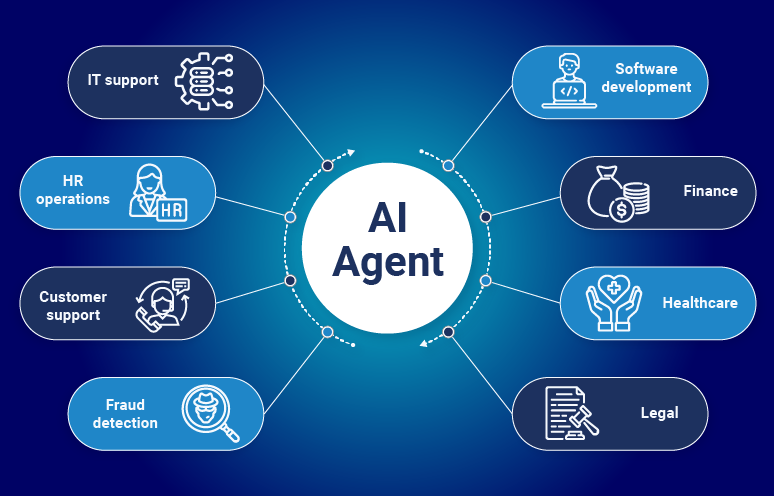
The most significant shift in AI hiring in 2026 is not just about generative AI—it is about agentic AI. The fastest-growing roles are no longer about using AI tools; they are about building autonomous systems that can reason, take action, and make decisions in complex environments like factory floors and clinical settings.
What employers are actively competing for now are skills that sit at the deployment and orchestration layer: multi-agent orchestration, retrieval-augmented generation (RAG), and production-grade AI engineering . Agentic AI roles have seen hiring growth of 180% to 260% over the last 12 months.
This guide explores the most exciting emerging AI roles in manufacturing and healthcare—two sectors where agentic AI is creating entirely new career paths.
1. Agentic Systems Engineer (Manufacturing)
What they do:
The Agentic Systems Engineer builds and deploys the software systems that power agentic AI platforms in manufacturing environments. This role owns the engineering backbone: APIs, services, data pipelines, and platform components that turn agentic AI solutions from prototype into production on the shop floor .
Key responsibilities:
-
Design, build, and maintain backend services and APIs for agentic AI applications across manufacturing platforms
-
Develop and operate the data integration layer: taxonomies, metadata, and structured stores that agentic AI applications depend on
-
Collaborate with manufacturing domain experts to translate manufacturing processes into software interfaces and data models
-
Integrate platform services into agentic AI workflows, chatbot interfaces, and decision-support tools deployed on the shop floor
-
Monitor service performance and improve reliability, scalability, and observability
Key skills :
-
Solid backend development (Python, FastAPI, REST APIs)
-
Experience designing production services: versioning, testing, CI/CD, deployment
-
Comfort with structured and unstructured data stores (SQL, NoSQL, graph databases)
-
Familiarity with containerization, orchestration, and cloud deployment (Docker, Kubernetes, Azure/AWS/GCP)
-
Enthusiasm for building agentic AI applications for real-world manufacturing
Who's hiring:
-
Advanced Remanufacturing and Technology Centre (ARTC), Singapore
-
Large manufacturing firms
-
Industrial AI startups
Qualifications: BEng/MEng/MSc in Computer Science, Data Engineering, AI; 2-5 years of relevant experience .
2. Manufacturing AI Systems Architect
What they do:
This is the lead engineering role that designs and builds agentic AI systems for manufacturing enterprise and shop floor environments. The Manufacturing AI Systems Architect connects agentic AI with existing manufacturing platforms and data sources, turning them into production-ready solutions that support real decisions on the shop floor .
Key responsibilities :
-
Define manufacturing system workflows, data flows, and API contracts across platform components
-
Architect end-to-end agentic AI platforms on cloud-native infrastructure (AKS, Azure OpenAI, API Management)
-
Design integration patterns between LLMs, knowledge graphs, vector databases, and reasoning engines
-
Recommend technology stacks for on-premise and cloud deployments based on scalability, cost, security, and maintainability
-
Lead architecture reviews, set engineering standards, and mentor junior engineers
-
Identify high-value use cases across maintenance, quality, planning, and scheduling
Key skills :
-
Hands-on experience with digital manufacturing systems (MES, SCADA, historians)
-
Experience designing distributed systems and cloud-native platforms (Azure, AWS, GCP)
-
Familiarity with AI/ML system integration: LLMs, agentic AI frameworks, APIs, vector search, knowledge graphs
-
Strong systems thinking—connecting data, AI models, and manufacturing applications
-
Experience with containers and orchestration (Docker, Kubernetes, AKS)
Who's hiring:
-
ARTC, Singapore (semiconductor, aerospace, FMCG sectors)
-
Large manufacturing enterprises
-
Industrial AI consultancies
Qualifications: BEng/BSc/MSc in Computer Science, Software Engineering; 6-10 years experience, with at least 3 years in a systems or solution architecture role .
3. AI Scientist – Manufacturing Knowledge Management
What they do:
This research-focused role works directly with engineers and domain experts to capture tacit expertise knowledge and represent it in forms that drive agentic AI reasoning and decision-support. The AI Scientist translates manufacturing knowledge into ontologies, decision rules, process flows, and knowledge graph schemas .
Key responsibilities :
-
Translate captured expertise into structured knowledge representations: ontologies, RDF, OWL, knowledge graphs
-
Elicit tacit expertise from manufacturing domain experts through structured interviews, workshops, and process walkthroughs
-
Conduct applied research on reasoning rules and inference methods to validate and enrich knowledge assets
-
Partner with AI engineers to integrate knowledge structures into LLM-, knowledge graph-, and RAG-based agentic applications
-
Develop reusable frameworks for knowledge capture across manufacturing use cases (semiconductor, precision engineering, aerospace)
Key skills :
-
Background in AI, cognitive science, information science, or knowledge management
-
Experience with knowledge representation technologies (ontologies, RDF, OWL, SPARQL, knowledge graphs)
-
Ability to communicate and build rapport with non-technical domain experts
-
Applied-research mindset—curious, rigorous, comfortable with ambiguity
-
Familiarity with manufacturing processes is a plus
Who's hiring:
-
ARTC, Singapore
-
Research institutes
-
Advanced manufacturing firms
Qualifications: PhD in AI, Cognitive Science, Information Science, or related field; 1-3 years applied research experience .
4. AI Engineer – Pharmacovigilance (Healthcare)
What they do:
This specialized AI Engineer role focuses on building intelligent pharmacovigilance agents that automate how adverse event data is processed and analyzed in clinical research. The role sits at the intersection of healthcare AI, regulatory compliance, and agentic systems .
Key responsibilities :
-
Implement specialized pharmacovigilance agents: write system prompts, configure model parameters, build tool-use definitions, define agent boundaries for precise adverse event processing
-
Build and iterate prompt chains for each processing step: source document parsing, field extraction, MedDRA coding, causality assessment, narrative drafting
-
Develop the deterministic rule engine layer: implement ICH E2B field validation, MedDRA hierarchy verification, regulatory logic constraints
-
Create and maintain evaluation datasets: annotated ground-truth cases, edge case libraries, regression test suites
-
Develop and maintain MCP (Model Context Protocol) servers to expose enterprise applications as standardized tools
-
Build human-in-the-loop feedback mechanisms and reviewer interfaces
Key skills :
-
Strong prompt engineering and experience with system prompts, few-shot examples, chain-of-thought, structured output formats
-
Python with LLM orchestration frameworks (LangChain, LangGraph)
-
Experience building evaluation pipelines for NLP or LLM outputs: precision/recall, confusion matrices, threshold tuning
-
Comfort with AWS services (S3, Lambda, IAM)
-
Experience with medical or clinical NLP is a strong plus
Who's hiring:
-
Parexel (multiple India locations: Hyderabad, Bengaluru, Punjab)
-
Clinical research organizations (CROs)
-
Pharmaceutical companies
-
Healthcare IT firms
Qualifications: 3+ years software engineering, with at least 1 year building LLM applications; Bachelor's in CS or related field .
Industry Snapshot: Agentic AI Roles
| Role | Sector | Key Skills | Who's Hiring |
|---|---|---|---|
| Agentic Systems Engineer | Manufacturing | Python, FastAPI, REST APIs, SQL/NoSQL, Docker, Kubernetes | ARTC, manufacturing firms |
| Manufacturing AI Systems Architect | Manufacturing | MES/SCADA, distributed systems, LLMs, agentic frameworks, cloud architecture | ARTC, industrial enterprises |
| AI Scientist – Manufacturing Knowledge Management | Manufacturing | Ontologies, RDF/OWL, knowledge graphs, expert elicitation, research mindset | ARTC, research institutes |
| AI Engineer – Pharmacovigilance | Healthcare | Prompt engineering, LangChain/LangGraph, evaluation pipelines, AWS, MedDRA/ICD-10 | Parexel, CROs, pharma firms |
The Talent Gap and Opportunity
In healthcare, the "dual competency" talent gap—professionals who understand both AI and the domain—has reached 38%. An estimated 250,000 professionals are needed to bridge this gap . The shortage is structural: many graduates fall into the trap of "understanding technology but not medicine, or understanding medicine but not algorithms" .
The wage premium for these skills is substantial. "Double-skilled talent" in AI healthcare commands salaries 30% higher than traditional roles .
The manufacturing sector faces a similar challenge. According to Deloitte and the Manufacturing Institute, the sector will need 3.8 million new workers by 2033, with nearly 1.9 million of those roles at risk of going unfilled.
How to Position Yourself
1. Choose a Domain, Then AI
The most valuable professionals are "dual competency" candidates—people who understand both manufacturing or healthcare and the AI stack. If you come from manufacturing, learn agentic AI. If you come from healthcare, learn AI engineering.
2. Master the Core Technical Skills
For agentic systems engineering: Python, FastAPI, REST APIs, SQL/NoSQL, Docker, Kubernetes . For pharmacovigilance AI: prompt engineering, LangChain, evaluation pipelines, medical terminologies .
3. Build Production Experience
Hiring managers want proof that you can deploy, monitor, and maintain AI systems in production—not just run Jupyter notebooks. Build an agentic workflow, deploy it, and measure its performance.
4. Learn to Translate Between Domains
The hardest part of AI integration is often not technical—it is getting different professional systems to understand each other. Doctors speak with clinical experience; engineers speak with algorithmic logic. The most valuable professionals are those who can stand between these worlds and translate .
Frequently Asked Questions (FAQs)
What is agentic AI?
Agentic AI refers to autonomous AI systems that can reason, use tools, take actions, and pursue goals over multiple steps—unlike simple chatbots that generate text in a single pass.
Which sector offers the best agentic AI career opportunities?
Healthcare and manufacturing both offer strong opportunities. Healthcare has a 250,000 professional gap . Manufacturing needs 1.9 million new workers by 2033.
What is the salary potential in agentic AI roles?
In healthcare, dual-skilled professionals command 30% more than traditional roles . In manufacturing, agentic systems engineers and AI architects command premium compensation.
How long does it take to transition into an agentic AI role?
If you have domain expertise, you can learn agentic AI skills in 6-12 months of focused effort. If you have AI skills, you need to build domain knowledge simultaneously.
Build Your AI Career with Coding Now – Gurukul of AI
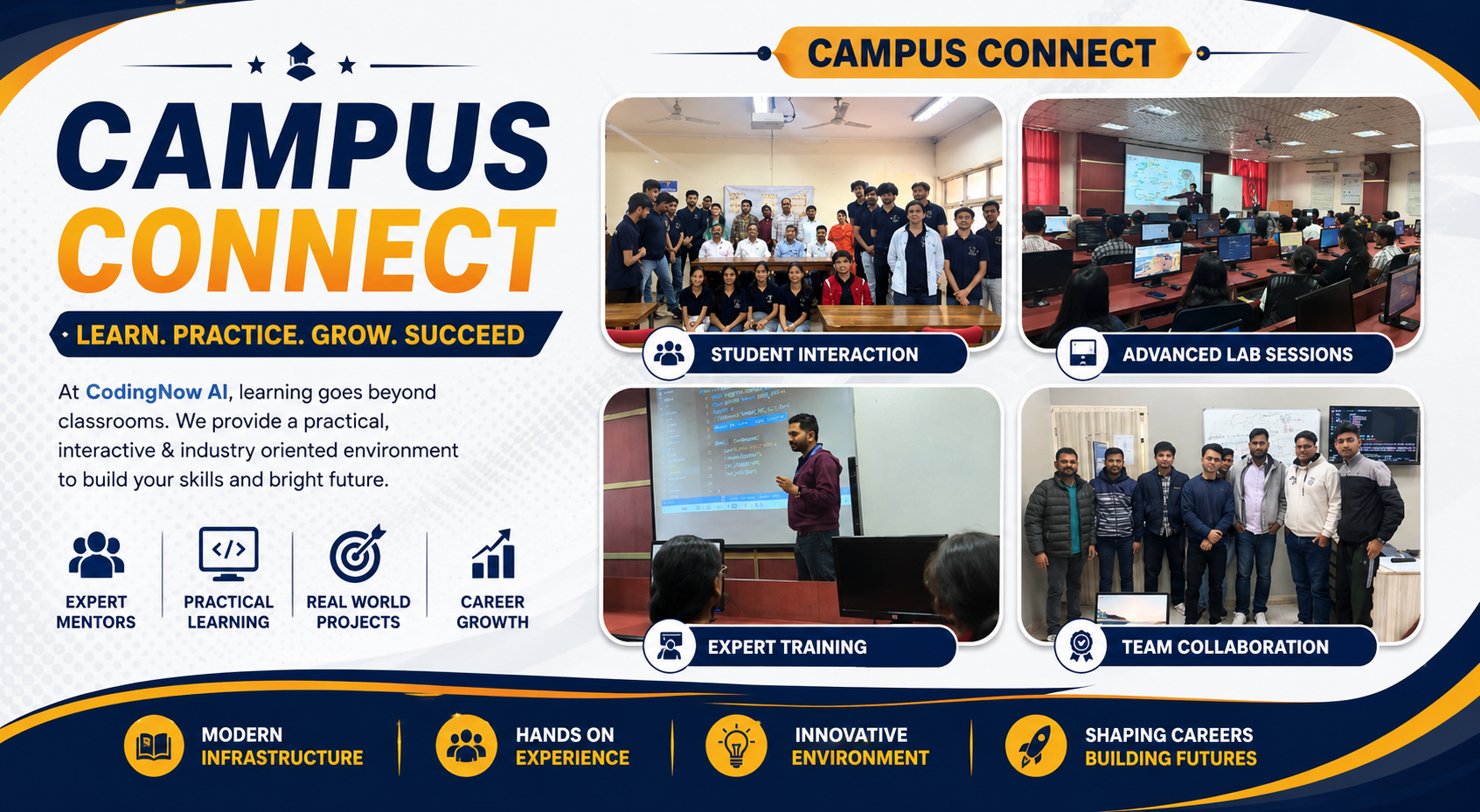
Agentic AI is transforming manufacturing and healthcare, creating unprecedented demand for professionals who can build and deploy autonomous systems. At Coding Now – Gurukul of AI, we offer industry-oriented programs designed to equip you with the AI skills that employers are actively seeking. Our curriculum covers agentic AI frameworks, RAG, production deployment, and more.
Visit us: https://codingnowai.in/ .
Conclusion
Agentic AI is creating entirely new careers at the intersection of technology and domain expertise. The most valuable professionals in 2026 will be those who can build autonomous AI systems that understand manufacturing processes or healthcare workflows—and deploy them reliably in production. The demand is unprecedented. The time to start is now.
SEO & Article Details
SEO Title
Agentic AI Jobs 2026: Manufacturing & Healthcare Careers
Meta Description
Agentic AI is creating new careers in manufacturing and healthcare. Discover roles like Agentic Systems Engineer, AI Architect, and Pharmacovigilance AI Engineer. Start now.
URL Slug
agentic-ai-jobs-manufacturing-healthcare-2026
Primary Keyword
agentic AI jobs 2026
Secondary Keywords
-
Agentic systems engineer
-
Manufacturing AI architect
-
Pharmacovigilance AI engineer
-
Agentic AI healthcare
-
AI knowledge management
-
MCP systems
-
LLM orchestration
-
AI career 2026
Suggested Tags
-
Agentic AI
-
Manufacturing AI
-
Healthcare AI
-
AI Careers
-
AI Engineer
-
RAG
-
LangChain
-
Coding Now
Internal Linking Suggestions
| Anchor Text | Suggested Destination | Where to Place It |
|---|---|---|
| AI Agent Engineer Roadmap | /blog/ai-agent-engineer-roadmap-2026 | Introduction / Skills section |
| AI Engineer Roadmap 2026 | /blog/ai-engineer-roadmap-2026 | Skills section |
| AI Careers in Traditional Industries | /blog/ai-careers-traditional-industries-2026 | Introduction |
| our industry-oriented AI programs | https://codingnowai.in/ | Conclusion / CTA |